
Enclosed by design
A rigid tubular body keeps the conveying path compact and limits external dust exposure between connected equipment.
Tubular screw conveyor
Move powder with less exposure and a better fit.
A compact, enclosed conveying route engineered around your material, throughput and plant layout — from silo discharge to weighing, mixing or downstream processing.
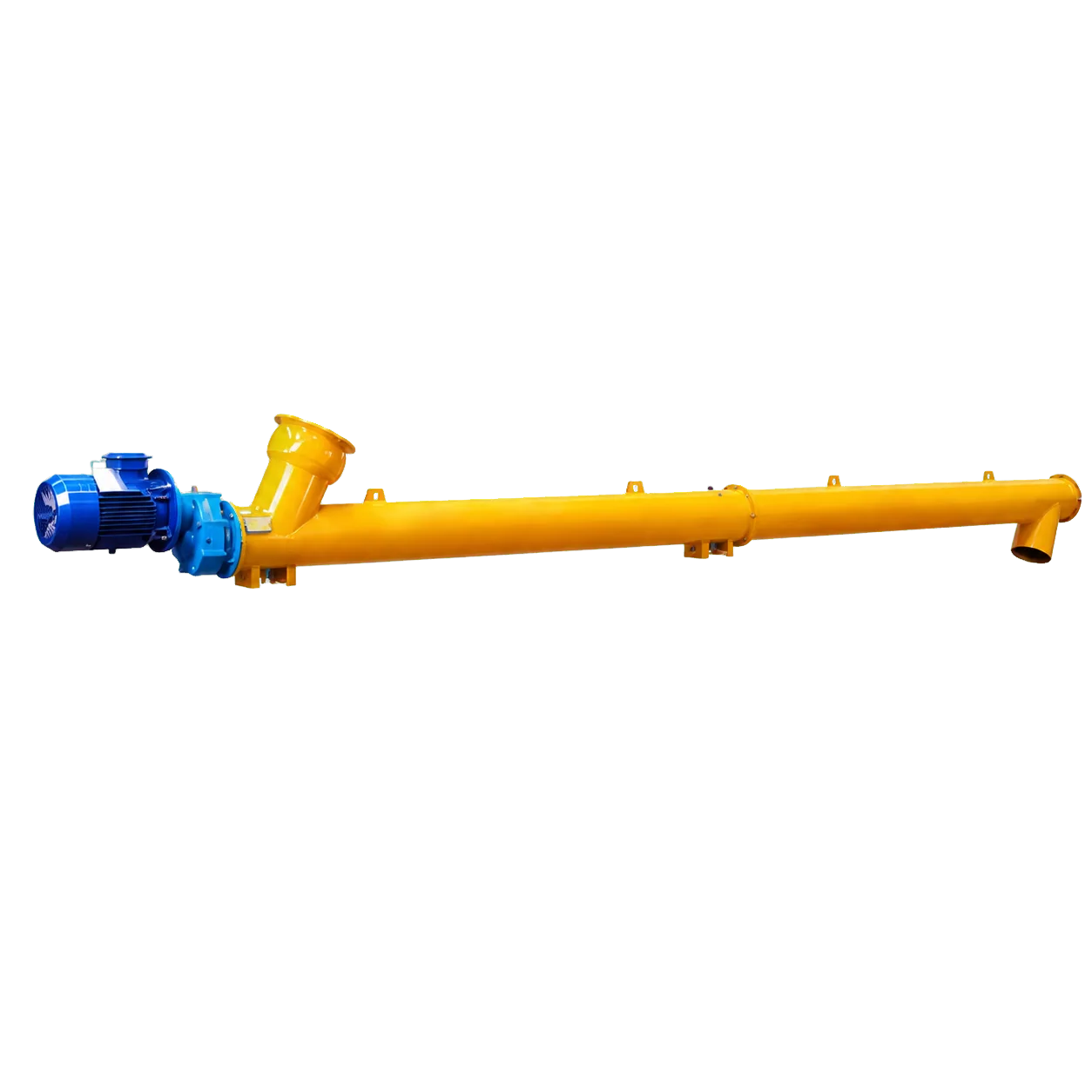
Reference boundaries only. Final capacity, power and dimensions depend on material and layout.
Engineered selection
A cement screw conveyor is not selected by diameter alone. Material behavior, throughput, inclination and connection geometry work together. We configure those variables before finalizing the proposal.
Why this configuration
A rigid tubular body keeps the conveying path compact and limits external dust exposure between connected equipment.
Diameter, length, angle, drive and connection arrangement are matched to the project instead of forced into one fixed layout.
Selectable hanger bearings, end bearings and drive arrangements support installation access and planned maintenance.
Layout flexibility
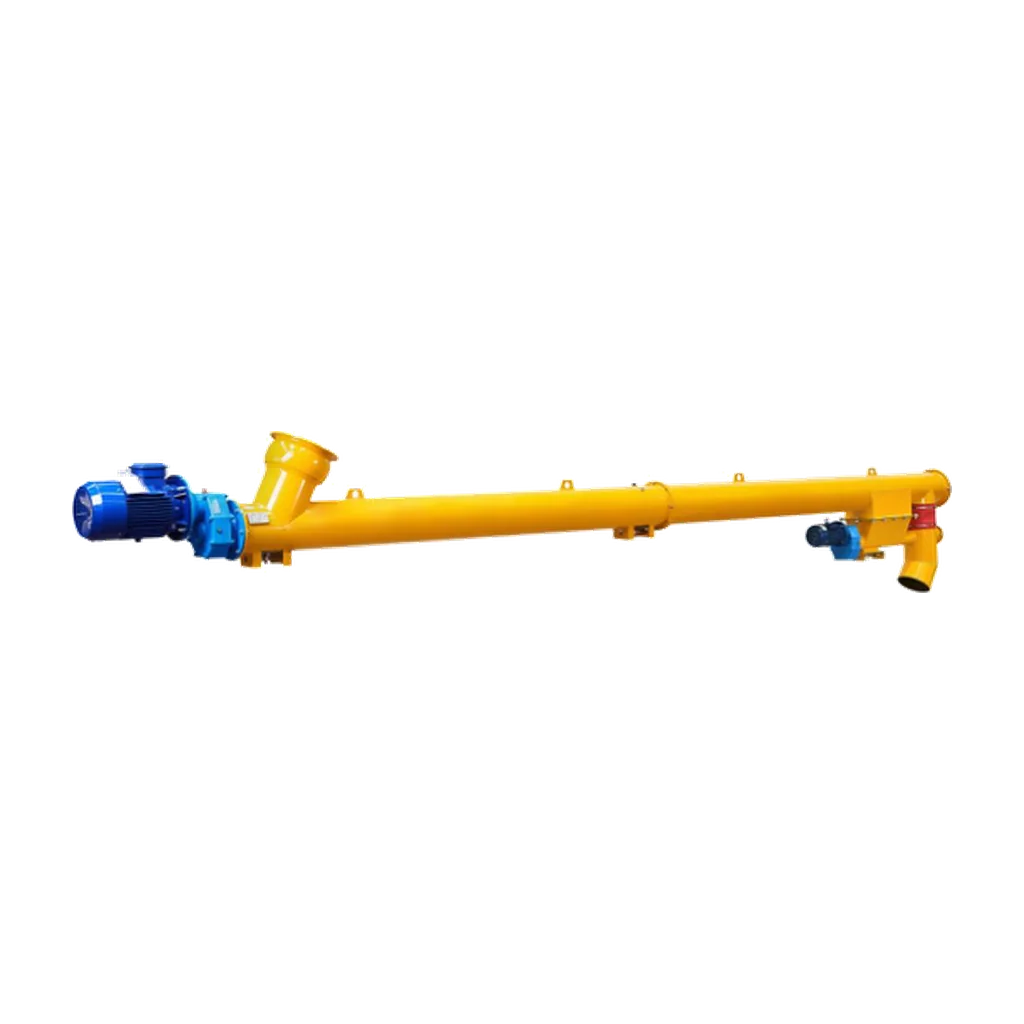
Length, inclination, inlet and outlet arrangement can be coordinated with silos, weighing hoppers, mixers and downstream equipment.
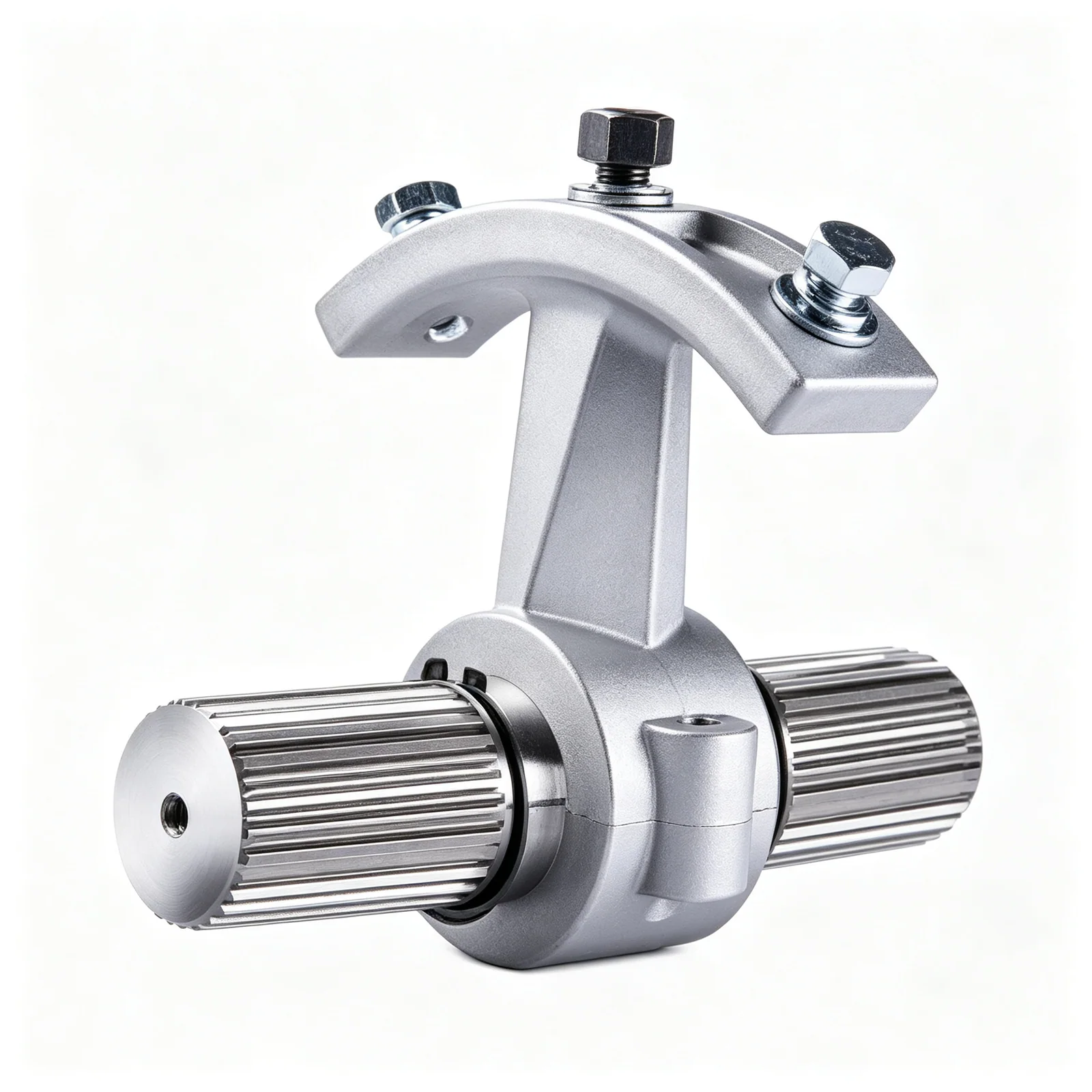
Inside support
Intermediate support options are selected around conveyor length and service conditions.
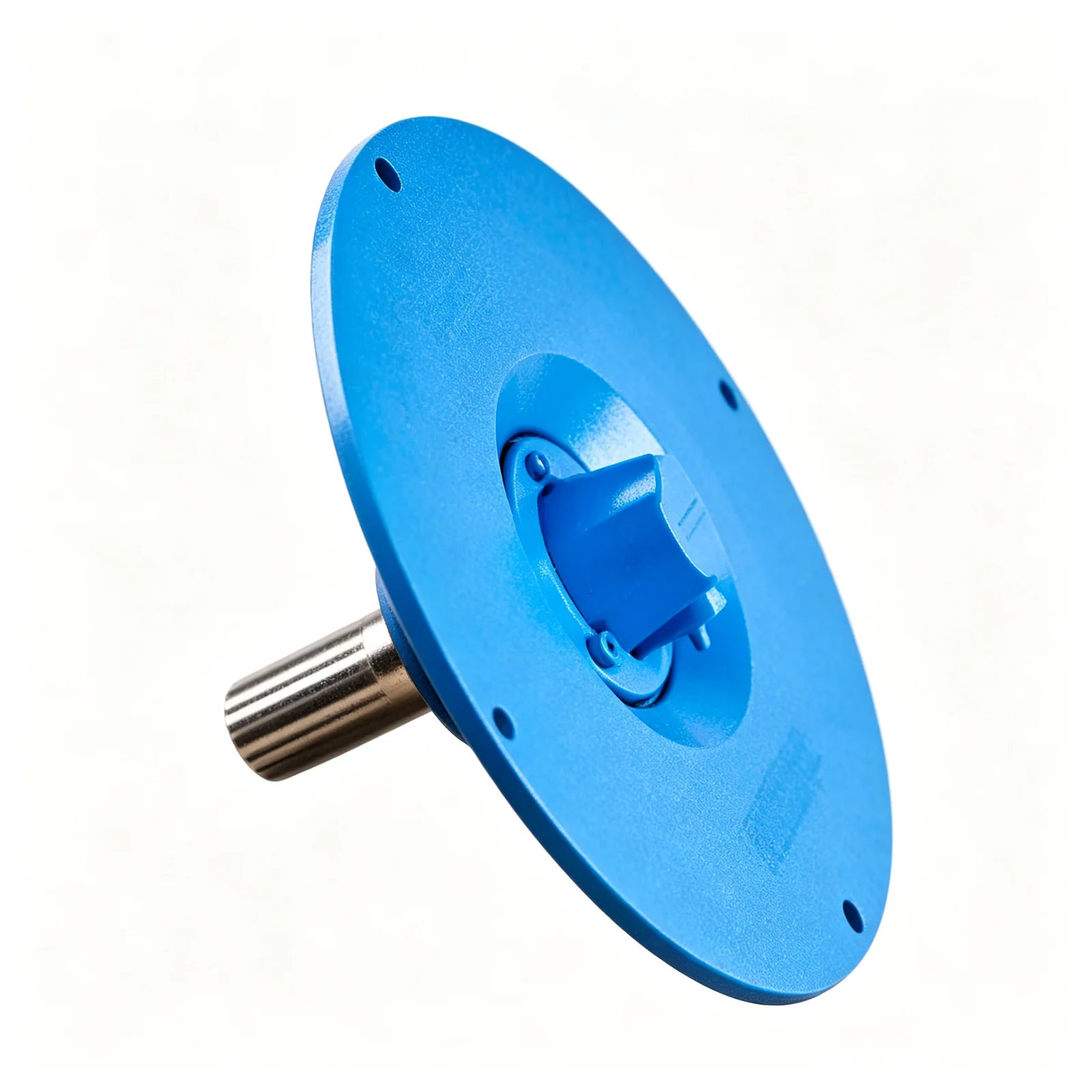
End support
End-bearing and connection arrangements are configured for installation and maintenance access.
Applications
Cement and fly-ash transfer from silo to weighing hopper.
Enclosed transport of cementitious powders and mineral fillers.
Controlled conveying of filler and compatible dry mineral powder.
Horizontal or inclined powder transfer between process stages.
Selection boundaries
Catalog values help narrow the configuration. The quotation and approved drawing define the final duty.
Faster selection
Questions
Selection starts with the material properties, required mass flow, centerline length, inclination, inlet and outlet arrangement, start frequency and available power. We confirm the final size and drive in the technical proposal.
Yes. Length, inclination, connection positions and drive arrangement can be engineered around the plant layout, subject to technical confirmation.
No. The published range is a selection reference. Actual capacity and power depend on the conveyed material, filling, inclination and operating conditions and must be confirmed for each project.
Send the material, required throughput, centerline length, inclination, connection layout, power supply and operating temperature. A drawing or site sketch is especially useful.
Selection support
Send the material, target capacity and layout. A drawing or site sketch helps us respond with the right technical questions.