
Asphalt mixer mixing time should be set by a controlled plant trial, not by copying a single number from another plant. Define the dry and wet intervals, run the approved recipe at its intended batch mass, and accept the setting only when coating, discharge temperature and project quality results are satisfactory. A longer timer cannot compensate for wet aggregate, inaccurate weighing or a poor charging sequence.
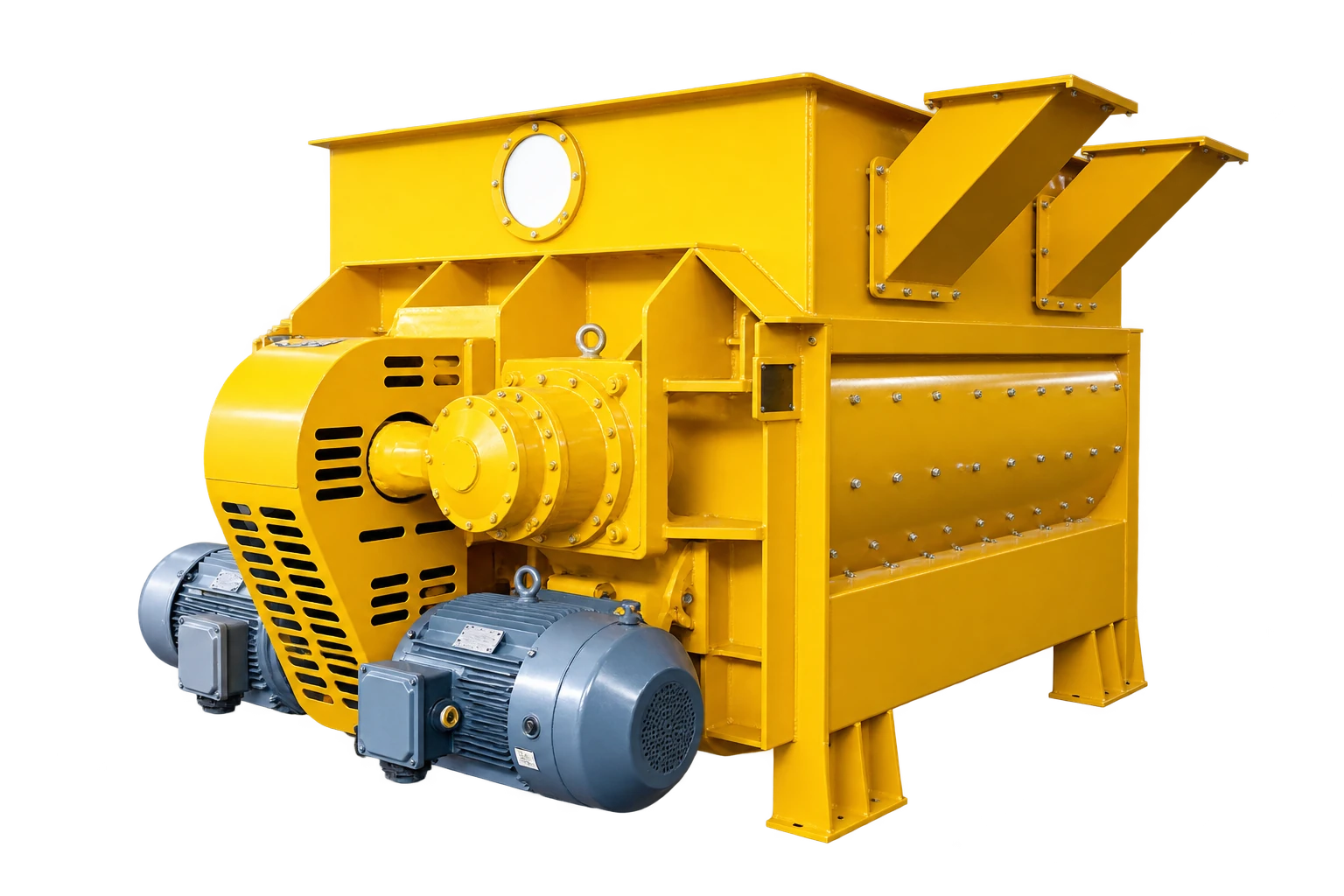
The AM asphalt mixer is selected from required batch mass, aggregate recipe and plant cycle. Those are project inputs; the product page does not prescribe a universal mixing time or temperature. The contract specification, approved mix design and binder supplier remain the controlling sources for the process window.
Define asphalt mixer mixing time at real events
An operator, PLC programmer and quality technician must use the same timing boundaries. The USDOT Hot-Mix Asphalt Paving Handbook describes batch-plant dry mixing before asphalt injection and wet mixing after the binder enters the pugmill. A practical event definition is:
| Interval | Start | End | Main purpose |
|---|---|---|---|
| Dry mix | Aggregate and required dry components are in the mixer | Binder injection starts | Distribute aggregate fractions and dry additives |
| Wet mix | Binder injection starts | Discharge command starts | Coat and distribute binder through the batch |
| Discharge | Gate begins opening | Gate closes and permissive resets | Empty the mixer without holding residue into the next batch |
If a project specification defines these events differently, configure and report its definitions. “Thirty seconds of mixing” is not auditable when one control system starts the clock at binder-pump command and another starts after binder addition finishes.
Record actual events from the PLC trend. A commanded valve can take time to move, a binder meter can finish after the pump starts, and an interlock can pause the sequence. Timer setpoints alone do not prove the material received the intended treatment.
Set temperature from the mixture, not the machine
The European Asphalt Pavement Association’s asphalt production overview notes that conventional hot-mix asphalt is generally produced in a broad 150–180°C range and that warm-mix processes operate lower. This is context, not an AM mixer setpoint. The correct window depends on binder grade, viscosity guidance, aggregate condition, additives, reclaimed asphalt, transport time, weather and the governing specification.
Establish at least four temperature checkpoints:
- aggregate leaving the dryer or hot bins;
- binder at the metering point;
- mixed material at discharge;
- mixture at the downstream acceptance point required by the project.
Use calibrated instruments at defined locations. A single reading from a convenient surface may not represent the batch. The FHWA’s quality hot-mix asphalt manual treats temperature, gradation, asphalt content and plant control as connected quality variables. Diagnose them together rather than changing the mixer timer after one abnormal reading.
Too low a discharge temperature can be associated with inadequate aggregate heating, moisture, cold additions, excessive delay or heat loss. Too high a temperature can accelerate binder aging and increase emissions. Neither condition should be “fixed” by extending wet-mix time until a thermometer reaches a target; mixing is not a substitute for controlled material heating.
Validate coating without hiding upstream faults
Start from the approved plant procedure and examine representative batches. The handbook explains that batch plants use a defined dry interval followed by a wet interval and warns that longer exposure in the pugmill can increase binder hardening. Use the shortest validated time that meets the mixture requirements; do not treat maximum time as maximum quality.
When coating is incomplete, investigate in this order:
| Observation | Check before adding time |
|---|---|
| Dry patches repeat in every batch | Binder quantity and distribution, spray bar/nozzles, charging sequence |
| Problem follows rain or morning startup | Aggregate moisture, dryer operation and hot-bin temperature |
| Only large batches fail | Actual batch mass, mixer working limit and material circulation |
| One recipe fails | Gradation, fines, binder/additive sequence and approved recipe |
| Coating varies by sample | Sampling location, discharge segregation and inspection method |
| Residue carries into next batch | Gate travel, clearance, buildup and discharge duration |
Do not judge coating only from a photograph. Use the inspection and tests required by the owner or mix-design system, and sample using the specified method. Visual evidence can guide a diagnosis, but it is not a replacement for asphalt content, gradation, temperature and mixture-property controls.
Calculate the plant-cycle consequence
Mixing time consumes only part of a batch cycle. Consider a hypothetical plant with a 4.0 t batch and these measured stages:
| Stage | Example time |
|---|---|
| Aggregate and filler charging | 8 s |
| Dry mixing | 5 s |
| Binder/additive dosing overlap | 7 s |
| Wet mixing | 30 s |
| Discharge and gate reset | 10 s |
| Total cycle | 60 s |
The theoretical mixer rate is:
60 min/h ÷ 1.0 min/batch × 4.0 t/batch = 240 t/h
If observed plant availability during the production window is 85%, the planning rate becomes:
240 t/h × 0.85 = 204 t/h
These are assumptions, not AM performance data. Dryer output, screens, hot-bin balance, binder metering, silo capacity and truck dispatch may set a lower plant rate. Increasing wet mix from 30 to 40 seconds would make the example cycle 70 seconds and the theoretical rate about 206 t/h before availability. That trade-off must buy a verified quality improvement.
The planetary mixer selection guide uses the same useful discipline for a different process: select equipment from the complete production cycle, not nominal vessel size alone. Asphalt trials must use asphalt-specific temperature, coating and quality criteria.
Build a recipe-specific validation matrix
Choose conditions that represent the production envelope rather than an easy demonstration batch. Include the normal recipe, the largest intended batch, the recipe with the most demanding fines or additives, and any approved reclaimed-material case that changes charging or heat balance.
For every trial, capture:
- material sources, gradation and aggregate moisture;
- target and actual batch masses for each component;
- charging order and measured addition durations;
- dry- and wet-mix event timestamps;
- aggregate, binder and discharge temperatures;
- coating observation and required laboratory results;
- gate travel, residue and any carryover;
- alarms, interlocks and operator interventions.
Change one factor at a time. If both binder timing and wet-mix time change, a better batch does not show which action mattered. Keep the accepted recipe parameters under change control and protect manual timer edits by authorization and audit logging.
Commission controls and safe access
Prove the sequence first without material where the manufacturer’s procedure permits, then under controlled load. Test high- and low-temperature alarms, no-flow or dosing faults, mixer-drive protection, gate permissives and the rule that prevents discharge into an unavailable downstream system.
Inspection or cleaning inside a mixer is servicing work, not an extension of normal operation. OSHA’s hazardous-energy guidance requires control of unexpected energization and stored energy. Isolate the mixer drive, discharge gate, upstream feeds, pneumatic or hydraulic energy and retained hot material under the site’s procedure. A stopped HMI animation is not proof of isolation.
Commissioning evidence should identify who approved the mix-time window and which specification edition applies. The mixer supplier can confirm equipment and control constraints; the mix designer and project authority accept the asphalt mixture.
Conclusion
Asphalt mixer mixing time is a validated process setting with defined dry- and wet-mix events. Set it alongside the approved temperature window, component dosing and complete plant cycle, then prove it with representative batches and required quality results. Use the shortest setting that consistently meets those results, and correct moisture, heating, weighing or charging faults at their source.
For a quotation, provide the target batch mass, recipes, aggregate and reclaimed-material data, required cycle, temperature-control basis, additive sequence and plant interfaces.