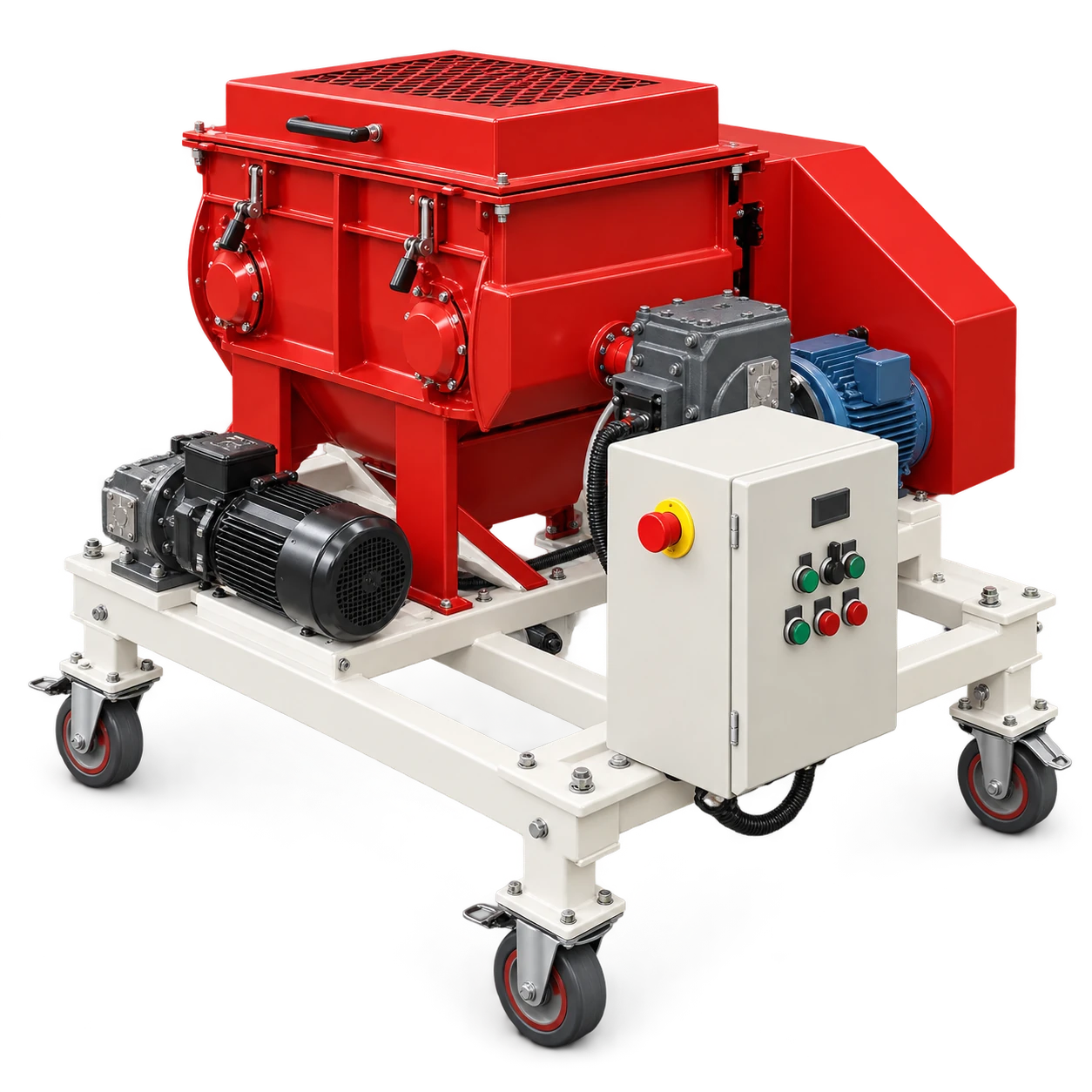
Laboratory concrete mixer scale-up should preserve the approved recipe and test intent while treating production mixing as a new process that must be verified. Multiplying every laboratory mass by one factor is only the material-balance step. It does not establish a production mixing time, charging sequence, energy input, discharge pattern or achievable cycle.
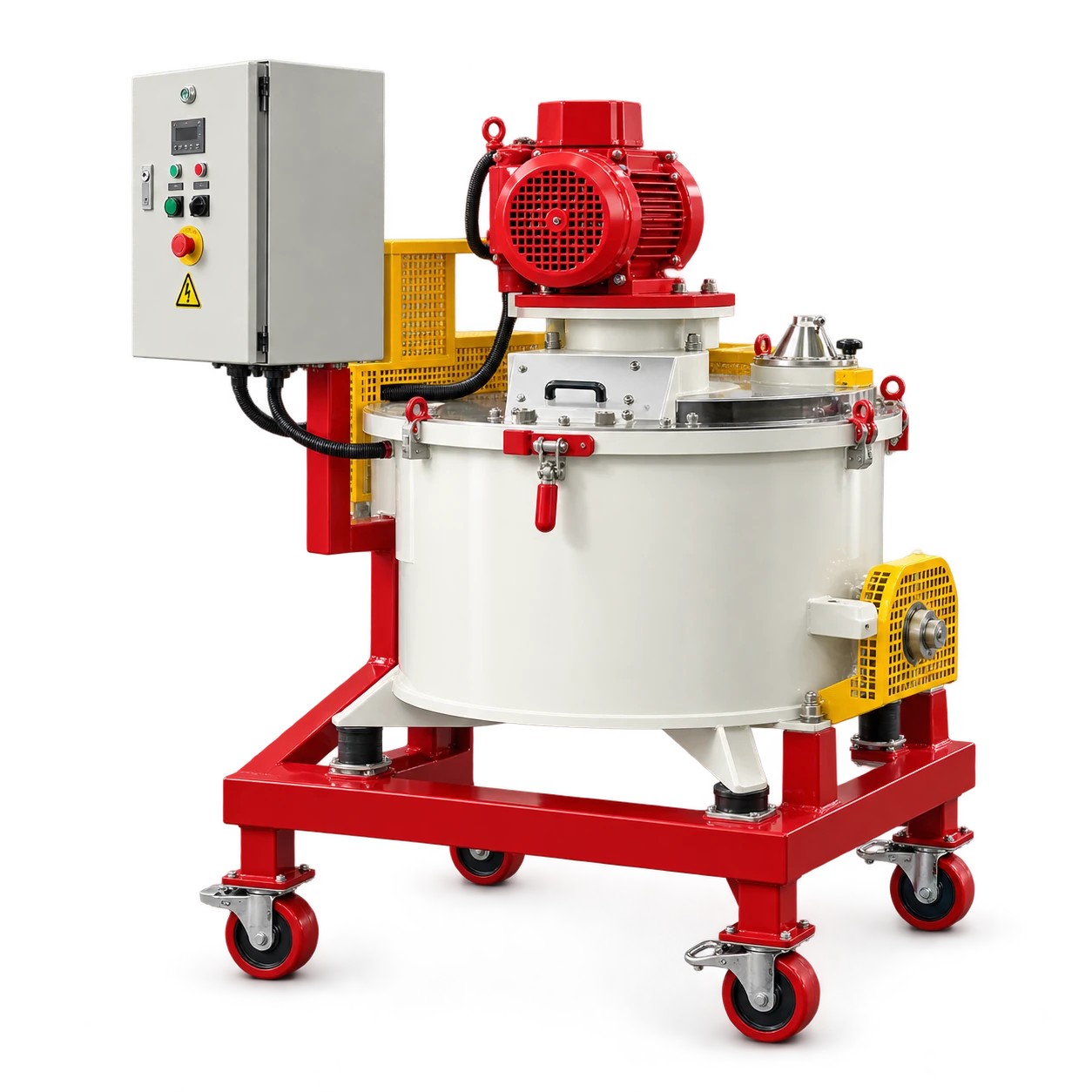
The MPT planetary laboratory mixer is a mobile laboratory and teaching range with published compacted capacities of 50–250 L. Select a model from the test batch volume and required mixing speed, then use the laboratory result as controlled development evidence. The product page does not claim that a laboratory cycle predicts a particular production mixer.
Define what is being transferred
Freeze the laboratory record before changing scale. It should identify material sources, aggregate grading, moisture and absorption basis, cementitious proportions, admixture dosage basis, batch temperature, charging order, mixing and rest stages, discharge method, sample timing and test results.
Separate three items:
| Transfer item | Normally preserved | Must be re-established at production scale |
|---|---|---|
| Recipe | Proportions on the approved mass basis | Actual wet batch masses and plant tolerances |
| Process | Order and purpose of each stage | Feed overlap, mixer time, speed and discharge timing |
| Evidence | Target properties and test methods | Representative sampling, acceptance limits and repeatability |
This prevents a common error: preserving a laboratory clock time while unintentionally changing the process. A production plant may charge aggregate while scales are still completing, introduce water through multiple nozzles, or dose admixture at a different point. Those differences can matter more than the nominal mixer size.
Recalculate the wet batch, not just the dry proportions
Start with the approved dry or saturated-surface-dry basis used by the mix design. Convert each aggregate fraction to its current wet batch mass and adjust added water. Record absorption, free moisture, measured moisture, carried water and final water addition separately.
Consider a calculation example. A laboratory recipe contains 80 kg of one aggregate fraction on a dry basis. Assume measured total moisture is 4.0% and absorption is 1.0% for this example.
wet aggregate mass = 80 × (1 + 0.040) = 83.2 kg
free water contributed = 80 × (0.040 − 0.010) = 2.4 kg
If the scale factor is 20, the corresponding dry aggregate basis becomes 1,600 kg, but production should calculate its own wet mass from the moisture measured for the production stockpile. The example is not a VOGO mixer parameter and is not a project acceptance rule.
Moisture is only one transfer variable. Verify admixture concentration, solution water, recycled-water contribution, material temperature and whether the production system rounds small dosages. A recipe can retain the same printed proportions while its effective water or chemical dosage changes.
The FHWA’s PCC materials training notes that admixtures from different manufacturers may require trial-batch testing to assess compatibility. That is a useful boundary: a formulation or supplier change should not be hidden inside a scale-up exercise.
Translate stages instead of copying laboratory minutes
A laboratory mixing cycle might contain dry blending, liquid addition, powered mixing, a rest or scrape-down, and final mixing. Describe why each stage exists, then decide how the production system can achieve that purpose.
| Laboratory stage | Production question | Evidence to record |
|---|---|---|
| Dry charge | Are fines lost, segregated or buried by the loading sequence? | Actual feed start and finish times |
| Water addition | How long does distribution take through the plant nozzles? | Flow duration and water-meter total |
| Admixture dose | Is it diluted and introduced at the same process point? | Dose mass, carrier water and timestamp |
| Powered mixing | What time begins after all required constituents are present? | Defined start point and measured duration |
| Discharge | Does the gate empty uniformly without unacceptable residue? | Start/end time and discharge observations |
Do not claim equivalent intensity from equal revolutions alone. Tool path, tool speed, fill fraction and material circulation differ between machines. Motor power also cannot be compared directly without the mechanical arrangement, actual load and measured energy. Where the plant can log motor current or energy, use the trend as supporting process evidence, not as a universal pass value.
The existing laboratory mixer repeatability guide explains how moisture, timing and sampling must be controlled before comparing repeated laboratory batches. Scale-up should begin only after that laboratory baseline is stable.
Plan a production-representative trial
Arizona DOT’s materials policy manual distinguishes laboratory trial batches from full-scale trials. Its full-scale note requires production materials, mixing equipment, procedures and batch size to match production. Project rules differ, but the principle is strong: a small mixer result is not proof of the actual plant process.
Before the trial, agree on:
- the exact production batch size and expected operating fill;
- stockpile moisture sampling and correction responsibility;
- actual charging order, overlap and time definitions;
- first, middle, last or composite discharge samples;
- fresh-property test order and maximum test delay;
- specimen preparation, curing and later acceptance tests;
- action if one result fails or the discharge is visibly nonuniform;
- the number of confirmatory batches required by the project plan.
Use the normal production system, not a hand-assisted sequence the plant cannot repeat. If operators must pause a feeder, manually split an admixture dose or scrape the mixer to pass, record that intervention and decide whether it is sustainable.
Check uniformity across the discharge
Average results can hide separation during discharge. The American Concrete Institute’s answer on mixer adequacy recommends comparing samples taken at different points in the discharge and notes that large differences in slump or air can indicate an unsuitable loading sequence or insufficient mixing.
Define sample positions before the run. For example, collect identified early, middle and late portions without delaying one test more than another. Depending on the project, compare slump or flow, air content, fresh density, temperature, coarse-aggregate distribution and strength specimens. Use the methods and limits named by the contract; this article does not set acceptance tolerances.
If results differ, do not automatically add time. Review moisture, weigh records, feed timestamps, admixture timing, mixer fill, gate opening and sampling first. Added time can reduce output and change temperature without correcting a poor loading sequence.
Include the whole production cycle
Successful scale-up must fit the plant, not just make one acceptable bowl of concrete. Measure:
- weigh and charging duration;
- time from the defined mixing start to discharge release;
- complete discharge time;
- residue or cleaning demand;
- reset time before the next batch;
- fresh-property and specimen results;
- variation across repeated production batches.
The planetary concrete mixer selection guide discusses mixer selection in the context of recipe trials, discharge and the plant cycle. Use that broader system view when the laboratory result will support a new production-equipment decision.
Use a scale-up release checklist
A release review should be able to answer yes to each item:
- The current recipe revision and constituent sources are identified.
- Production moisture corrections and solution water are traceable.
- Charging, mixing and discharge start points are defined from plant signals.
- No laboratory time or speed has been copied without production evidence.
- Sampling covers the intended discharge portions.
- Acceptance tests and limits come from the governing project documents.
- At least one production-representative trial has been completed where required.
- Deviations, manual interventions and cleanup observations are recorded.
- Repeat batches demonstrate that the result is not a one-off.
- Cleaning or internal inspection uses the site’s energy-control procedure.
For cleaning, blade inspection or removal of hardened material, a normal stop is not an energy-isolation method. OSHA’s hazardous-energy overview explains that servicing must control electrical, mechanical and other stored energy against unexpected startup or release.
Conclusion
Laboratory concrete mixer scale-up succeeds when the recipe basis stays traceable and the production process is independently proven. Recalculate wet batch masses, translate the purpose of each mixing stage, sample across the discharge and verify the complete plant cycle. Do not turn laboratory minutes, revolutions or batch volume into production promises without a representative full-scale trial.
For MPT selection, provide the test material, target compacted batch volume, required speed and cycle, laboratory power supply and the tests that each batch must support.