A cement butterfly valve specification should define powder duty, loaded opening and closing, pressure and leakage boundaries, connections, actuator supply and the evidence required at acceptance. Nominal diameter alone is not a purchasing specification. This guide is for dry cement handling, not water service, and does not establish a pressure rating for any VOGO valve.
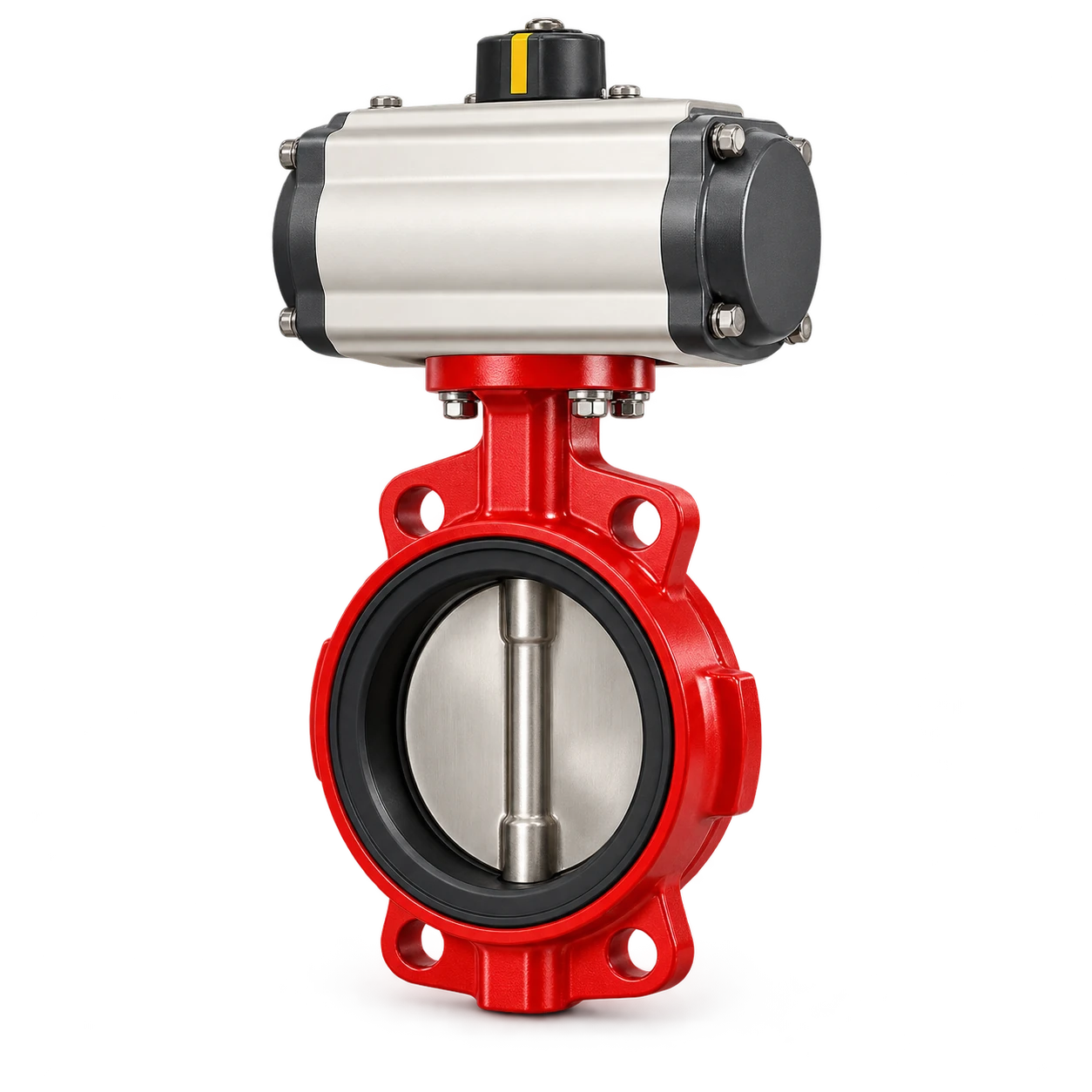
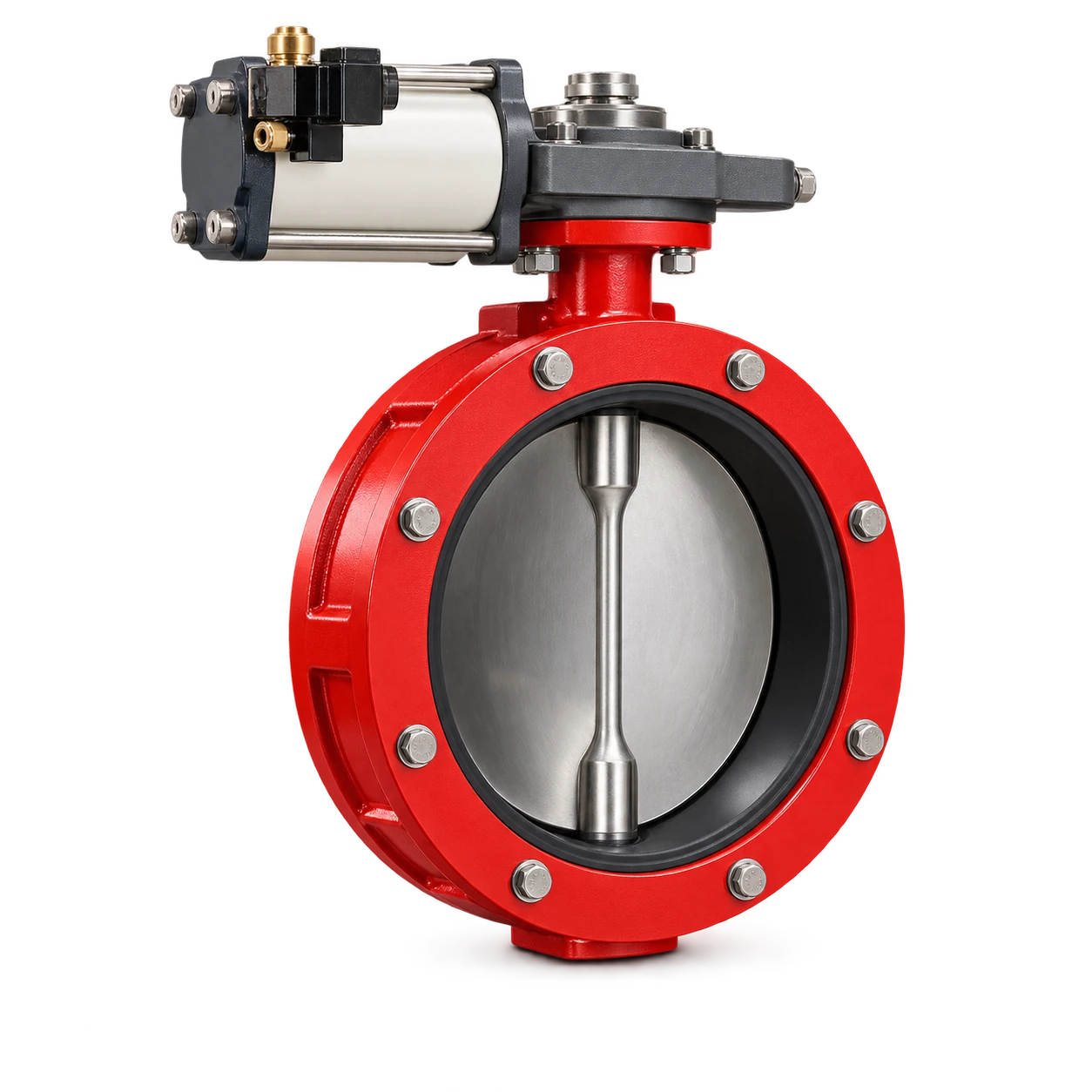
The cement butterfly valve range lists SDC models in the DN100–DN400 class with actuation choices. Use it to identify candidates, then obtain confirmation for the actual powder, installation and controls. The catalog range is not proof that every listed size suits every silo outlet.
Describe the process duty in the request for quotation
Draw the equipment immediately above and below the valve. Identify whether it closes a gravity-fed silo outlet, isolates a controlled transfer or forms part of a pneumatic line. State whether the disc must move through material or only operate after the flow has stopped.
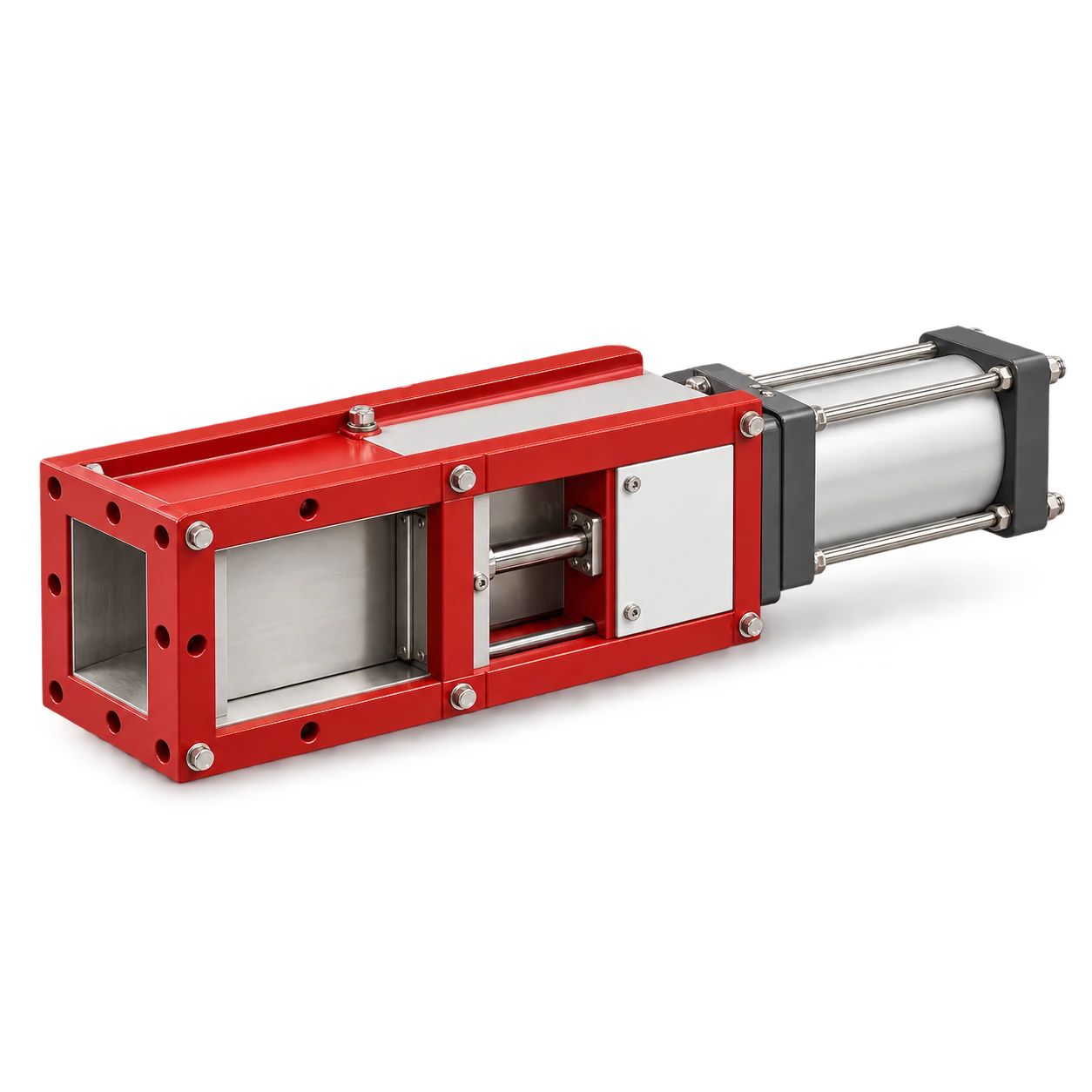
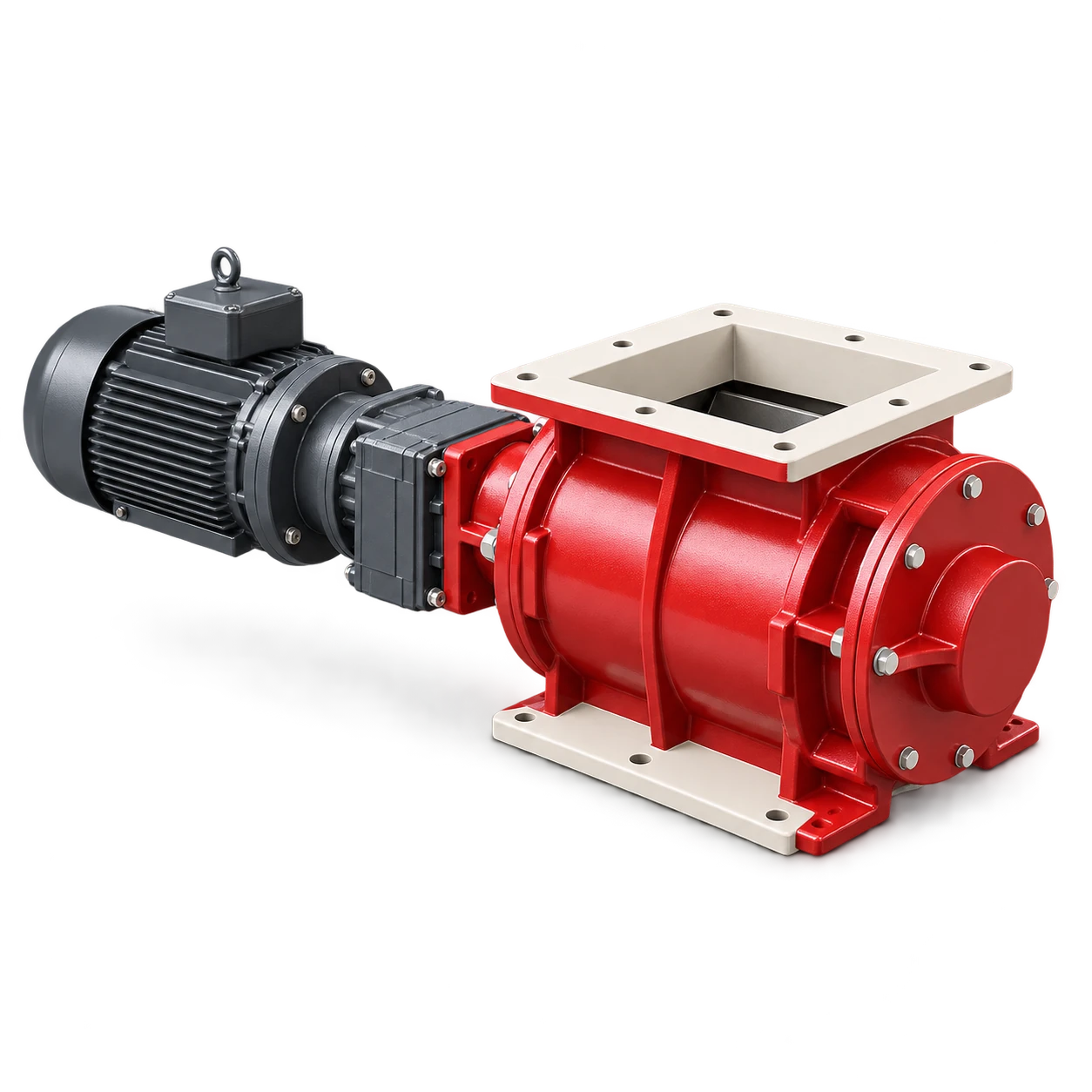
WAMGROUP’s bulk-solids valve overview treats butterfly valves, slide gates and other arrangements as separate bulk-handling options. Use that distinction to ask a process question before a brand question: what movement and isolation duty must the valve perform? Similar flange dimensions do not establish interchangeable process behaviour.
Include powder identity, temperature, moisture range, lumps or contamination, bulk density and the range of material levels above the outlet. Ask the valve supplier which of these conditions limits the proposed assembly. Describe abnormal states explicitly, including a stopped downstream feeder with material resting on the closed disc.
Separate pressure, leakage and material load
Request allowable upstream pressure, downstream pressure and differential pressure for the offered configuration. State whether positive and negative pressure cases occur, and whether the valve is expected to operate under differential pressure. Obtain a documented leakage requirement with the test medium, pressure, direction and acceptance method.
A closed disc is not automatically airtight, a certified explosion-isolation device or a safe barrier for maintenance. “Dust-tight” and “pressure-rated” answer different questions. Do not transfer a liquid-service rating, another manufacturer’s rating or a body rating to the complete valve-and-actuator package.
For loaded duty, ask for application-specific torque evidence and the corresponding actuator selection. Do not infer closing torque solely from DN or from an unloaded demonstration. Keep a record of the utility conditions used for sizing and what happens if supply air or electrical power falls outside the agreed range.
Use a comparable supplier-return schedule
The table below is a proposed RFQ worksheet, not a statement that the catalog includes all listed features.
| RFQ item | Supplier return | Acceptance question |
|---|---|---|
| Material and duty | Approved powder and operating envelope | Can it close under the specified load? |
| Connections | Dimensioned flange and disc-clearance drawing | Does it fit both adjacent components? |
| Pressure and leakage | Limits and agreed test basis | What exactly does sealing mean here? |
| Actuation | Torque basis, utilities and loss-of-supply action | Can the complete package perform the duty? |
| Feedback | Open/closed signals and adjustment procedure | Can the control system verify position? |
| Service parts | Seat, disc, shaft and actuator parts list | Which components can be replaced on site? |
Require the same return format from each supplier. Otherwise one price may include feedback and mounting hardware while another covers only the bare valve. Record excluded accessories and site work beside the quoted amount.
Verify mounting without assuming actuator suitability
ISO 5211:2026 specifies part-turn actuator attachment dimensions and reference interface torque values. Its public scope describes mechanical interfaces; it does not select a valve for cement service or confirm the torque required by your powder.
Ask for the offered attachment standard and edition, flange designation, drive geometry and mounting drawing. If an intermediate bracket is present, confirm its attachment to the valve separately. A matching attachment is necessary where specified but does not prove adequate actuator output, utility compatibility or complete assembly strength.
Use the existing butterfly-valve actuator torque guide for the separate sizing workflow. Keep the RFQ centred on the whole powder-duty package instead of repeating that calculation.
Write a functional acceptance sequence
Agree the test conditions before ordering. Begin with dimensional and documentation checks, followed by controlled no-load operation. Verify the indicated position against the disc position, confirm normal operating commands and observe the agreed loss-of-supply behaviour. A successful electrical signal alone is not a physical-position test.
Where the supplier approves loaded testing, define the material condition, head above the valve, pressure conditions and cycle sequence. Record operation, leakage observations and drive response without reaching into moving equipment. Set measurable acceptance criteria and a safe stop condition. Do not create a universal closing-time or leakage limit in the absence of a contract.
A short hypothetical comparison illustrates the commercial issue: two offers for the same DN can differ in seat material, actuator supply, position feedback, mounting hardware and spare parts. Make those differences visible in the return schedule before concluding that one supplier is cheaper.
Plan maintenance isolation and replacement
OSHA’s hazardous-energy standard requires applicable energy isolation and control of residual energy during servicing. Treat it as US guidance here; apply the site’s jurisdiction and procedure. A control command to close the valve is not, by itself, verified maintenance isolation.
Ask the responsible engineer how stored powder, pressure and actuator energy are made safe before a seat or actuator is removed. Include physical access, support, replacement clearances and a post-maintenance check in the procurement brief. Define who verifies isolation; do not leave that responsibility implied by the product name.
Conclusion
A cement butterfly valve specification should make powder conditions, operating loads, pressure boundaries and acceptance evidence explicit. Compare complete, documented assemblies on the same scope, and obtain project confirmation before treating a catalog size as a finished selection.