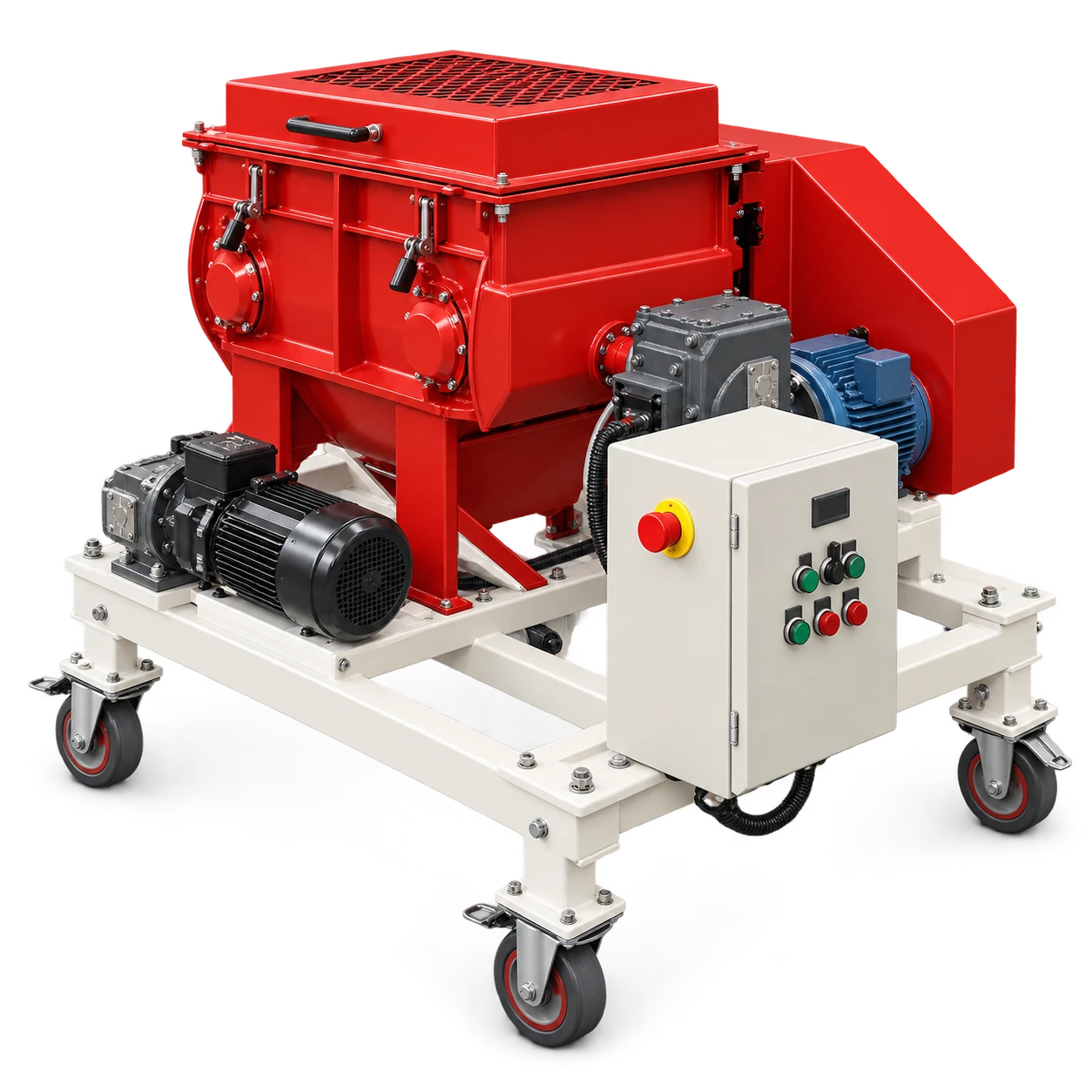
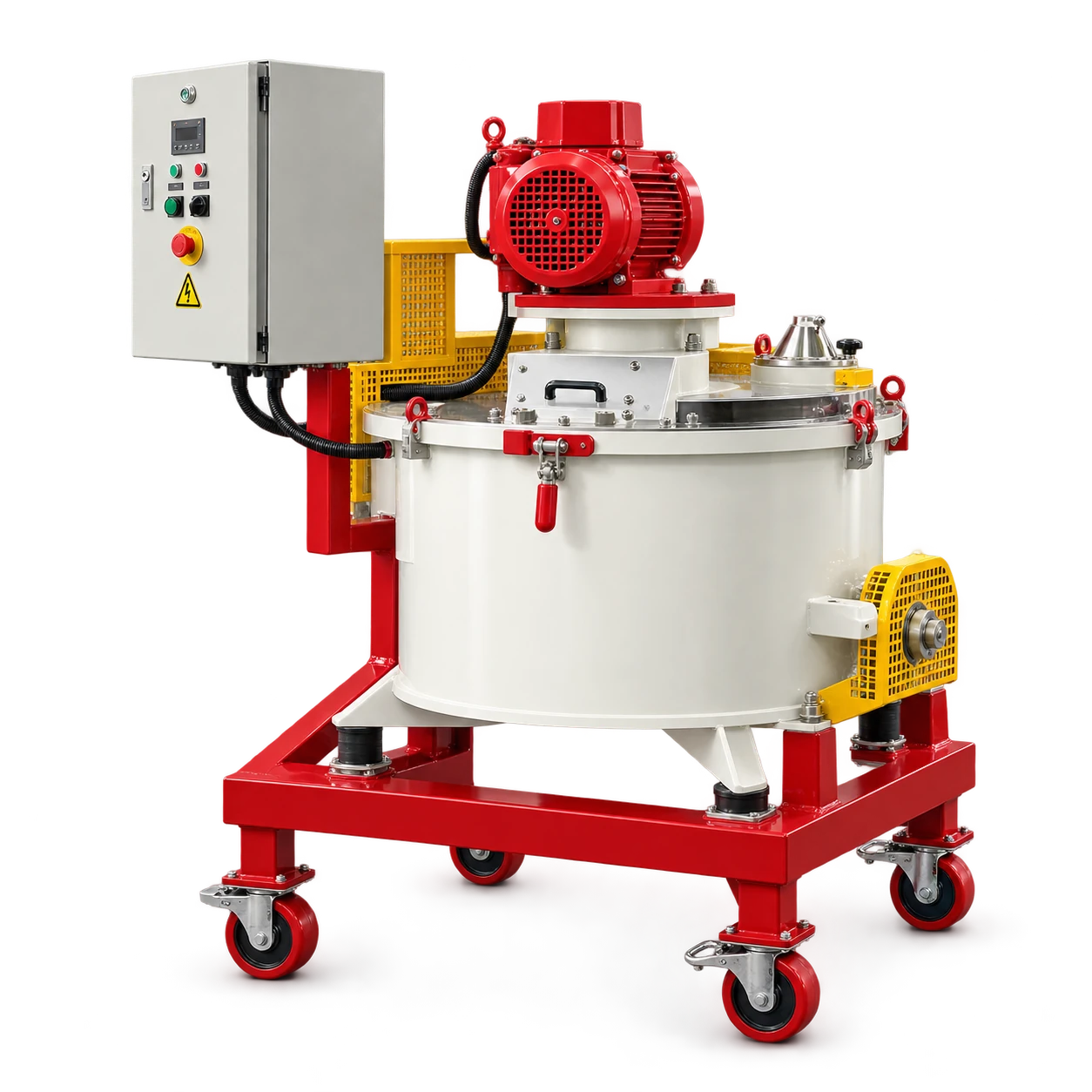
A laboratory concrete mixer quotation is comparable only when each supplier prices the same usable batch range, material envelope and delivery scope. Start with the concrete needed for one test session, not the geometric size of the bowl. Require the offer to identify what is included, what the laboratory must provide and how the proposed machine will be accepted.
The MPT planetary laboratory mixer has a published compacted-capacity range of 50–250 L. That is a catalog starting point, not confirmation of a minimum batch, a particular recipe or independently adjustable tool speeds. Ask the supplier to state those limits for the exact model offered.
Laboratory concrete mixer quotation: define the batch
Prepare one representative test schedule and one demanding material case. Identify aggregate grading, maximum particle size, binder system, fibers if present, consistency and constituent temperatures. Include the smallest research batch as well as the largest specimen session. An offer based only on the largest volume can miss the laboratory’s routine work.
The public scope of ASTM C192/C192M-26b concerns laboratory preparation, mixing and specimen making and curing. It is not a product certificate for a mixer. Name the applicable project method and edition in the RFQ; obtain the full method separately rather than treating this checklist as its replacement.
Use explicit volume labels. Bowl volume, loose charging volume, fresh-concrete yield and compacted output should not share an unlabeled “liters” column. Ask bidders to reconcile their quoted capacity with the laboratory’s measurement basis and identify any recipe-dependent reduction.
Calculate one session before choosing a model
Consider a hypothetical session requiring twelve cubes with an internal side length of 150 mm. Assume another 10 L for fresh-property tests and 5 L for handling and retained material. These quantities are planning assumptions, not prescribed specimen numbers or standard allowances.
Specimen volume = 12 × 0.15³ × 1000 = 40.5 L
Provisional session demand = 40.5 + 10 + 5 = 55.5 L
This calculation uses filled specimen volume as its reference. The laboratory must reconcile test consumption and handling allowances to the same basis before comparing it with compacted capacity. A 50 L reference capacity would be below 55.5 L on that agreed basis. A 100 L model is only a candidate: it still needs confirmation at the intended load and at the smallest research batch.
Do not fill the gap by dividing a batch without approval. Separate batches may change the experimental design or introduce different waiting times. If splitting is permitted, describe the allocation and preparation method in the purchasing specification.
Ask for process capability, not only motor power
NIST’s review of concrete mixing identifies mixer type, charging order, power and duration as process variables. A motor nameplate alone therefore does not demonstrate the required mixing result.
Translate that into supplier questions. What sequence can the operator actually execute? Can liquid additions be measured and introduced at the required stage without unsafe access? What settings are fixed, adjustable or only available as options? Ask for the approved load envelope, tool arrangement and discharge method in writing.
| RFQ field | Buyer input | Supplier return |
|---|---|---|
| Batch window | Smallest and largest required usable volumes | Confirmed volume basis and operating limits |
| Material envelope | Aggregate, fibers, consistency and temperatures | Restrictions and proposed demonstration |
| Process | Charging stages and required observations | Controls, access provisions and recording scope |
| Laboratory interface | Supply, floor plan, collection vessels and washout | Connection requirements and clearance drawing |
| Acceptance | Named recipes and agreed tests | Trial responsibility, records and exclusions |
Price the complete laboratory installation
Request a dimensioned arrangement showing charging access, discharge height, collection-vessel clearance, service access and the route into the room. A footprint rectangle does not establish that a loaded container can be removed or that a replacement tool can pass through the doorway.
Separate the base machine from controls, power connection, dosing accessories, weighing equipment, collection containers, freight, unloading, assembly, training and initial spares. Mark every item as included, optional, buyer supplied or excluded. Avoid a vague “complete laboratory package” that hides several unassigned interfaces.
Check local electrical supply and protective requirements with the responsible electrician. Do not infer suitability from a matching motor power. If water or cleaning services are required, define the supply, drainage and waste-handling responsibility. A closed mixing cover is not evidence of airtight containment or a pressure rating.
Agree on acceptance before comparing prices
Choose representative recipes and batch sizes before the order. Record who provides materials, who witnesses the demonstration, which instruments are used and who pays for an unsuccessful repeat. Acceptance should address the required output and workflow, not simply whether the empty machine rotates.
The laboratory mixer repeatability guide covers the test-method controls in detail. Refer to that procedure rather than inventing a new uniformity limit in the quotation. Here, the purchasing task is to make the agreed protocol an explicit deliverable.
A practical acceptance schedule records the offered configuration, recipe revision, actual load, permitted operating settings, discharge recovery and the agreed fresh-property or specimen results. Define what constitutes a deviation, who approves changes and what documents must accompany delivery. Laboratory results do not automatically validate production-scale equipment.
Review cleaning and ownership costs
Ask how residue is removed, which parts are consumable and how their replacements are identified. Request a priced spare-parts list, manuals, recommended inspection tasks and confirmation of service access. Do not turn an estimated cleaning time into a guaranteed daily throughput without a representative demonstration.
HSE maintenance guidance emphasizes competent work, safe access, isolation and control of stored energy. Include those provisions in the purchasing review. An interlocked cover or stop button is not a substitute for the isolation procedure needed during servicing.
For commercial comparison, keep currency, delivery term, destination, taxes, validity, payment milestones and warranty exclusions visible. Evaluate rejected or missing technical evidence before ranking total cost. A lower headline price cannot resolve an undefined usable batch range.
Conclusion
A laboratory concrete mixer quotation should return a confirmed operating window, an assigned installation scope and a testable acceptance plan. Use the session-volume calculation to screen candidates, verify the smallest batch as well as the largest, and compare prices only after technical exclusions are resolved.