Butterfly valve seat material selection begins with the full fluid history, not a rule that “water means EPDM” or “oil means NBR.” Identify normal service, contamination, cleaning and temperature excursions. Then obtain written compatibility for the exact compound and verify the assembled valve’s pressure-temperature limits.
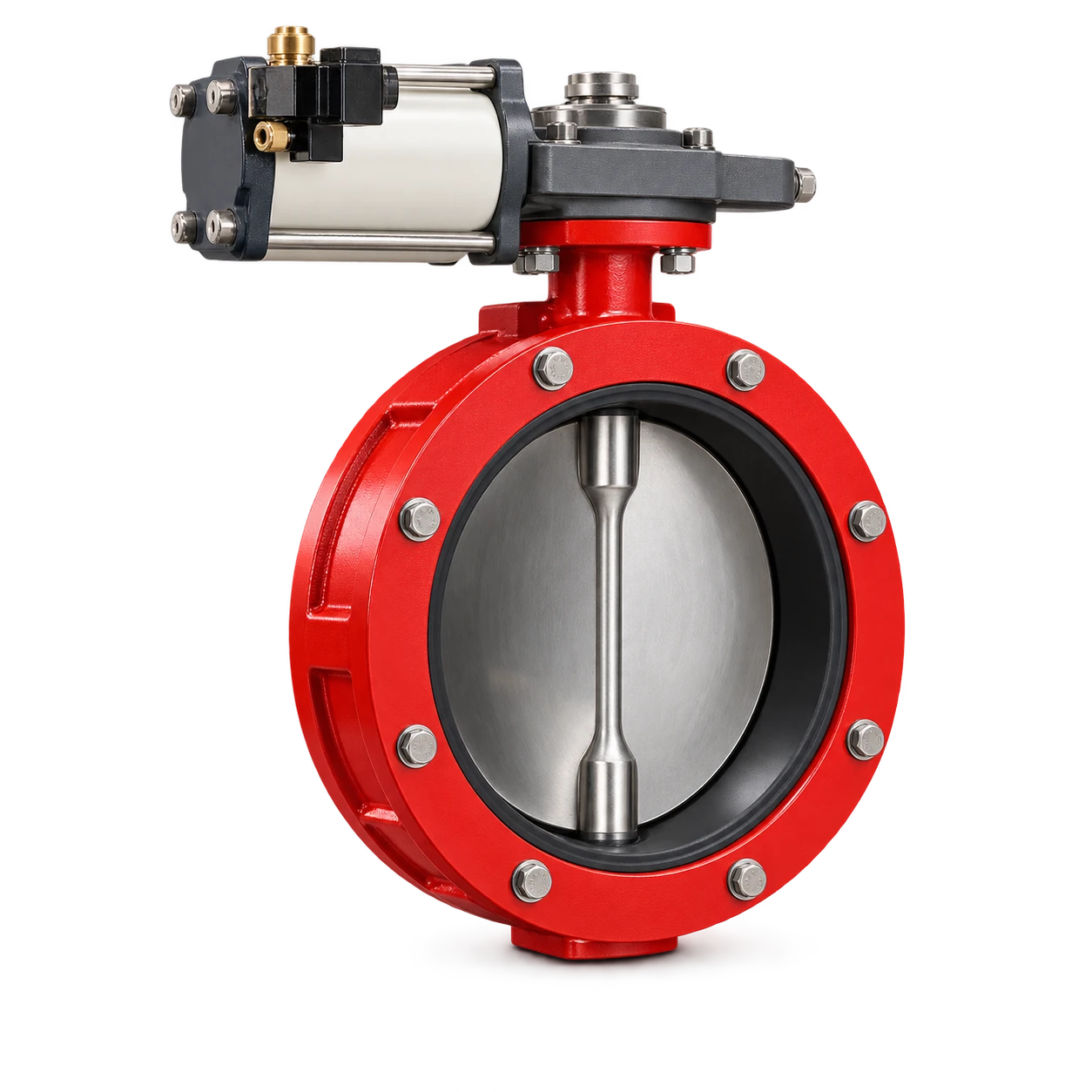
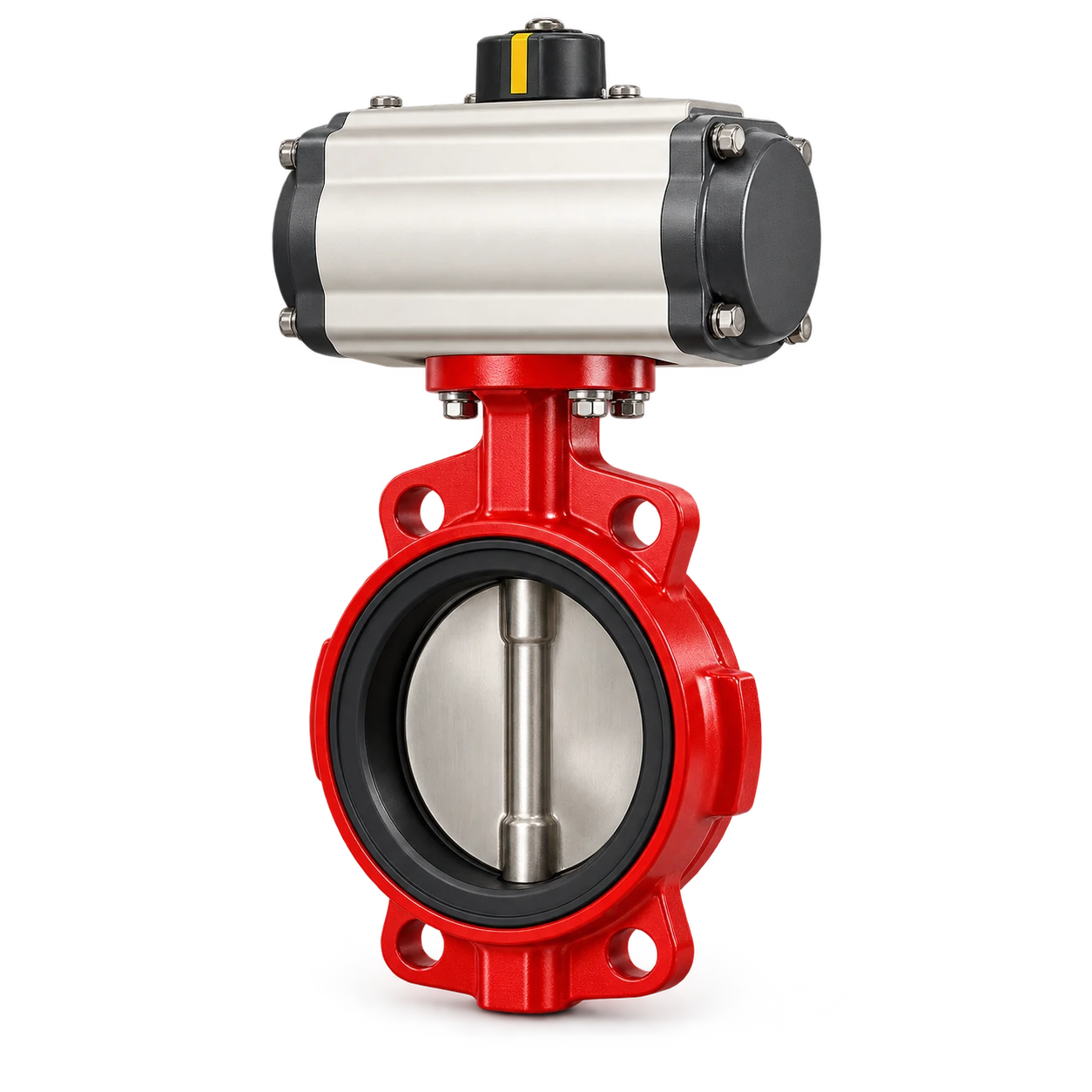
The VOGO water butterfly valve is listed in DN50–DN200 sizes. Its published dimensions do not identify the seat compound, chemical limits or drinking-water approval. Treat it as a configuration to investigate, not a pre-approved EPDM or NBR valve for the application.
Butterfly valve seat material selection starts with exposure
Write a contact schedule before asking for a seat recommendation. Record the fluid name, concentration, temperature, duration and frequency for operation, flushing, cleaning and shutdown. Add the possibility of oil ingress or an incorrectly diluted cleaning chemical. “Water line” omits most of this information.
Use the same schedule for all bidders. A supplier answering only for clean cold water has not answered a duty that includes hot detergent cleaning. Likewise, a general compatibility statement for one chemical does not establish suitability for an unidentified mixture.
| Exposure item | Information to provide | Evidence to request |
|---|---|---|
| Normal liquid | Composition and concentration range | Exact compound compatibility statement |
| Cleaning | Chemical, concentration, duration and temperature | Separate confirmation for each cleaning stage |
| Contamination | Likely oil, solvent or process carryover | Permitted exposure or an explicit exclusion |
| Mechanical duty | Differential pressure, cycling and solids | Assembled valve limits and application review |
| Regulated service | Applicable project approval | Evidence identifying the offered configuration |
Use EPDM and NBR as screening categories
Bray’s water-industry engineering guide distinguishes standard EPDM from a proprietary high-temperature EPDM formulation and identifies Buna-N for hydrocarbon service. Its listed ratings belong to Bray configurations, not to every seat with the same polymer initials.
Material suppliers make a similar distinction. Trelleborg describes EPDM properties for water, weathering and different formulated grades. Its NBR description emphasizes oil resistance but also identifies chemical limitations. Those pages concern rubber sheeting; they are not valve approvals.
The engineering use of these references is to form questions, not to copy temperature ranges. Ask which compound, cure system and grade is offered and which compatibility evidence applies. If the supplier cannot identify the material beyond “rubber,” the selection is not ready for approval.
Do not presume a more expensive polymer is universally better. An alternative compound can change chemical compatibility, seating behavior and documentation requirements. The relevant comparison is suitability for the whole duty, with a traceable replacement specification.
Separate chemistry from the valve rating
Ask for two distinct confirmations: the compound can tolerate the declared exposure, and the complete valve is rated for the required pressure and temperature. Neither answer replaces the other. Include maximum differential pressure during movement and any required dead-end duty in the supplier review.
Record disc, stem, seat and other wetted materials separately. Selecting a suitable seat does not answer corrosion or coating compatibility elsewhere in the flow path. Where solids or deposits are present, ask how that service changes the offered construction and the agreed inspection plan.
Work through a changed-duty example
Consider a hypothetical cooling-water isolation valve. Its original specification states treated water, but the operating team later adds an alkaline wash and identifies occasional lubricating-oil carryover. No concentrations or exposure temperatures have yet been confirmed.
The correct outcome is not an immediate EPDM-to-NBR substitution. Mark the chemical review incomplete. Obtain the wash chemical’s actual composition and dilution, determine the credible contamination envelope and ask the valve supplier to assess each candidate compound against both exposures.
If neither candidate has adequate evidence, keep the valve unapproved while a different configuration is evaluated. Do not dilute the specification by declaring the cleaning stage “occasional.” A short exposure still belongs in the review. This scenario illustrates a decision method; it is not a VOGO application case.
Record the decision in a short matrix: exposure, candidate compound, supporting document, restriction and disposition. Use “accepted,” “rejected” or “awaiting evidence.” A blank cell must not be treated as an acceptance.
Recheck actuation and replacement compatibility
After a material change, obtain the torque requirement for the actual valve and service. The butterfly valve actuator torque guide explains the separate breakaway, running and seating checks. This article does not repeat that sizing method; it identifies the point at which the prior selection needs review.
A replacement seat should be specified by the approved part and compound, not only by nominal diameter. Ask the supplier to confirm geometry, retention, mating surfaces and installation instructions. A generic ring with the right size label is not evidence of interchangeability.
Before removal, establish safe isolation, depressurization, drainage and control of actuator energy. HSE’s maintenance guidance covers isolation of pressurized plant and release of stored energy. Follow the applicable site procedure; closing the same valve being serviced cannot be its own proven isolation boundary.
Put the approval into the purchase record
Request the exact valve configuration, seat material designation, application limits, replacement identification and supplier exceptions in the order documents. If drinking-water service applies, specify the required approval and verify evidence for the offered assembly rather than accepting a material-family label.
Define the contract’s leakage test method and acceptance condition separately. Chemical suitability does not establish a universal “zero leakage” promise or a service-life guarantee. Record the process conditions under which testing occurs and how a later fluid change triggers reassessment.
At delivery, check identification against the approved return sheet. Keep the material record available to maintenance so an urgent replacement does not silently change the compound. If the site cannot trace the installed seat, record the uncertainty and obtain supplier advice before extending the service envelope.
Conclusion
Butterfly valve seat material selection is complete only when exposure, exact compound and assembled-valve limits are documented together. Use EPDM and NBR to screen possibilities, resolve missing chemistry before ordering, and reopen the review whenever the fluid, cleaning procedure or replacement material changes.