A rotary paddle vs capacitance level switch comparison should start with the material and the required action, not with a technology ranking. Choose the device that reliably distinguishes covered from uncovered conditions across the actual material envelope and can support the specified alarm or interlock response.
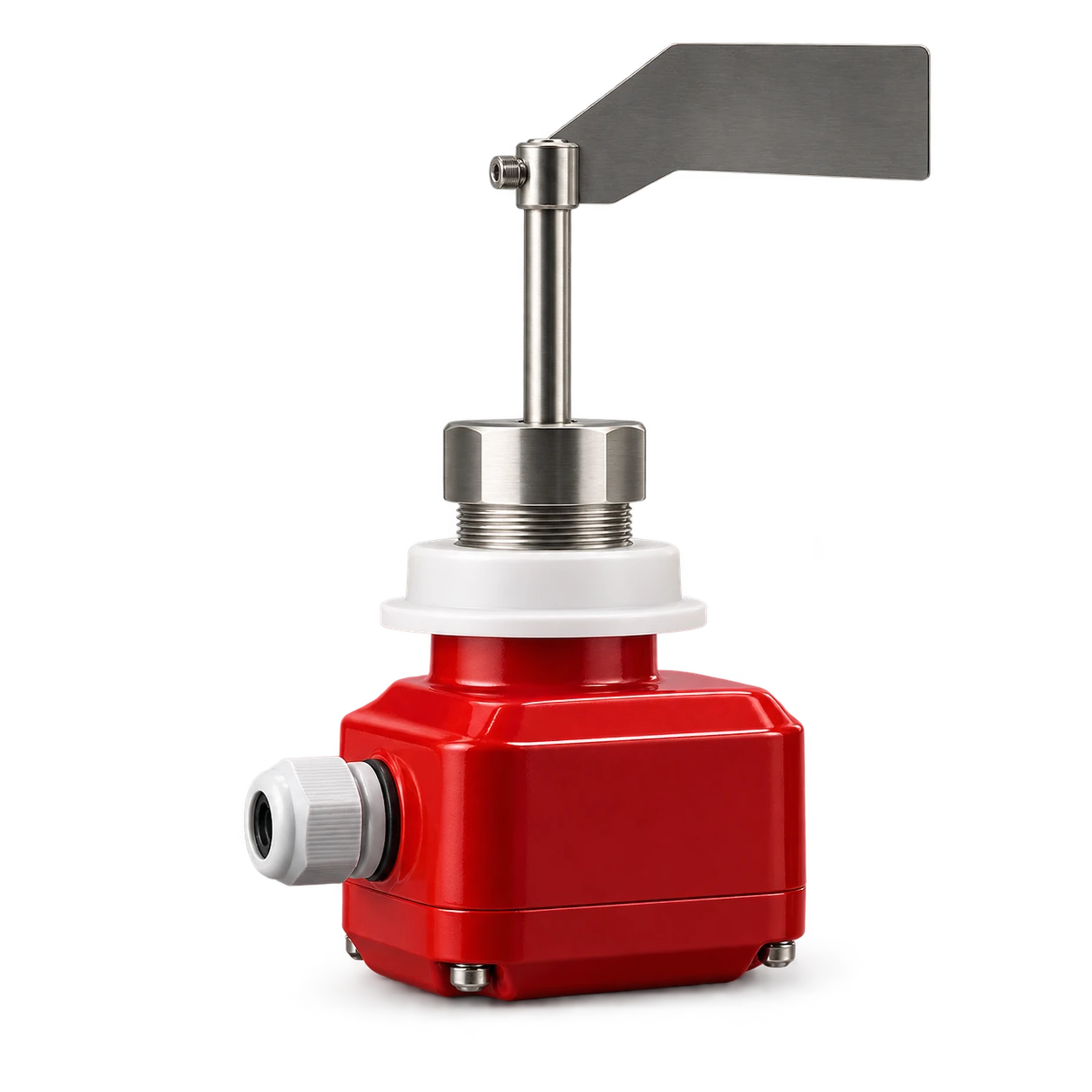
The VOGO rotary paddle level indicator is a point-level product to assess for the project. Its catalog entry does not publish minimum bulk density, buildup tolerance, diagnostic coverage or a certified safety integrity level. Those missing details must be resolved for the offered configuration; another manufacturer’s specification cannot fill the gap.
Rotary paddle vs capacitance level switch: the difference
A paddle responds to material resisting mechanical rotation. Monitor Technologies’ KA/KAX engineering bulletin documents that principle and shows that minimum material density depends on the selected paddle. Its model-specific limits do not establish VOGO capability.
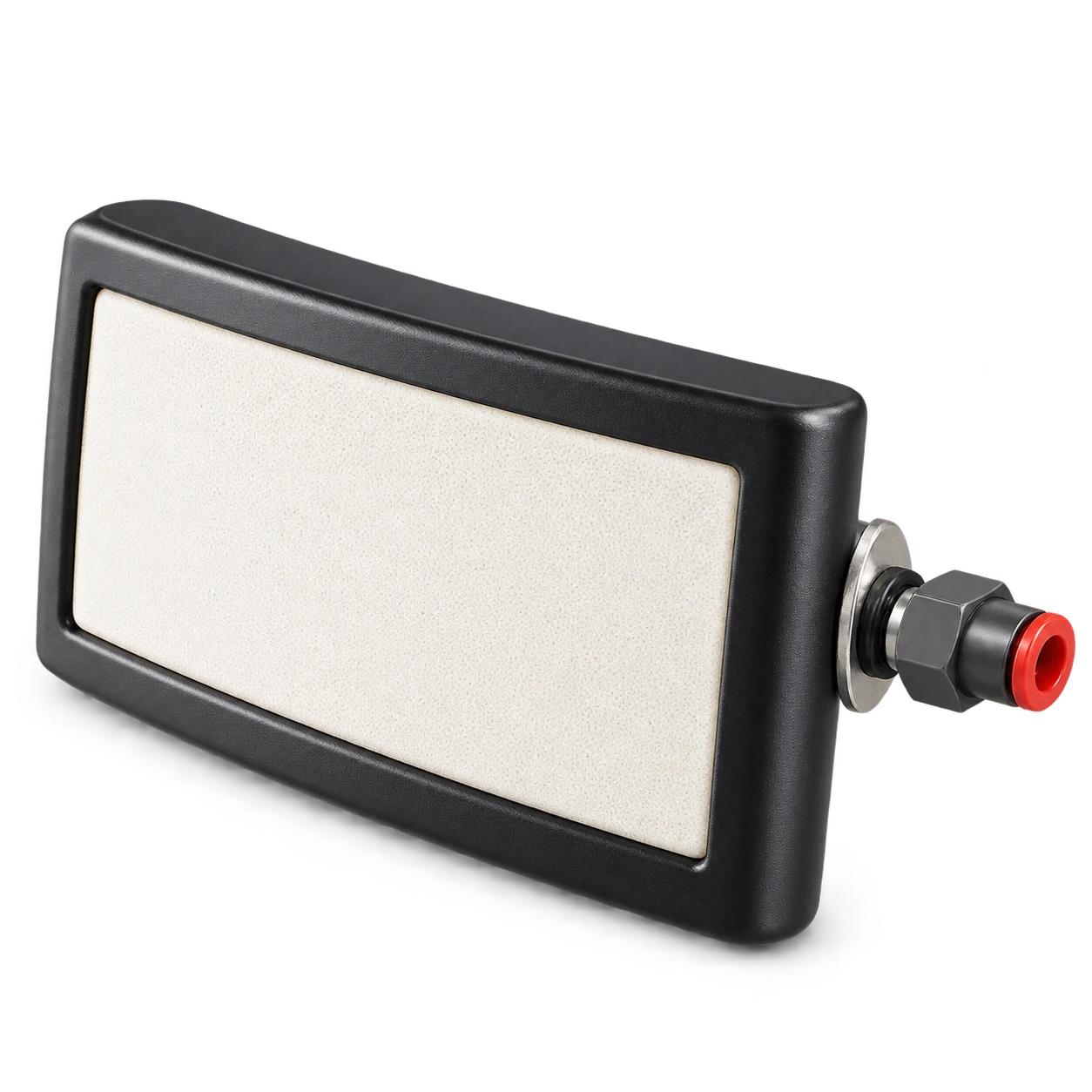
A capacitance switch detects an electrical change at a probe. The BinMaster PROCAP I operating instructions require installed calibration and material verification; they also describe a model-specific probe shield for buildup. Do not generalize that feature to every capacitance device.
Both are point instruments. They indicate material near a sensing location, not a continuous fill profile or total silo mass. Before comparing them, state whether the task is replenishment, low-level warning, high-level alarm or a protective high-high action. Different consequences require different evidence.
Build a material envelope, not a product-name list
Provide representative samples and operating conditions. Record loose and aerated bulk-density ranges, particle size, moisture variation, tendency to adhere or harden, temperature, abrasive behavior and likely mechanical loading. If a powder changes condition after storage, include that aged state rather than testing only newly delivered material.
For paddle candidates, ask whether each relevant material state can create the required resisting action with the proposed paddle and sensitivity arrangement. For capacitance candidates, request evidence that the selected probe and calibration distinguish the required states across material changes.
Neither a successful hand demonstration nor one dry sample resolves the whole duty. A test may need to include covered, drained, coated and refilled conditions. Define those cases before requesting a demonstration so each bidder answers the same question.
| Selection issue | Rotary paddle candidate | Capacitance candidate |
|---|---|---|
| Light or aerated powder | Verify the exact paddle’s detection limit | Verify response with representative material |
| Adhering deposits | Show release after material drains | Demonstrate the offered buildup treatment |
| Changing moisture or recipe | Repeat mechanical response checks | Repeat calibration verification across changes |
| Fill-stream impact | Check shaft, paddle and protection arrangement | Check probe strength and mounting arrangement |
| Protective duty | Document contacts, faults and system response | Document contacts, faults and system response |
Compare failure evidence as well as detection
Ask what the output does for covered, uncovered, supply loss and detectable internal faults. Separate a configurable relay action from a monitored fault output. A high/low selector or the word “fail-safe” is not, by itself, proof of the required complete protective function.
Determine how the PLC distinguishes a process alarm from a broken cable or loss of supply. If it cannot distinguish them, document the resulting response and whether that limitation is acceptable. Do not claim a SIL rating or independent overfill protection without the appropriate device and system evidence.
Apply the matrix to a powder-silo choice
Consider a hypothetical silo receiving one powder grade when dry and another that can leave an adhering layer. The buyer needs a high-level filling stop. No verified material-density limit or installed capacitance trial is available yet.
Keep both candidates open initially. Ask the paddle supplier to demonstrate detection and release with the lowest-density relevant condition and after deposits form. Ask the capacitance supplier to show the uncovered baseline, covered response and behavior after drainage leaves the expected coating.
If the paddle remains mechanically held after discharge, reject that tested arrangement or require a verified correction. If the capacitance probe remains in a covered state after drainage, do the same. Do not accept either candidate merely because an adjustment makes one demonstration pass; the settings must still work across the full material envelope.
Choose only after the recorded outcomes meet the project’s acceptance criteria. If neither does, evaluate another sensing arrangement. This is a proposed selection workflow, not evidence of a VOGO field trial or a universal preference for one technology.
Define installation interfaces without rewriting the manual
Request the exact connection, insertion length, removal clearance and mechanical support requirements. Check the proposed location against falling material, internal obstructions and stagnant zones. A sensor can work on a bench yet monitor an unrepresentative pocket in the vessel.
The rotary paddle installation and testing guide covers mounting and control-loop verification. Use it after selecting an appropriate configuration; this comparison does not replace the model’s installation instructions.
Verify enclosure, process-pressure and hazardous-area suitability separately. An enclosed instrument housing does not make the vessel airtight or pressure rated. Nor does a level alarm replace the silo’s filling-air, venting or pressure-protection system.
Specify a selection acceptance record
Use a return sheet identifying the material samples, tested conditions, sensor model, probe or paddle, settings and observed transitions. Include any delay in the complete chain and the required filling-stop response. The project must define acceptable timing; no generic delay is prescribed here.
Where a demonstration requires servicing or exposure to hazardous movement, plan isolation and stored-energy control. OSHA 1910.147 addresses those hazards; an output contact or stop command is not physical energy isolation. Testing must also respect applicable vessel-access and material-handling procedures.
Keep an approved configuration and change-control trigger in the handover. A new powder grade, different aeration practice or changed cleaning method can invalidate the original evidence. Make those changes visible instead of repeatedly retuning a sensor without a record.
Conclusion
The rotary paddle vs capacitance level switch decision is an evidence comparison: mechanical response versus electrical response under the same material conditions. Select the exact device and mounting arrangement that pass those cases, document fault behavior, and validate the complete control function before relying on it.