
Silo filter media selection starts with the dust and gas conditions, then checks the complete element against the collector. Specify the base material, surface treatment, cleaning method, sealing interface and approved operating envelope together. A matching diameter or a familiar fabric name alone is insufficient for approval.
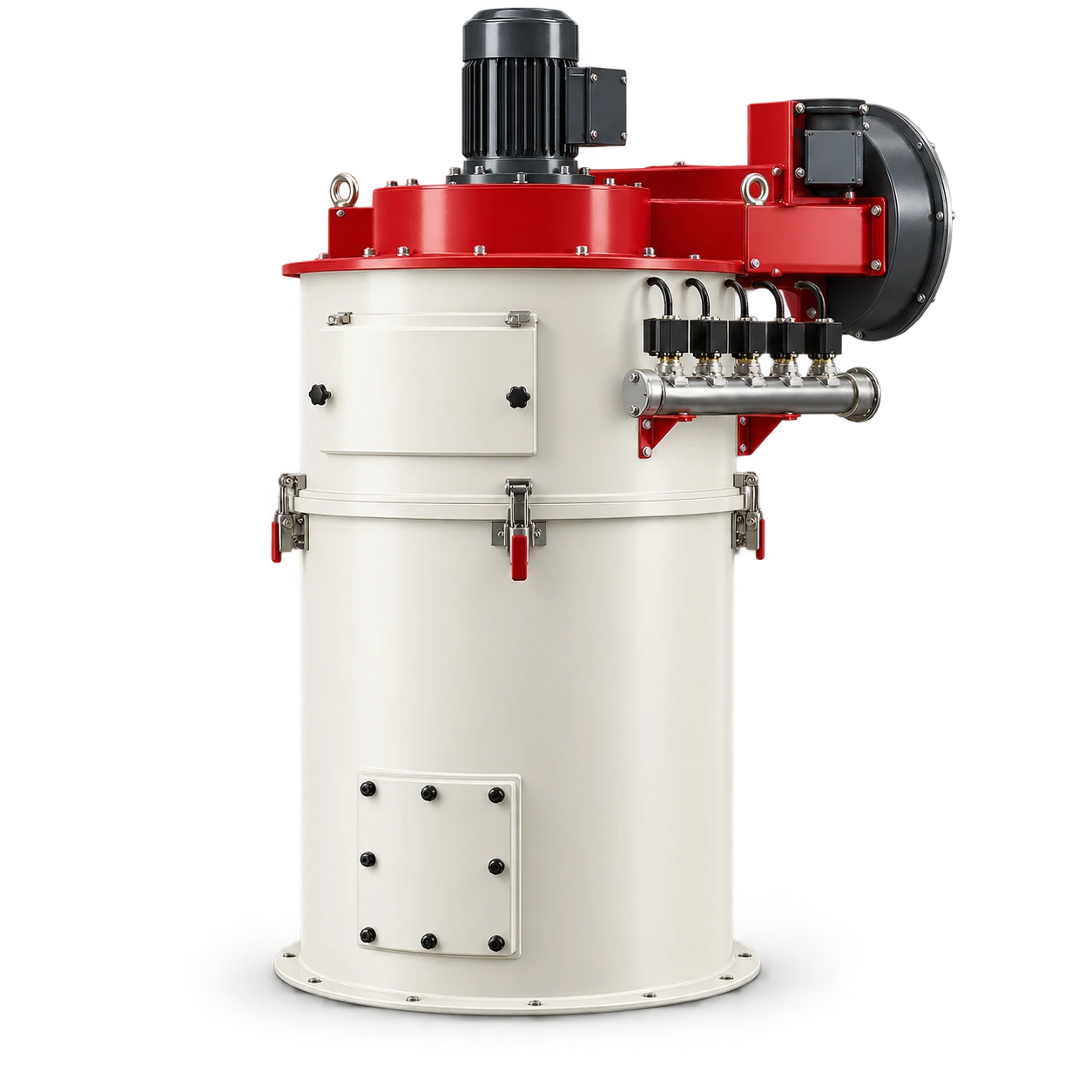
The DC Series Dust Collector has published filter-area, airflow and configuration data. Those catalog entries identify the collector family; they do not establish a particular replacement fabric, membrane, temperature limit or emissions guarantee. Obtain a written, model-specific element approval before ordering.
Silo filter media selection starts with the duty record
Build a duty record before choosing a fabric. Identify the powder and any changing blend, particle-size information, moisture, tendency to cake, abrasive contamination and relevant safety data. Record gas conditions during normal filling, final purge, idle periods and startup. A warm delivery into a cold collector may be a different exposure from steady operation.
Include the cleaning mechanism, available cleaning-air quality, installed element geometry and required outlet performance. Distinguish a measured operating value from a design limit and from an unknown input. If no temperature or humidity history exists, mark the field for measurement rather than using a generic material chart to fill the gap.
The EPA fabric-filter overview describes how accumulated dust affects capture and resistance, and why periodic cleaning is needed. A material specification must therefore consider the dust cake and cleaning duty as well as the clean fabric. A low initial pressure drop is only one part of that decision.
Compare base material, finish and membrane separately
These are layers of a specification, not interchangeable grades. The base material provides the supporting structure. A surface finish changes how the exposed surface behaves. A membrane adds a distinct filtration layer whose compatibility must be checked with the substrate, dust and cleaning method.
Donaldson’s original bag-filter media selector screens for humidity or chemical resistance, sticky and abrasive dust, outlet requirements and static-related needs. Its notes caution that application conditions may change the selection and that free oil can clog an ePTFE membrane. This is screening evidence, not approval of a Donaldson element for a DC collector.
| Specification layer | Evidence to request | Reason to withhold approval |
|---|---|---|
| Base fabric or substrate | Exact material and approved continuous/transient exposure | Only a generic polymer name is supplied |
| Surface finish or membrane | Purpose, compatibility and cleaning restrictions | A claimed upgrade has no stated limits |
| Complete element | Drawing, seal, support, attachment and effective area | Dimensions match but the seal or support differs |
| Collector duty | Airflow, resistance and cleaning basis | Approval assumes a different operating condition |
Use this table as a supplier-return schedule. Ask the supplier to identify exclusions and the evidence needed to close each open item. Do not rank candidates by a universal hierarchy of plain fabric, treated fabric and membrane. Their suitability depends on the actual service.
Check moisture across the operating cycle
Ambient relative humidity alone does not describe condensation at the element. Review the incoming gas, moisture sources and cold surfaces through startup and shutdown. The EPA explains that condensation can blind bags and obstruct airflow. Where acid gases actually occur, their condensation also introduces corrosion concerns; do not assume that cement silo venting has the same chemistry as a kiln exhaust.
As an engineering review, separate rain ingress, wet cleaning air and process-moisture changes from a media-compatibility problem. Ask which observations would distinguish them. Record when deposits appear, whether elements are wet, and whether the problem follows weather, a particular powder or a delivery sequence. Intrusive inspection requires a planned safe shutdown.
Choosing a humidity-resistant material does not remove the need to resolve a source of liquid water. Likewise, fitting a membrane does not establish that a wet dust cake can be cleaned. Require the supplier to address the actual moisture condition in writing instead of accepting a material name as a complete solution.
Work through a cold-start replacement decision
Consider a hypothetical silo that operated acceptably in dry weather but develops persistent deposits after a colder, damp period. The proposed change is a membrane element of similar external size. No failure rate, service life or pressure-drop improvement is assumed in this example.
First preserve the existing part identification and operating record. Check for water ingress, the cleaning-air supply and changes in powder or filling practice. If liquid water is entering, correct and verify that condition before treating a different medium as the remedy. The site should decide what measurements can be obtained safely without opening an operating collector.
Next send both the normal and cold-start duty to the element supplier. Request confirmation of substrate, membrane, seals, supports, cleaning compatibility and installed fit. A technically useful answer may be a conditional approval with specific unresolved inputs. An unqualified statement that the membrane is “better” is not an acceptance basis.
Finally define a comparable trial with the same material and filling conditions. Observe resistance trends, cleaning response and outlet evidence required by the project. Stop and investigate abnormal silo pressure or emissions under the site procedure. The trial validates the agreed duty; it cannot establish performance under every powder or season.
Write acceptance and maintenance into the order
The purchase record should identify the collector model, existing element reference, drawing revision, supplied quantity, material construction, seal details and approved duty. Include supplier exclusions, installation instructions, traceability and the evidence used to accept the installed assembly. Keep replacement access and disposal in the planning record.
For work at the silo top, plan access, dust exposure controls and isolation of electrical, pneumatic and material hazards. The HSE maintenance guidance calls for competent people, planned work and control of unexpected movement and stored energy. A stopped fan alone does not establish a safe filter-change condition.
Can the existing filtration area be retained?
Only after checking effective installed area, airflow, cleaning and resistance for the new element. Geometry or membrane changes can invalidate an earlier basis. Use the silo dust collector sizing guide for the airflow and venting review; this media decision does not replace it.
Does selected media prove safe silo operation?
No. Normal venting, filling controls, overfill protection and pressure relief remain separate system functions. “Enclosed” does not mean airtight or pressure-rated. Material-specific combustible-dust or static risks require a separate competent assessment; a conductive fabric label alone is not complete explosion protection or a VOGO certification.
Conclusion
Silo filter media selection is complete when the supplier has approved the whole element for the documented dust, moisture cycle, cleaning system and installation. Keep unresolved conditions visible in the purchase record. That gives the buyer a defensible acceptance decision without inventing a universal fabric, service life or performance promise.