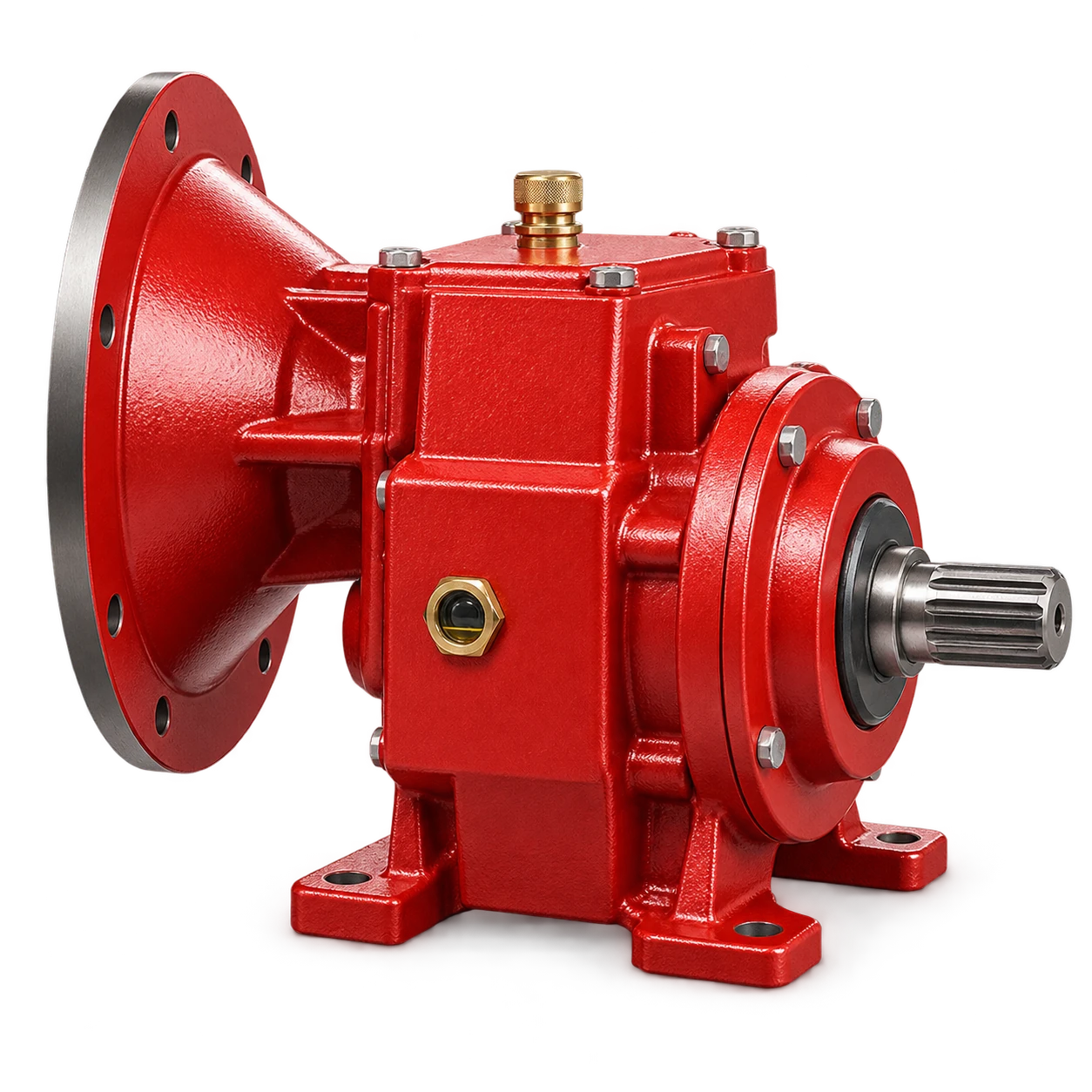
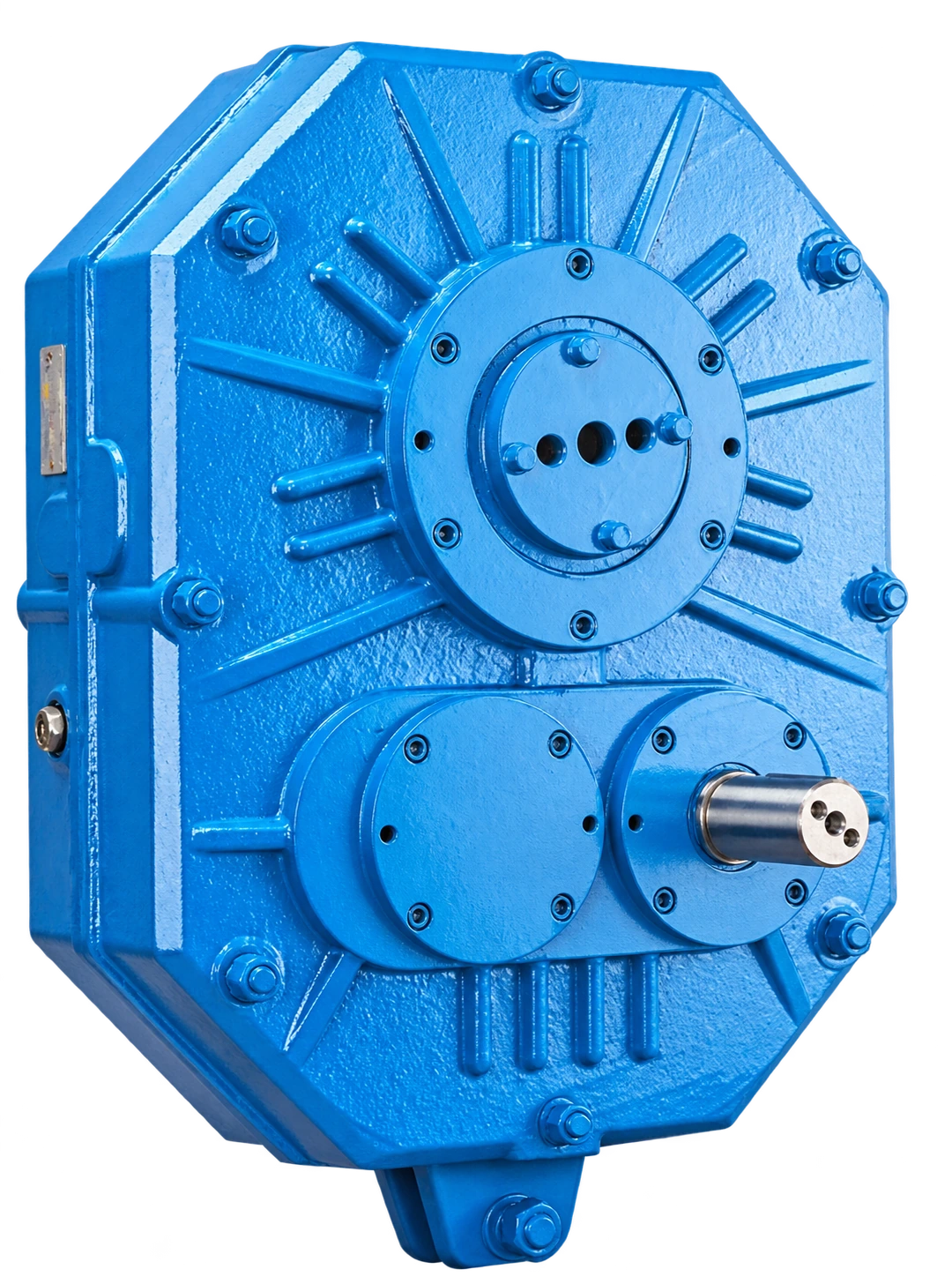
A shaft mounted gearbox quotation should identify the operating duty, the shaft interface and every supplied accessory before prices are compared. Request the supplier’s selected ratio, permissible loads and exclusions against the same input sheet. A matching motor power or hollow-shaft diameter alone does not establish an equivalent offer.
The WS shaft-mounted gearbox product page provides the VOGO product starting point. Its published model and selection information does not establish the contents of a particular quotation. Motor, transmission accessories, mounting parts and protective equipment need an explicit commercial and technical allocation.
Start a shaft mounted gearbox quotation with the duty
Describe the driven machine and its load, rather than sending only an old gearbox photograph. State the required output speed range, available input speed, operating hours, starts, reversals and loaded restarts. Identify whether the drive runs continuously, intermittently or through a defined cycle. Include the ambient conditions and any speed-control arrangement.
Record normal demand separately from occasional overloads. Ask the supplier to state which load case governs the proposed size and how the duty factor has been applied. Do not silently apply an additional factor to an already factored load. A comparison sheet should show the original load, the allowance and the resulting selection requirement in separate fields.
NORD’s B1000 operating instructions, edition en-4419, identify output torque, speed, ratio, installation orientation and lubricant information as distinct nameplate items. This archived engineering reference illustrates why a single power value cannot describe a complete drive. It is not a WS selection approval or a substitute for the offered unit’s current documentation.
Check the shaft basis before comparing torque
Use power and speed measured or specified at the same shaft. For steady rotation, the unit conversion is T = 9550 × P / n, where T is torque in N·m, P is delivered shaft power in kW and n is speed in rpm. The rounded coefficient comes from the relationship between rotational power and angular velocity.
Hypothetical comparison: assume the application needs 7.5 kW delivered at the gearbox output. At 30 rpm, calculated running torque is 9550 × 7.5 / 30 = 2387.5 N·m, approximately 2388 N·m. At 60 rpm, the same delivered power corresponds to 1193.75 N·m, approximately 1194 N·m. These are example operating points, not WS ratings or recommended application loads.
If 7.5 kW instead describes the motor input, this output calculation is not valid without addressing the transmission boundary and losses. Neither result proves that a reducer can start a loaded machine, withstand a jam, hold a reversing load or dissipate heat over the stated duty. Those checks need separate supplier returns.
SEW-EURODRIVE’s brake project-planning terminology distinguishes maximum, peak and emergency-stop output torques and defines radial-force reference locations. Its numerical factors belong to the documented SEW system. The purchasing lesson is to ask which torque and shaft position a quoted limit describes, not to transfer those factors to WS.
Make the scope return comparable
Send a revision-controlled shaft drawing with diameter, tolerance, keyway or locking interface, engagement length and available mounting space. Identify the mounting orientation and the direction convention. Where an existing installation must be reused, mark which measured dimensions remain unverified; a photograph does not confirm a fit tolerance.
| Quotation item | Buyer input | Required supplier return |
|---|---|---|
| Reducer duty | Speed, running load and overload cases | Selected size, ratio, limits and selection basis |
| Driven shaft | Drawing revision and measured interface | Approved fit and attachment arrangement |
| Input transmission | Motor and proposed transmission boundary | Supplied motor, pulleys, belts or coupling; exclusions |
| Reaction support | Available structure and space | Torque arm, bracket and responsibility for structure |
| Lubrication | Orientation, ambient and duty | Approved arrangement, initial fill and instructions |
| Protection | Rotation, access and reverse-load hazards | Guards, backstop or brake scope and limitations |
Separate accessories from unassigned interfaces
Require an included, optional, buyer-supplied or excluded status for each line. A torque arm listed as included does not establish that its structural anchor is designed or supplied. A motor in the price does not necessarily include its electrical connection, starter, control logic or site commissioning. Record who closes each interface and which drawing or document defines completion.
For inclined equipment, describe the reverse-load hazard and request a documented holding arrangement if the risk assessment requires one. The shaft-mounted gearbox backstop selection guide addresses that separate decision. Do not accept a backstop option as proof of personnel protection or as an instruction to release a loaded drive.
Ask for access and maintenance information before finalizing the package. OSHA’s hazardous-energy guidance explains that servicing can expose workers to several forms of stored energy. Translate that into a clearly assigned isolation and restraint review for the installed machine. A normal stop command does not establish isolation, and adding a guard to the quotation does not complete the machine risk assessment.
Compare commercial terms after technical exceptions
First mark each unresolved technical return as accepted, rejected or awaiting clarification. Then normalize currency, quantity, delivery destination, freight, taxes, unloading, installation, training, initial spares and documentation. Ask for validity, lead-time assumptions, warranty exclusions and acceptance responsibilities. There is no defensible universal gearbox price without those boundaries.
A useful comparison has a base price and separately identified scope additions; unknown items remain unknown rather than being assigned invented costs. If a supplier offers an alternative size or attachment, require a revised technical return. A cheaper reducer that changes the shaft, support or protective arrangement may change work elsewhere in the plant.
Conclusion
Approve a shaft mounted gearbox quotation against an agreed duty sheet, shaft drawing and completed scope matrix. Resolve load-basis and ownership questions before ranking prices, and retain the supplier’s written exceptions with the purchase record. The order should identify what will arrive and what still needs engineering approval.