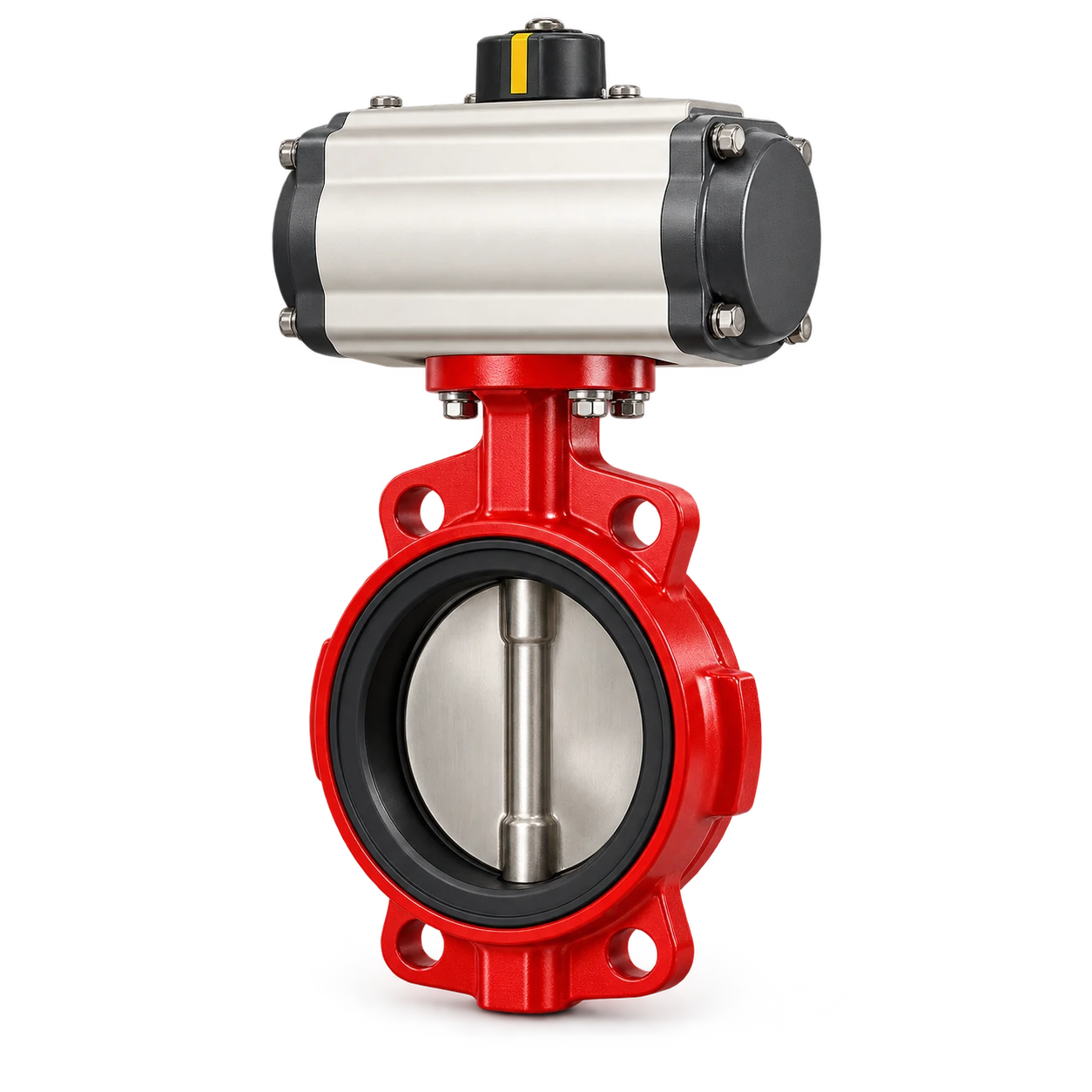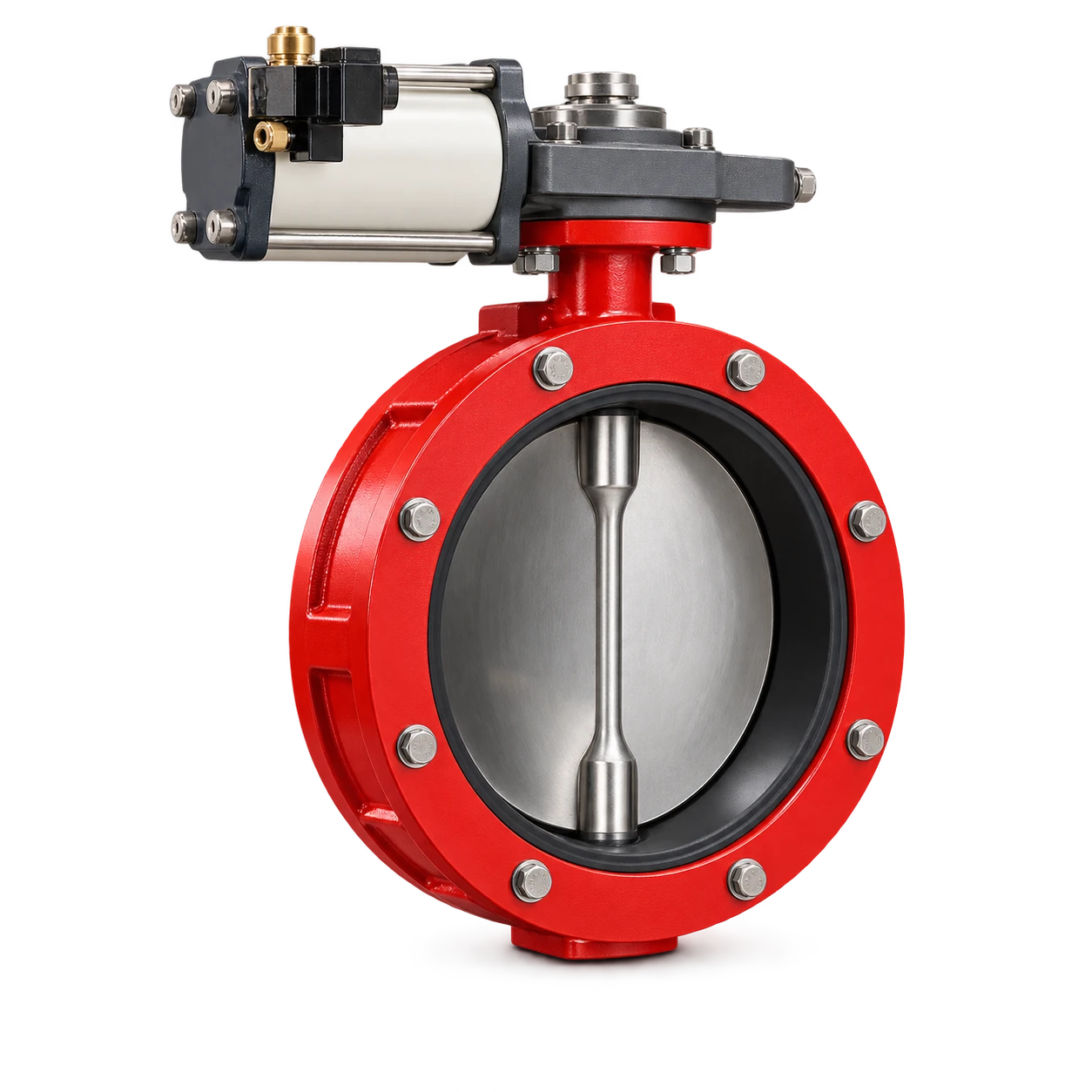
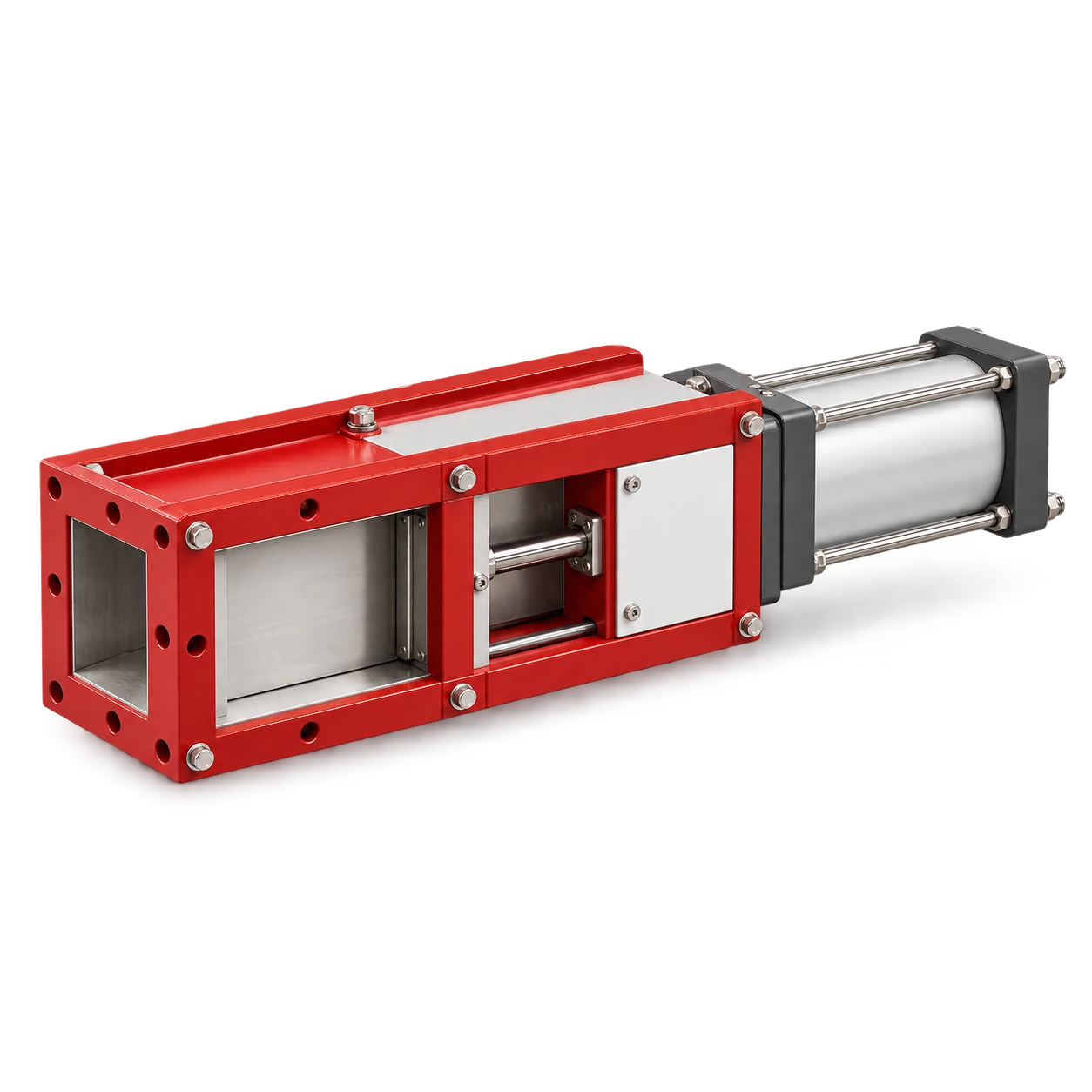
For slide gate valve leakage in dry bulk service, first locate the path and verify actual blade travel. Material passing downstream, dust escaping outside and a misleading closed-position signal are different faults. Replacing seals before separating them can leave the original problem in place.
The SG slide gate valve range has catalog connection sizes from 200 to 800 mm. VOGO does not publish a universal leakage allowance, pressure rating or loaded-closing capability for that range. Diagnose the delivered configuration against its approved duty and instructions rather than infer these limits from the size designation.
Slide gate valve leakage: identify what is escaping
Record where the material appears and during which operating state. Is powder passing through the closed opening, leaving the blade slot, escaping a flange or arriving from material already downstream? Note whether it begins during closure, after a hold period or when aeration starts.
A falling tail of material after closure is not automatically leakage across the blade. Observe the approved process sequence from a safe position and distinguish material already in the downstream chute. Do not disconnect a connection or reach into the passage to find the source while equipment is live.
Capture the material, moisture, head condition, command, feedback and time. These observations establish the fault case. They also prevent a repair trial on an empty gate from being mistaken for proof under the condition that originally caused leakage.
Establish safe access before intrusive checks
OSHA 1910.147 addresses unexpected energization and stored-energy release during servicing. Apply the site’s appropriate energy-control procedure to the actual installation, including electrical or pneumatic actuation and gravitational material release. A close command is not isolation.
Identify upstream filling, flow aids and connected downstream machinery. Establish an approved means of securing the material inventory and preventing renewed supply. The gate under investigation cannot be assumed to provide its own reliable personnel-protection barrier.
HSE maintenance guidance also requires competent work, safe access and release of stored energy. Internal inspection belongs after isolation has been established and verified by the responsible people. This article does not authorize vessel entry or a particular isolation arrangement.
Use the symptom to select the next check
WAMGROUP’s original VL operation and maintenance manual links leakage to incomplete opening/closing behavior and identifies blockage, material load, air supply and drive issues in its troubleshooting table. That is useful fault classification; its pressures, tolerances and modifications apply to WAM VL equipment, not SG valves.
| Observation | Candidate explanation | Next approved check |
|---|---|---|
| Closed signal but material continues | Feedback does not represent full blade travel | Compare actual travel with the approved endpoint |
| Travel stops before the endpoint | Obstruction, load or drive limitation | Review empty versus approved loaded behavior |
| Full travel with internal passage | Deposit, damage or unsuitable sealing duty | Inspect contact surfaces after isolation |
| Dust at the blade slot or flange | External containment problem | Locate the exact joint and process condition |
| Leakage begins with aeration | Changed pressure or material condition | Review flow-aid sequence and system boundary |
| Fault follows installation work | Frame distortion or altered alignment | Check the installed support and connection arrangement |
These are investigation branches, not proof of a cause. More than one can apply. Keep each rejected explanation and the evidence that rejected it in the maintenance record.
Verify travel before changing the seals
Compare the command, actuator motion, blade endpoint and feedback as separate events. A switch can indicate closure even when its bracket or setting is wrong. Confirm the approved reference point without using the control indication as its own evidence.
If a gate reaches its endpoint empty but stops short with material, do not immediately increase pneumatic pressure or motor torque. First determine whether that loaded-closing condition is permitted, then review material buildup, head and the actual available drive capability with the supplier.
If it fails even when empty and safely testable, inspect the approved travel path, alignment and connection loads after isolation. Do not hammer the blade, remove a guard for powered cycling or alter the stop to conceal the symptom. Any adjustment must remain within the delivered instructions.
Inspect the sealing path without inventing a clearance
Once access is safe, document deposits, blade condition, guides, seals and the surrounding frame. Compare damaged areas with the supplier’s drawing and replacement criteria. A photograph or measured trend can support a decision; a generic clearance from a different valve cannot.
Separate an external gasket repair from internal shutoff work. Repairing a leaking flange does not establish that the blade stops powder, and reaching full travel does not establish pressure containment. An enclosed valve body is not automatically airtight or pressure rated.
The bulk-solids slide gate selection guide defines the original material and sealing duty. Use that record when judging whether the installed service changed. This article diagnoses a fault; it does not substitute a new valve-sizing method.
Test the repair against the original fault condition
Consider a hypothetical gate that closes empty but leaks after aeration begins. A seal replacement followed only by an empty test does not resolve the observed fault. The release plan must also address the approved material and aeration condition, without exceeding the equipment’s confirmed duty.
Agree the test sequence, duration, observation points and allowable result with the responsible engineer and supplier. Record travel, feedback, operating utilities, material condition and leakage path. If the original condition is not safely reproducible, state that limitation instead of marking the repair fully verified.
When a screw below a hopper remains flood loaded, it is performing screw-feeder duty. Keep head load, loaded restart, material flowability and upstream isolation in the system review. The gate does not by itself solve bridging or authorize a higher feeder starting load.
Conclusion
Slide gate valve leakage should lead to a documented fault path: locate the release, isolate safely, verify travel, inspect the relevant sealing surface and test the approved repair against the real condition. Keep internal shutoff, external containment and pressure claims separate, and leave the gate out of service when the release evidence is incomplete.