A reliable UHPC mixing sequence is a validated series of process stages, not a universal number of minutes. Control the materials, moisture and temperature; define dry-blend and liquid-addition stages; wait for the specified matrix transition; add fibers at a controlled rate; and accept the batch using measured fresh properties and project tests. Copying a sequence from another formulation or mixer can change workability, temperature, fiber distribution and plant output.
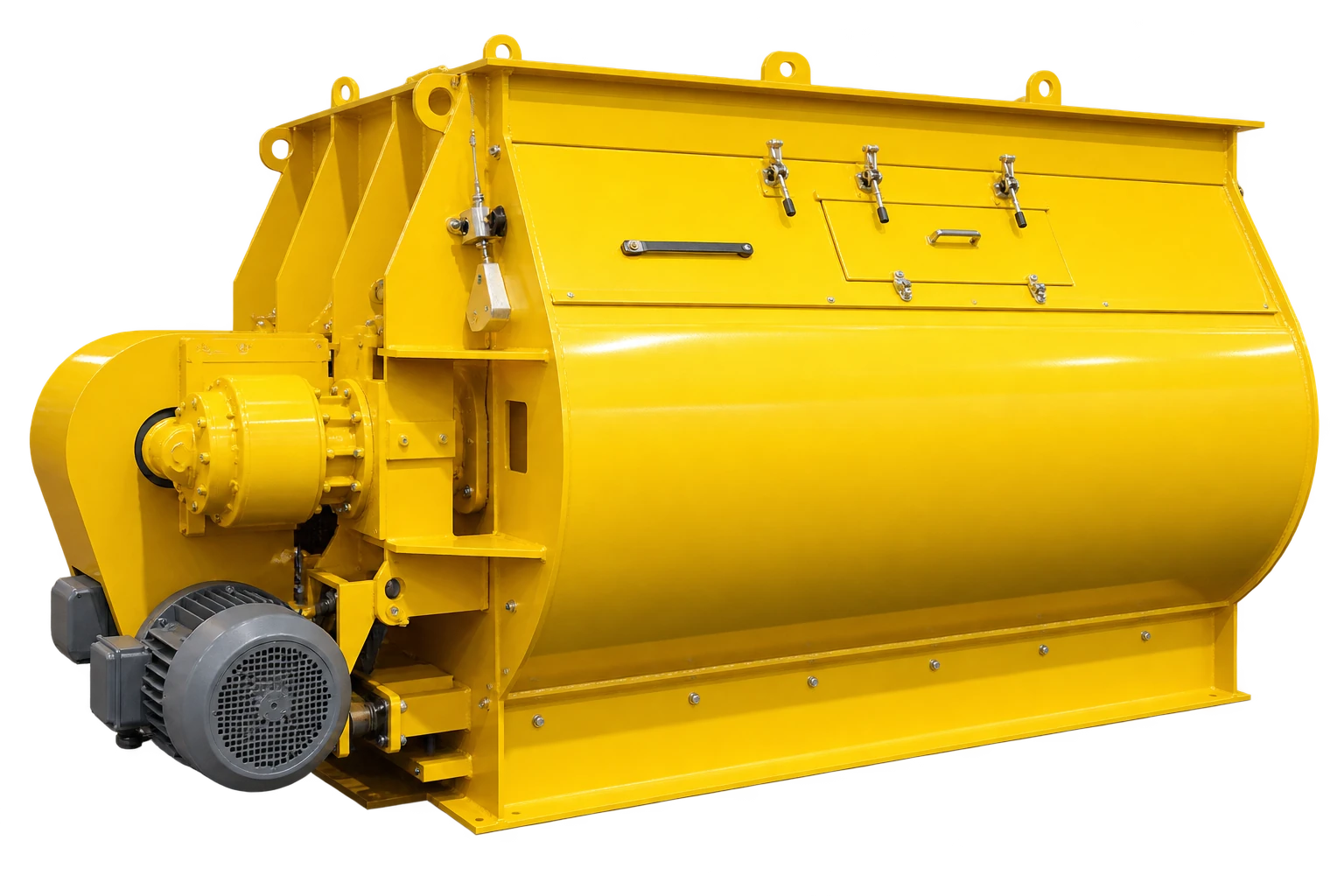
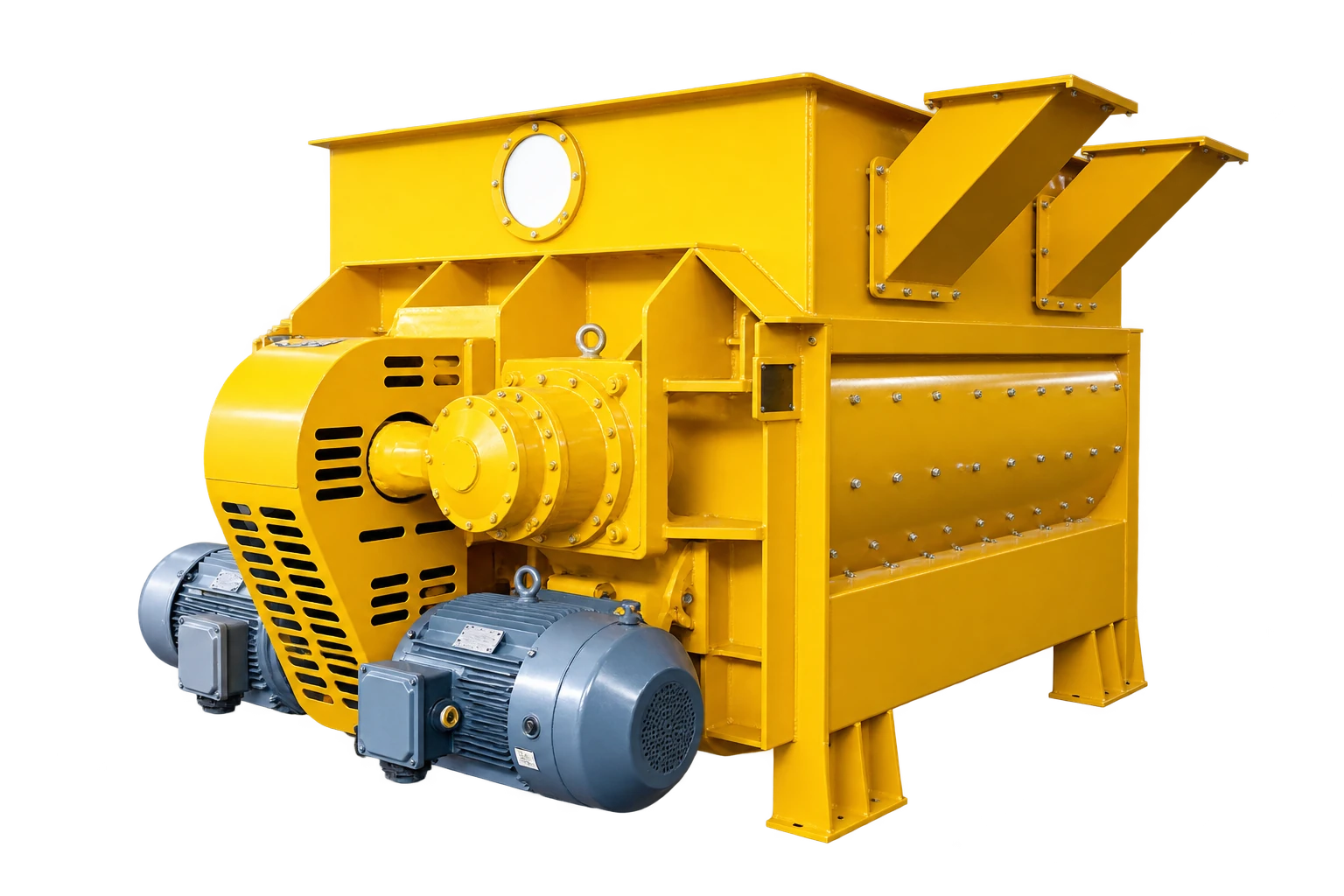
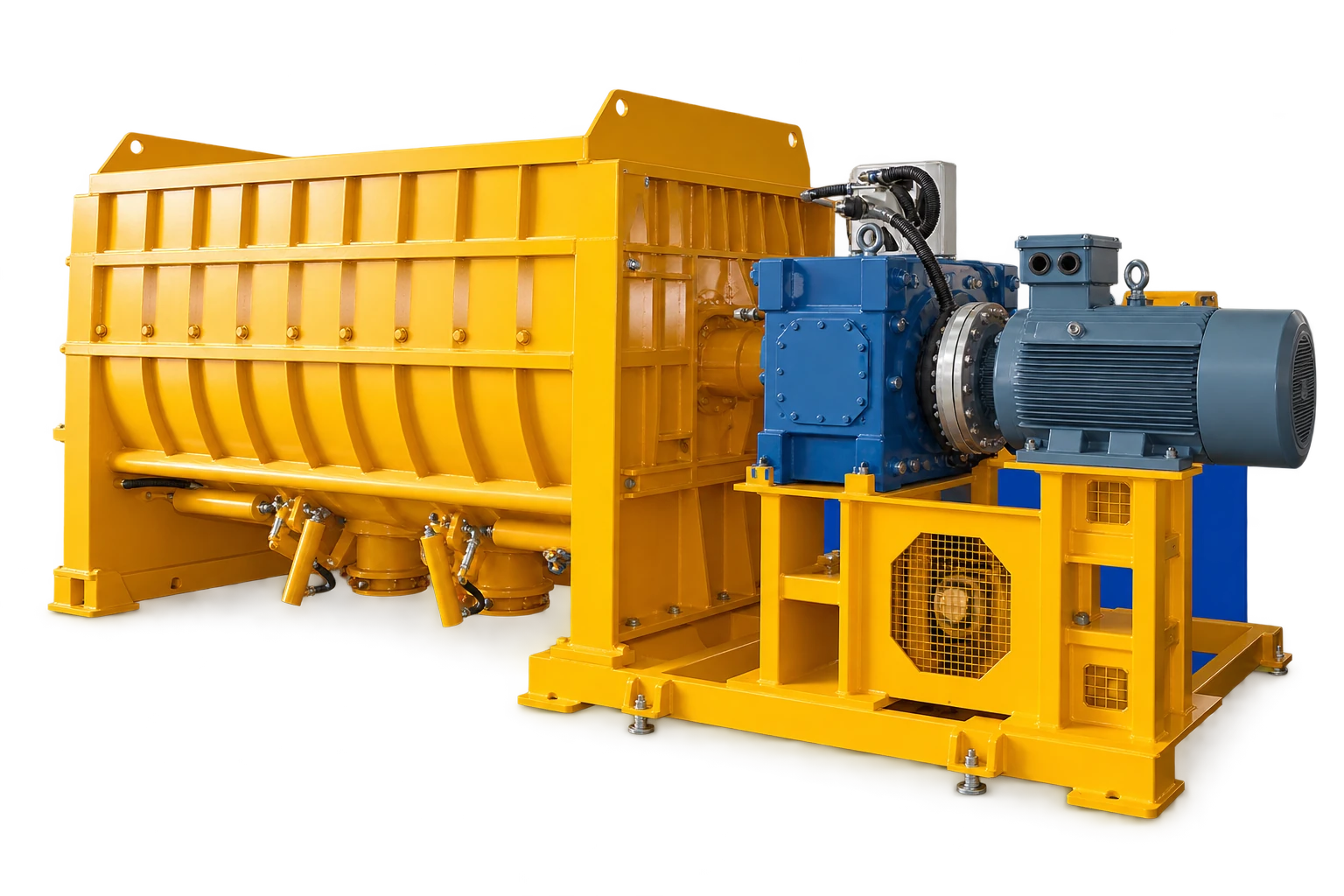
The UHPC High-Performance Concrete Mixer is a 5,000–10,000 L catalog class for UHPC and other high-viscosity formulations. VOGO’s selection basis is batch volume, recipe, working interval and discharge method. Those are procurement inputs, not proof that the nominal class is usable for a particular UHPC formulation. Final working volume, power, sequence and cycle require supplier confirmation and a representative production trial.
Freeze the UHPC mixing sequence inputs
Issue a controlled batch sheet before changing mixer settings. At minimum, record:
| Input | Why it matters |
|---|---|
| Formula revision and constituent lots | Cement, supplementary materials and HRWR compatibility affect the matrix transition |
| Actual moisture and temperature | They change net water, evaporation, consistency and mixing heat |
| Target batch mass and working volume | UHPC may not use the same working volume as conventional concrete |
| Mixer model, tool speed and condition | Mixing energy cannot be transferred by time alone |
| Loading and liquid-addition method | Addition rate and location affect wetting and agglomeration |
| Fiber type, dose and feed rate | Rapid addition can form fiber balls or overload the developing matrix |
| Discharge and placement window | The plant must deliver continuously enough to avoid unintended interfaces |
The FHWA UHPC state-of-the-art report notes that UHPC normally needs longer mixing than conventional concrete and that temperature control or higher-energy mixing can affect the process. Its reported time ranges describe studied systems; they are not VOGO settings and should not be copied into a purchase specification.
Correct aggregate or sand moisture before charging. For a hypothetical recipe using 2,000 kg of sand at 2.0% free moisture, the water arriving with the sand is:
2,000 kg × 0.020 = 40 kg water
If the approved batch water is 300 kg, the controlled water addition would begin from 260 kg, subject to the formulation’s own absorption and moisture definitions. This is a calculation example, not a UHPC recipe or VOGO parameter. A small moisture error matters when the formulation has a low water-to-cementitious-material ratio.
Use process transitions instead of a copied timer
A practical trial procedure divides the batch into observable stages. The exact order remains formulation-specific:
- Verify the clean, dry mixer and weighing system. Residual wash water or previous concrete changes the water balance.
- Charge and distribute dry constituents. Define the order that limits dust loss and prevents one fine powder from coating or agglomerating before the others disperse.
- Add water and HRWR in the approved stages. Record start and finish times, delivery rate and actual mass; do not add unrecorded water to chase workability.
- Develop the matrix. Monitor current or power, appearance and temperature until the approved transition criterion is reached.
- Add fibers gradually. Feed uniformly only after the matrix is ready to separate and wet them; inspect for balls or unincorporated bundles.
- Mix to the validated endpoint and discharge. Use the specified fresh-property and temperature checks, not appearance alone.
The FHWA field-cast UHPC connection guidance states that UHPC specifications commonly define constituent amounts, order and timing, and warns that deviations in water or admixture can harm performance. It also documents the influence of material and water temperature on fresh properties. Use those principles to create project acceptance limits rather than assuming every UHPC should reach the same temperature or flow.
Establish the mixer operating window by trial
Run the first trial below the proposed maximum working volume. Increase only after the data show acceptable motor load, temperature, mixing action and discharge. Record time-resolved evidence rather than one final observation:
- dry-charge start and finish;
- each liquid-addition interval;
- time to matrix transition;
- fiber-addition duration;
- current or power trend at defined stages;
- material temperature before charging and at discharge;
- fresh-property result and test time;
- discharge duration, residue and evidence of fiber clustering.
The FHWA field guidance gives a rule of thumb that UHPC mixer volume can be roughly half the conventional concrete or grout volume for the mixers discussed there. That is a field-planning warning, not a universal capacity factor. A VOGO model must be accepted against the exact formula, tool configuration, allowable drive load and supplier-approved working volume.
The PCI Journal paper on implementing nonproprietary UHPC in a precasting plant found that mixer energy and plant conditions required changes to mixing procedures and used staged trial batches before full plant production. This supports treating scale-up as process translation, not a linear multiplication of laboratory time. The related laboratory-to-production mixer scale-up guide provides a broader checklist for translating batch mass, sequence and evidence between scales.
Define acceptance evidence before production
The trial plan should state which results release the batch and which require investigation. Separate four questions:
| Question | Possible project evidence |
|---|---|
| Was the recipe delivered? | Scale records, moisture correction and admixture totals |
| Was the process followed? | Time stamps, addition sequence, current trend and discharge temperature |
| Is the fresh UHPC acceptable? | Specified flow, visual fiber dispersion, density or air test where applicable |
| Will the material meet its requirement? | Properly sampled, fabricated, cured and tested specimens |
ASTM C1856/C1856M-24 covers fresh-property measurement and specimen fabrication and testing for UHPC within its stated scope. It does not certify a mixer or prescribe a single production sequence for every proprietary or nonproprietary formulation. Use the project specification and current standard edition to define the exact test method, specimen handling and acceptance rules.
Do not treat a satisfactory flow as proof of complete fiber dispersion, and do not treat motor current alone as proof of fresh properties. Combine process evidence with sampling. Where the contract requires strength or tensile performance, preserve traceability from specimens to batch, discharge position and curing history.
Diagnose a batch that misses the endpoint
Stop unapproved adjustments and work through the evidence in order:
- reconcile actual constituent masses and moisture correction;
- check whether water or HRWR was retained in the delivery system;
- compare material temperatures with the validated trial window;
- review dry and liquid addition locations, durations and interruptions;
- inspect the current or power trace for a changed matrix transition;
- check blade condition, buildup and effective working volume;
- inspect fiber feed for clumps, bridging or an excessive addition rate;
- quarantine the batch if project acceptance cannot be demonstrated.
Longer mixing is not an automatic remedy. It can increase temperature and cycle time and may reduce the placement window. Extra water is not a permitted troubleshooting shortcut unless the approved procedure explicitly allows a measured adjustment within a defined range.
The dry mortar homogeneity test guide explains why process sampling, measurement variation and batch repeatability answer different questions. UHPC requires the same evidence discipline, with test methods suited to fresh and hardened UHPC.
Hand over a production-ready batch procedure
The final controlled document should identify the mixer and formula, permitted batch size, charge order, every start/stop event, liquid and fiber feed rates, temperature window, fresh-test method, maximum hold time, discharge method, cleaning boundary and failed-batch disposition. Attach the trial records and supplier-confirmed drive and working-volume limits.
For daily production, trend total cycle time, time to matrix transition, discharge temperature, fresh results and drive load. A gradual shift can identify material, moisture, admixture or equipment changes before a batch falls outside its approved window.
Conclusion
An effective UHPC mixing sequence defines controlled stages and measurable endpoints for one formulation, mixer and plant environment. Freeze moisture and temperature inputs, validate liquid and fiber addition, prove the working volume with representative trials, and connect process records to fresh and hardened tests. For model and interface review, view the UHPC mixer range.