A vacuum mixer specification must describe the material and the result to achieve before it describes a pump. Define the powders, liquids, fibers, viscosity and temperature; the maximum and minimum working batch; the acceptable air content, bulk density or visual-defect endpoint; and the process stage at which vacuum is applied. Then specify absolute pressure, evacuation rate, vapor and dust protection, seals, discharge and a representative trial.
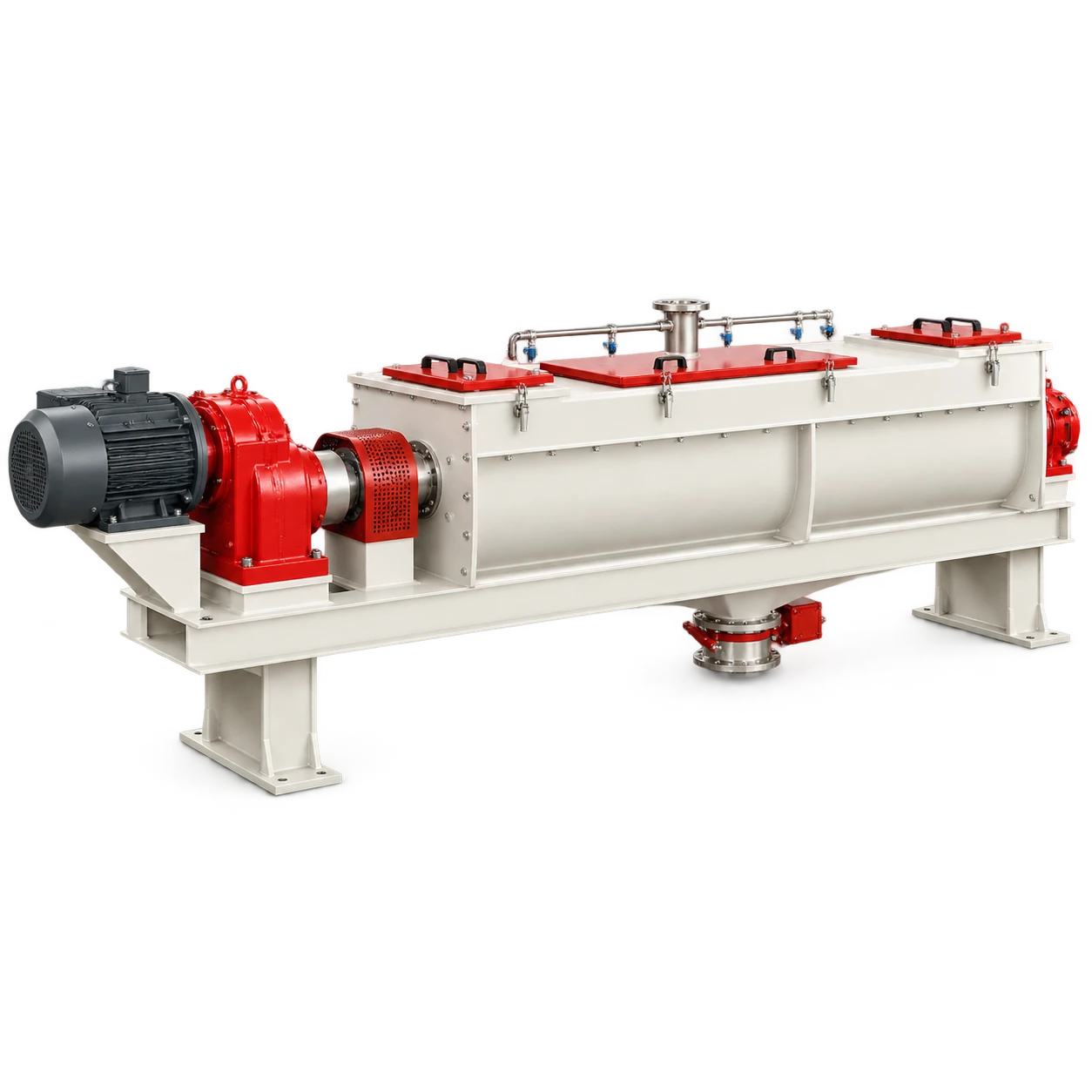
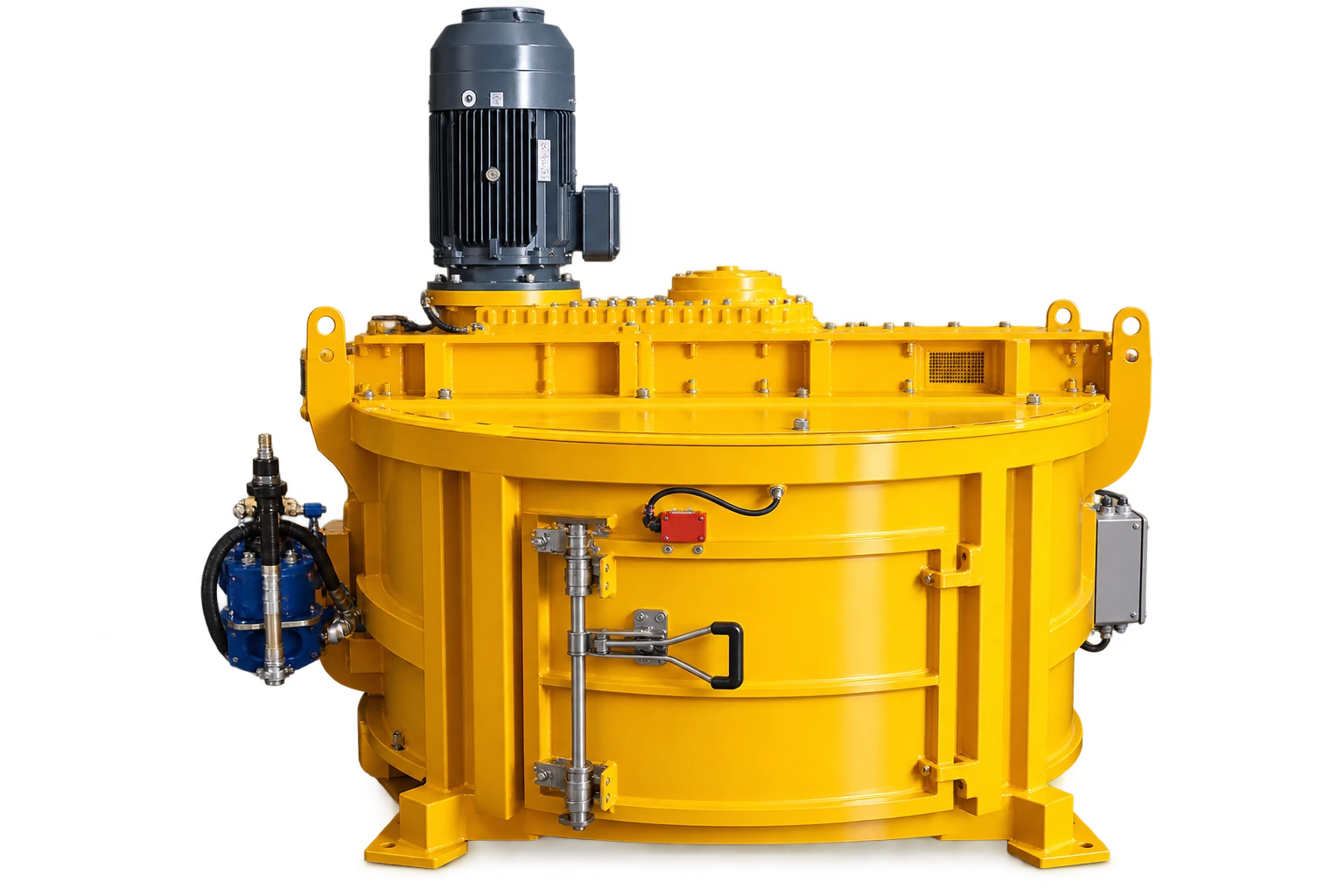
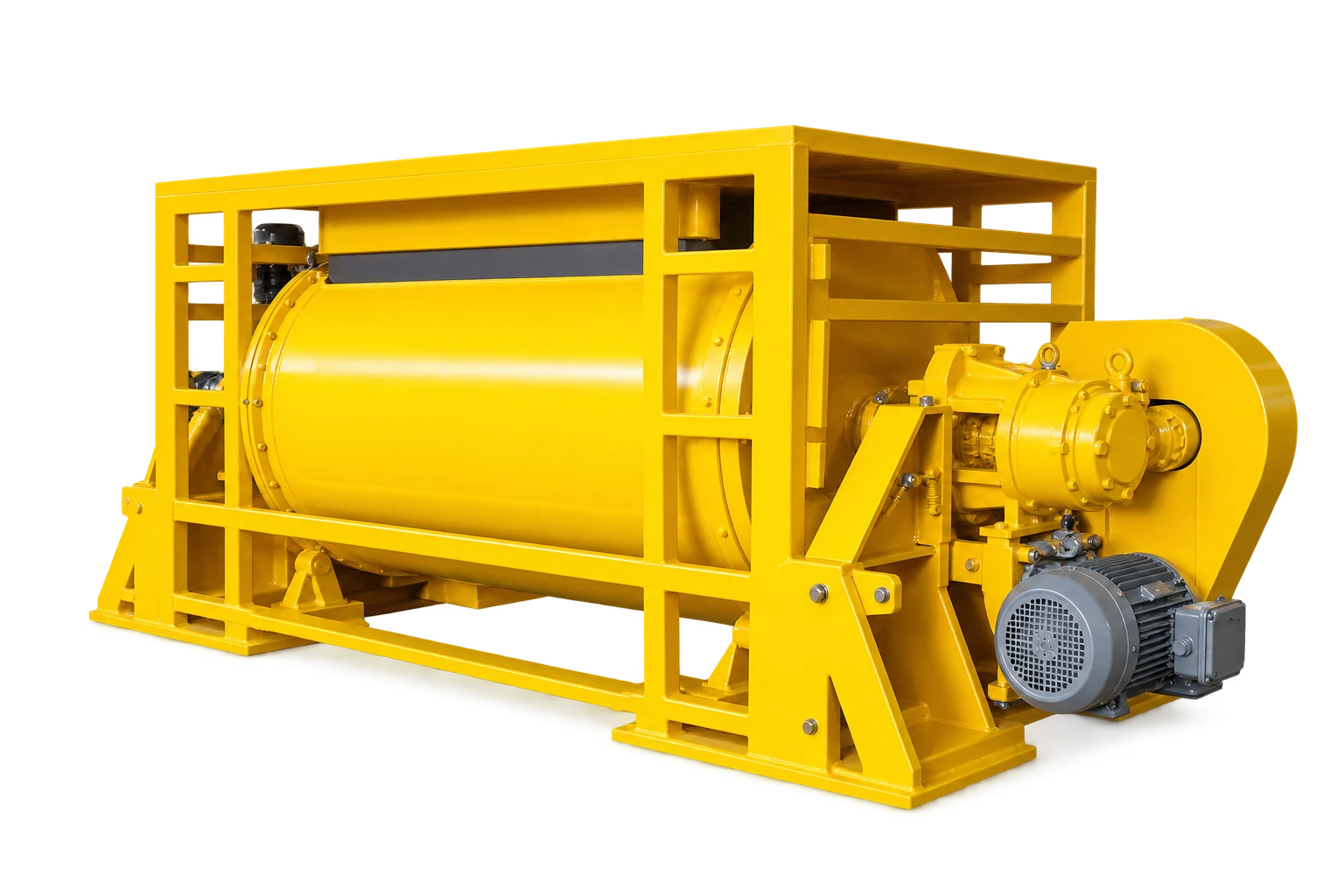
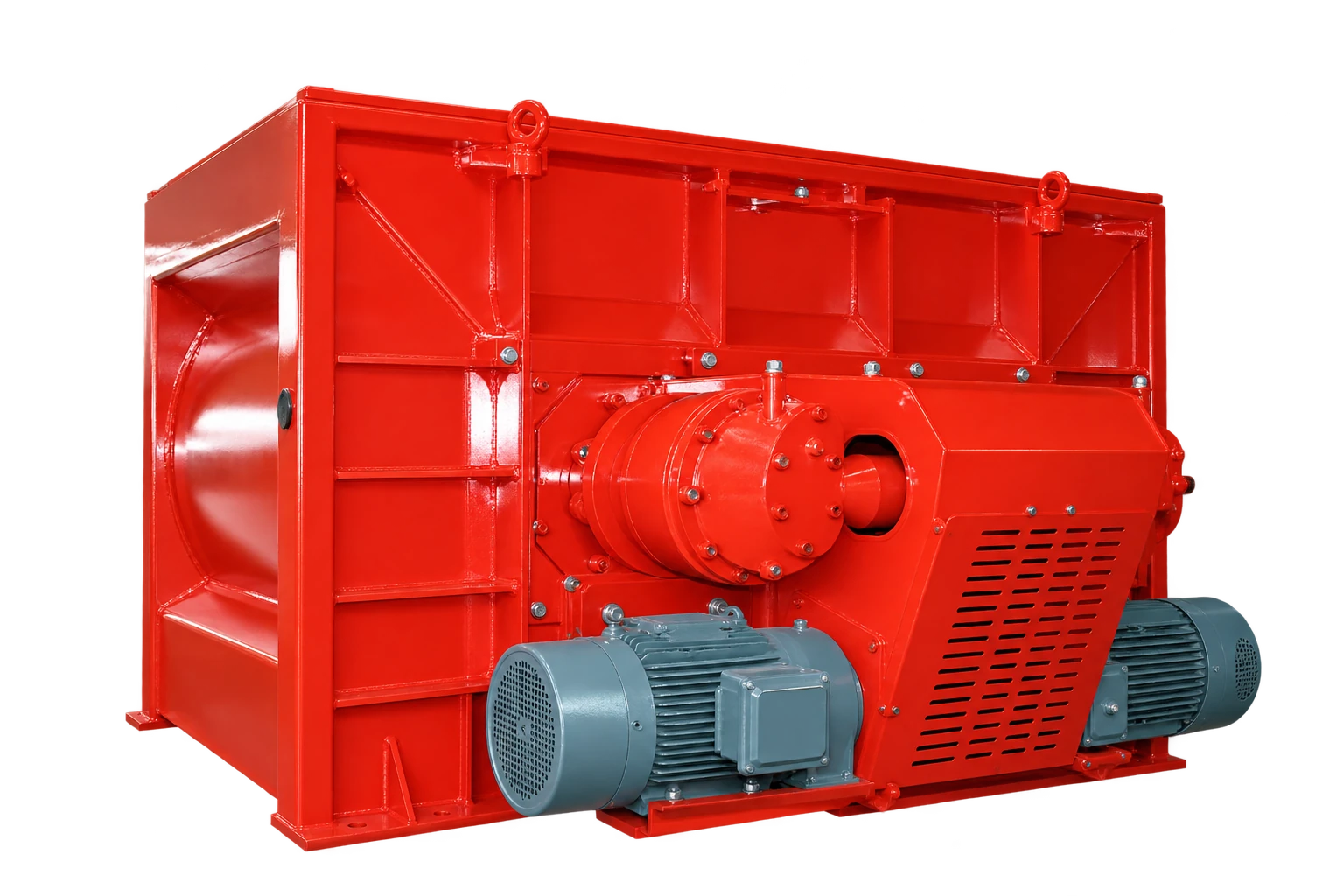
The MMO Building Material Vacuum Mixer is a twin-shaft catalog range with atmospheric and vacuum configurations, published in a 1,000–20,000 kg class. VOGO selects a candidate by batch mass, vacuum requirement and formulation. The catalog does not publish a universal working batch, absolute pressure, leak rate, evacuation time or deaeration result.
Decide why the process needs vacuum
Vacuum is a process tool, not a quality certificate. Possible objectives include removing entrained gas, reducing visible voids, improving wet-out, adding material below the surface or drying at a lower temperature. The Ross vacuum-mixing technical report describes these as possible benefits and emphasizes process optimization; it does not make them automatic for every formulation.
Write one measurable endpoint for each objective. Examples include fresh density, air content by a named method, maximum visible void count, moisture after a defined cycle or filling yield. Record where and when the sample is taken. A density result immediately after mixing may not predict bubbles introduced again during pumping or casting.
Ghent University’s vacuum concrete mixer facility uses both 75 L and 5 L equipment for research on concrete, paste, mortar and powder. That is a useful warning against transferring one laboratory time or pressure directly to a production mixer: geometry, fill, power input, gas path and freeboard change with scale.
Specify pressure without ambiguity
State the target as absolute pressure, or define the reference and units if gauge vacuum is used. Include the allowable pressure ramp, hold time and release rate. Record ambient pressure where it materially affects the conversion.
Gas expands as pressure falls. For a screening example using ideal, isothermal behavior:
P₁V₁ = P₂V₂
If a hypothetical formulation contains 80 L of trapped gas at 1,013 mbar absolute and the chamber reaches 200 mbar absolute, unconstrained gas volume would be:
V₂ = 1,013 × 80 ÷ 200 = 405 L
This 405 L is a hypothetical gas-expansion illustration, not an MMO limit or vessel-sizing result. Real bubbles escape, coalesce or remain trapped; vapors may evolve; temperature changes; and viscous material can foam. Use the calculation to justify freeboard and a controlled pressure ramp, then prove behavior in a trial.
Define the vacuum-system boundary
The mixer RFQ should assign responsibility for:
| Item | Required supplier return |
|---|---|
| Vessel and seals | Design basis, allowable pressure conditions, leak-test method and seal compatibility |
| Vacuum pump | Technology, rated point, evacuation curve and utilities at the declared gas load |
| Off-gas protection | Knockout vessel, condenser or filter; drain and cleaning method |
| Instrumentation | Absolute-pressure range, location, accuracy, alarms and calibration access |
| Controls | Ramp, hold, vent sequence, permissives and response to loss of vacuum |
| Product handling | Charging, freeboard, discharge, residue and cleaning provisions |
“Enclosed” does not mean airtight, vacuum-rated or pressure-rated. Request the applicable vessel design basis and current drawing for the supplied configuration. If the recipe contains volatile, flammable, toxic or reactive components, a project hazard review must determine materials, ventilation, electrical classification and emission controls; do not infer suitability from a product photo.
The HSE HSG258 ventilation guide is relevant where powder charging or off-gas requires capture, but a connection diameter alone does not prove control performance. Define the contaminant, gas flow and commissioning measurements for the complete extraction system.
Match mixing sequence to gas removal
Ask the supplier to return a step-by-step recipe with mixer speed or stage, load, temperature, pressure and time. Vacuum may be applied before, during or after ingredient addition, and each choice changes foaming, volatile loss and wetting. Include minimum and maximum loads because free surface, tool engagement and gas path change with fill.
The RILEM-fib-AFGC study Can Vacuum Mixing Replace Heat Curing in UHPFRC? reported material-specific improvements under reduced pressure, but also concluded that vacuum did not fully replace heat treatment in its tested UHPFRC system. Treat that as evidence that vacuum can influence results—not as a transferable strength guarantee or universal pressure recipe.
The related artificial stone mixer specification provides a complementary procurement boundary for powders, viscous binders, dust capture, discharge and cleaning. Add vacuum only when trials show that the quality or process benefit justifies the additional vessel, pump, filtration and maintenance scope.
Use a trial that can reject the proposal
Run representative material at agreed minimum, normal and maximum batches. For each run, record:
- ingredient masses, temperatures and addition sequence;
- mixer load or current, speed stages and elapsed time;
- absolute pressure versus time and venting behavior;
- foam level, carryover and material captured upstream of the pump;
- discharge mass, residue, cleaning time and rejected material;
- the agreed fresh and finished-product quality endpoints.
Repeat enough batches to separate a stable process from a single favorable result. Acceptance should state the required quality and repeatability, not simply “pump reached vacuum.” Before cleaning or opening the mixer, isolate electrical, mechanical, pneumatic, vacuum and stored gravity energy. OSHA 1910.147 addresses unexpected energization during servicing.
Conclusion
A vacuum mixer specification connects the formulation and quality endpoint to batch range, absolute pressure, gas and vapor load, equipment boundary and a repeatable trial. Define freeboard, off-gas protection, seals, controls, discharge and cleaning before comparing quotations. Use the MMO range as a candidate only after the supplier confirms the vacuum configuration and demonstrates the actual material.