A fly ash conditioning water calculation is a moisture mass balance, not a percentage copied from another plant. First declare whether moisture is on a wet basis or dry basis. Measure the incoming ash moisture and dry-solids flow, convert the target to the same basis, subtract water already present, and then commission the setpoint against dust, handling, transport and destination requirements.
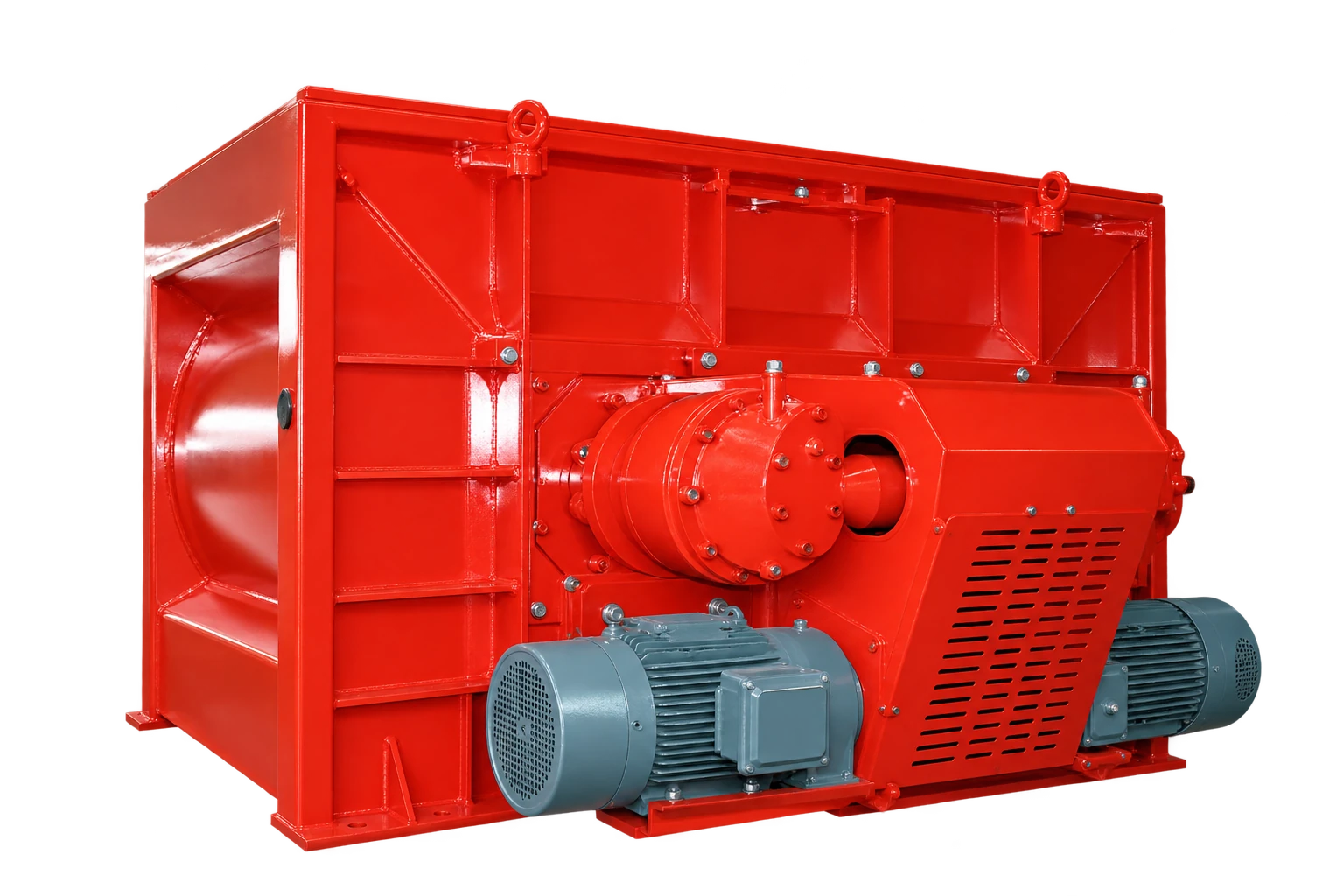
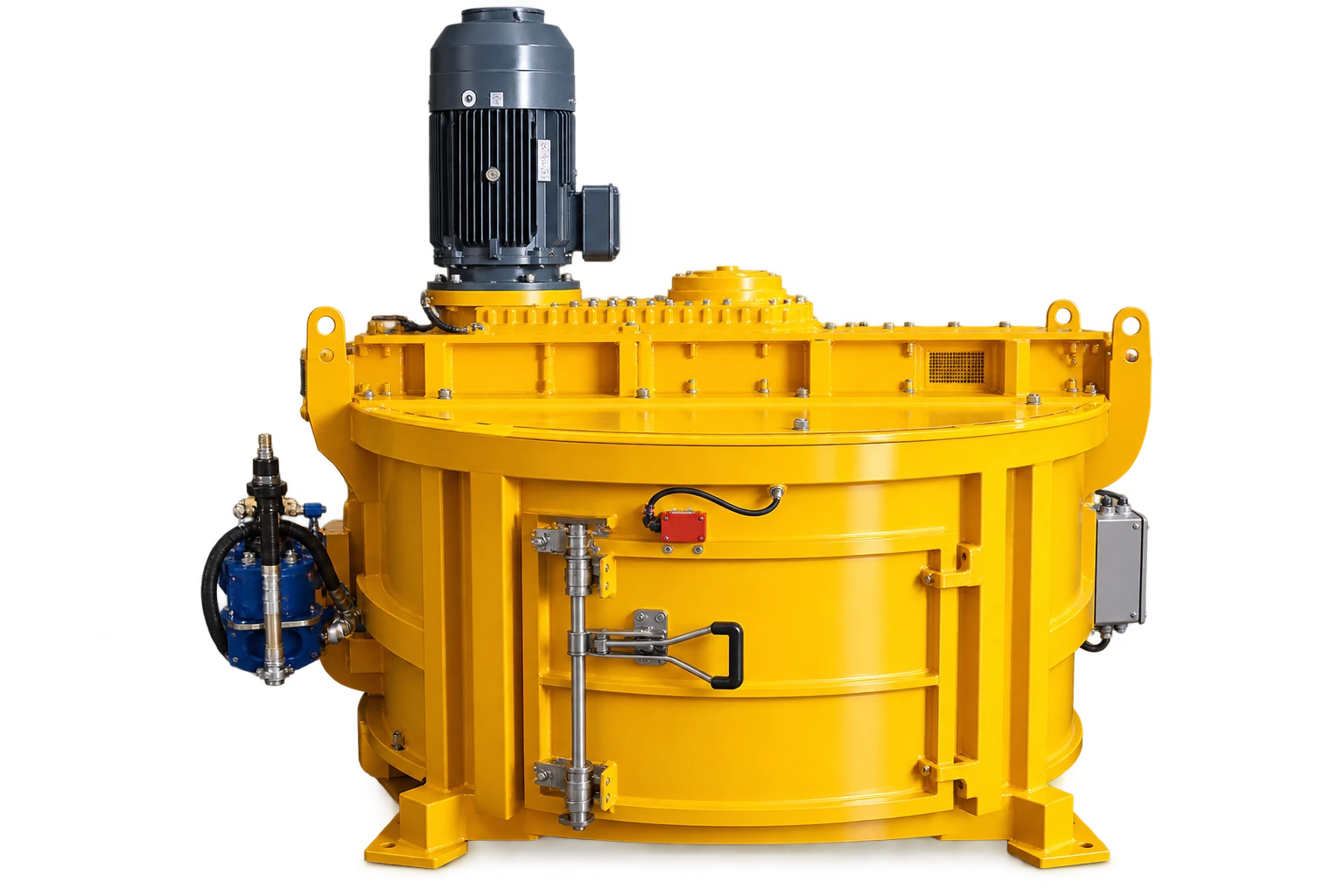
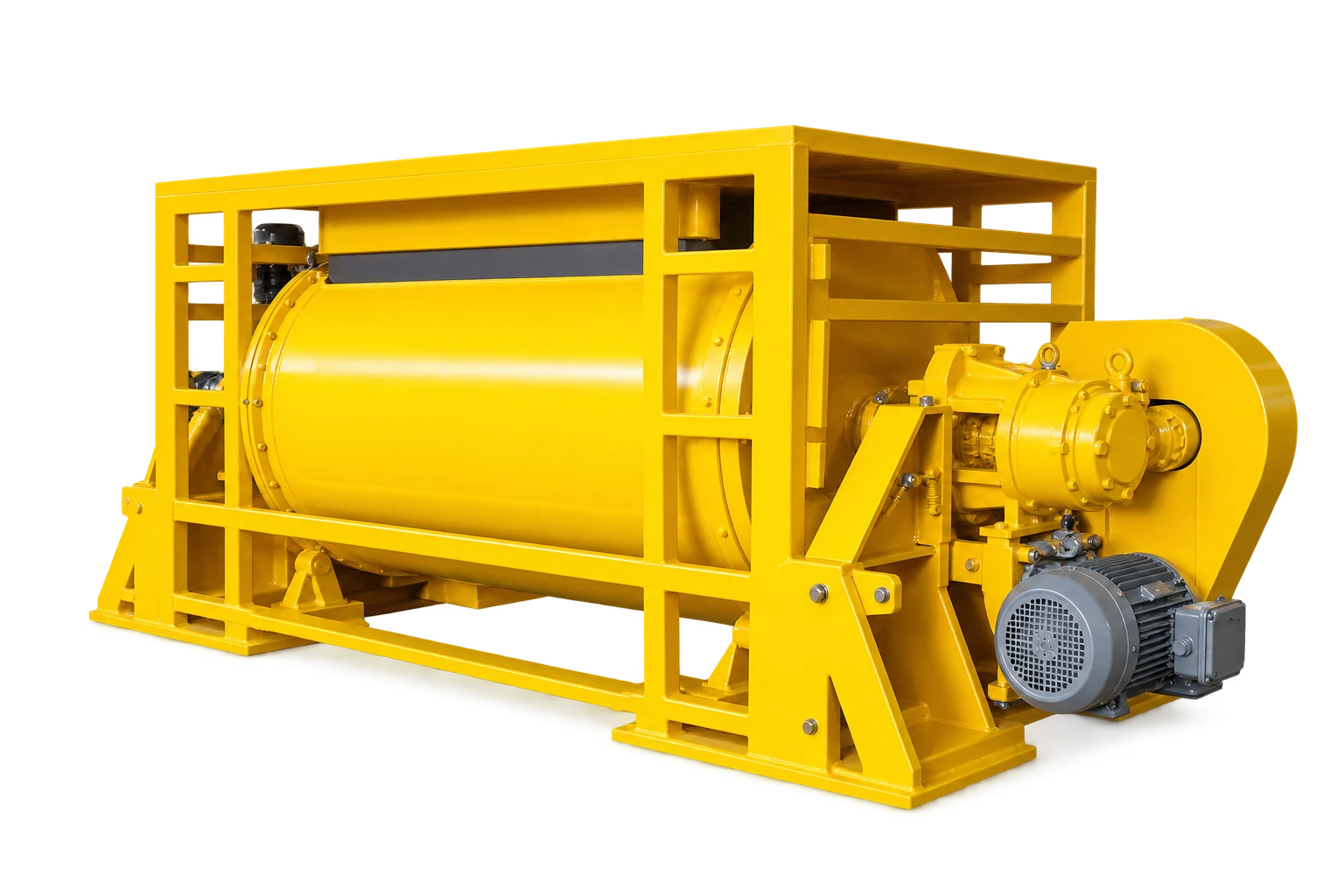
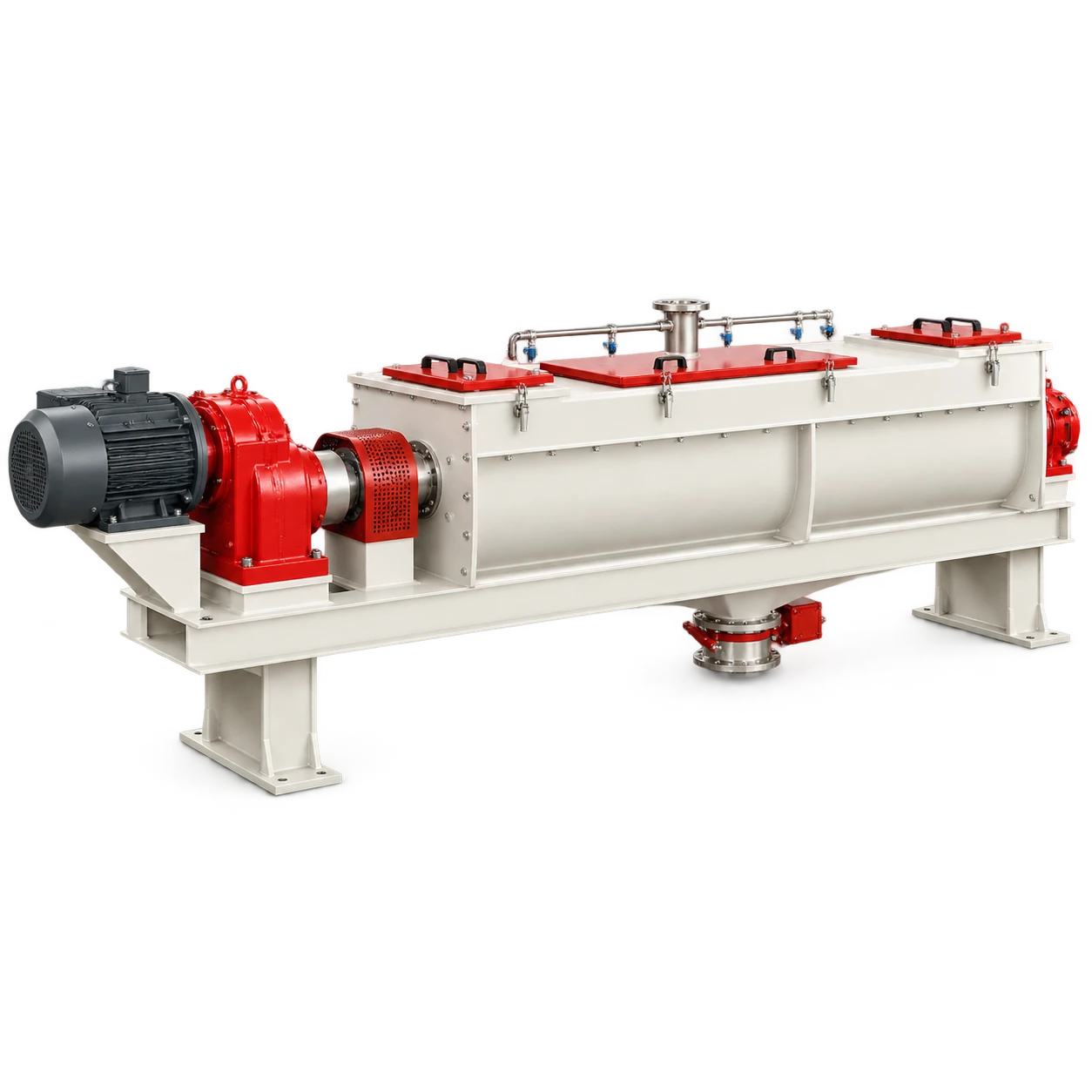
The SJ Twin-Shaft Humidifier Mixer is a catalog range for powder conditioning and dust control, published at 10–200 t/h processing capacity. VOGO selects a candidate by processing rate, spray requirement and material condition. The catalog does not prescribe a fly-ash moisture target, water flow, residence time or disposal result.
Define the conditioning objective and moisture basis
Conditioning can reduce dust during loadout, prepare ash for transport or support a defined disposal or beneficial-use route. These purposes can require different moisture windows. The US EPA steam-electric technical development document describes wet unloaders that use pugmills to unload and moisture-condition fly ash, and reports 15–20% moisture in surveyed practice. That is evidence of a specific industry practice, not a universal target.
Write the moisture basis explicitly:
- Wet basis: water ÷ total wet material × 100%.
- Dry basis: water ÷ dry solids × 100%.
A value of 15% wet basis equals 17.65% dry basis. Subtracting an initial dry-basis number from a target wet-basis number produces an incorrect water rate. Define the sampling method, sample location and whether free water, chemically bound water or both are included by the governing test.
Calculate water addition on dry-solids flow
For wet-basis moisture fraction M, water associated with dry-solids mass D is:
Water mass = M ÷ (1 − M) × D
Therefore:
Added water = [Mtarget ÷ (1 − Mtarget) − Minitial ÷ (1 − Minitial)] × dry-solids flow
Hypothetical example: dry fly-ash solids flow is 10,000 kg/h. Incoming moisture is 1% wet basis and the trial target is 15% wet basis.
Initial water:
0.01 ÷ 0.99 × 10,000 = 101 kg/h
Target water:
0.15 ÷ 0.85 × 10,000 = 1,765 kg/h
Required addition:
1,765 − 101 = 1,664 kg/h, or approximately 1.66 m³/h if the conditioning water density is assumed to be 1,000 kg/m³.
This is a hypothetical mass-balance example, not an SJ setting or an approved moisture target. Flowmeter error, spray losses, evaporation, variable feed moisture and water retained in the mixer change the field setpoint. Use sampled conditioned material to close the balance.
Do not turn a reported range into a universal specification
The EPA environmental-stewardship compendium discusses 10–15% water addition for a particular fly-ash dust-control and structural-fill context. The separate EPA steam-electric document reports 15–20% moisture for wet unloaders. These numbers have different wording, bases and applications; neither should be inserted into a purchase order without reconciling ash properties and destination rules.
The EPA Energy Answers permit requires fly ash to be conditioned through equipment such as a pugmill before disposal in that permitted system. A permit condition for one facility is not a design approval for another. Obtain the receiving site’s acceptance, environmental limits and leachate or runoff requirements.
Specify feed, spray and mixing evidence
Ask bidders to return one process basis:
| Input | Required declaration |
|---|---|
| Ash feed | Dry-solids rate, as-received rate, moisture range and measurement method |
| Water | Quality, temperature, density, pressure and available flow |
| Dosing | Meter range, turndown, control signal, shutoff and calibration method |
| Spray system | Nozzle arrangement, droplet distribution, access and anti-blocking provisions |
| Mixer | Working hold-up, residence-time basis, drive load and discharge behavior |
| Acceptance | Moisture window, dust observation or measurement, handling and destination criteria |
Feed-forward control should calculate a starting water demand from dry-solids flow and incoming moisture. Feedback can trim the setpoint from representative outlet sampling or a validated online measurement. Do not let a water valve remain open when ash feed is lost; define permissives, delay logic and a safe recovery sequence.
The UK Environment Agency permit decision document describes conditioning water added concurrently with augered powder feed to reduce fugitive-dust potential in that installation. It supports coordinated feeding and wetting, but it does not establish the correct water ratio or emission performance for a different plant.
Validate handling after the mixer
Too little water may leave dusty pockets. Too much can cause sticky build-up, blocked chutes, unstable truck loads, runoff or rejection at the destination. Test low, normal and high incoming-moisture cases and inspect:
- moisture distribution across multiple discharge samples;
- visible dry streaks, balls or free water;
- mixer current, residue and cleaning frequency;
- chute, conveyor or truck loading behavior;
- dust at transfer and loadout points;
- destination acceptance after transport and storage time.
The related fly-ash solidification mixer specification covers treatment recipes and acceptance where conditioning becomes part of stabilization. Simple dust conditioning must not be presented as proof of chemical stabilization, contaminant immobilization or regulatory compliance.
Before clearing a blockage, changing nozzles or entering a hazardous zone, isolate electrical, mechanical, pneumatic, water-pressure and gravity-fed material energy. OSHA 1910.147 addresses unexpected energization during servicing.
Conclusion
Fly ash conditioning water calculation requires one declared moisture basis and a measured dry-solids flow. Convert initial and target moisture to water mass, subtract existing water and treat the result as a commissioning start point. Verify uniformity, dust, handling and destination acceptance across real feed variability before fixing the control window or selecting an SJ configuration.