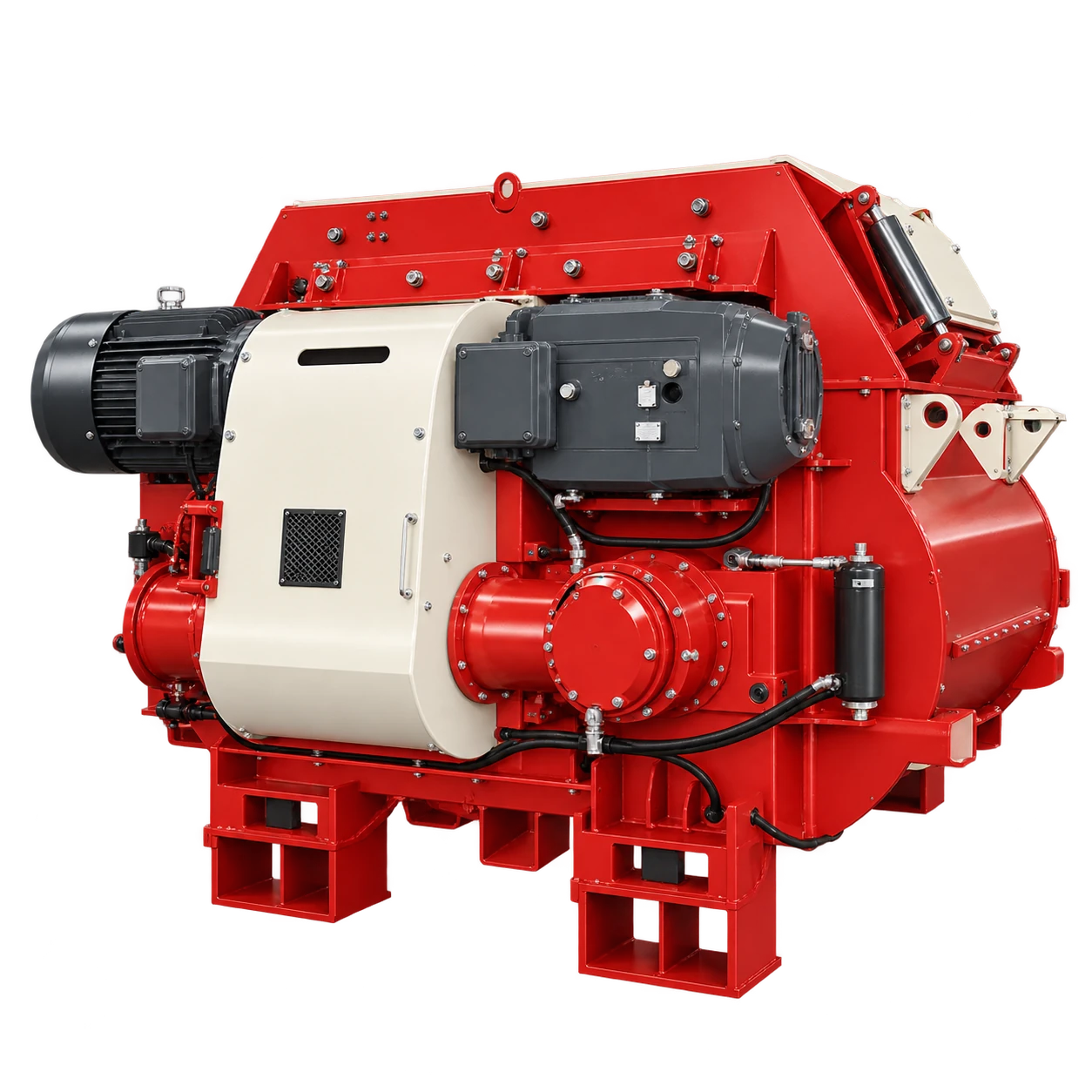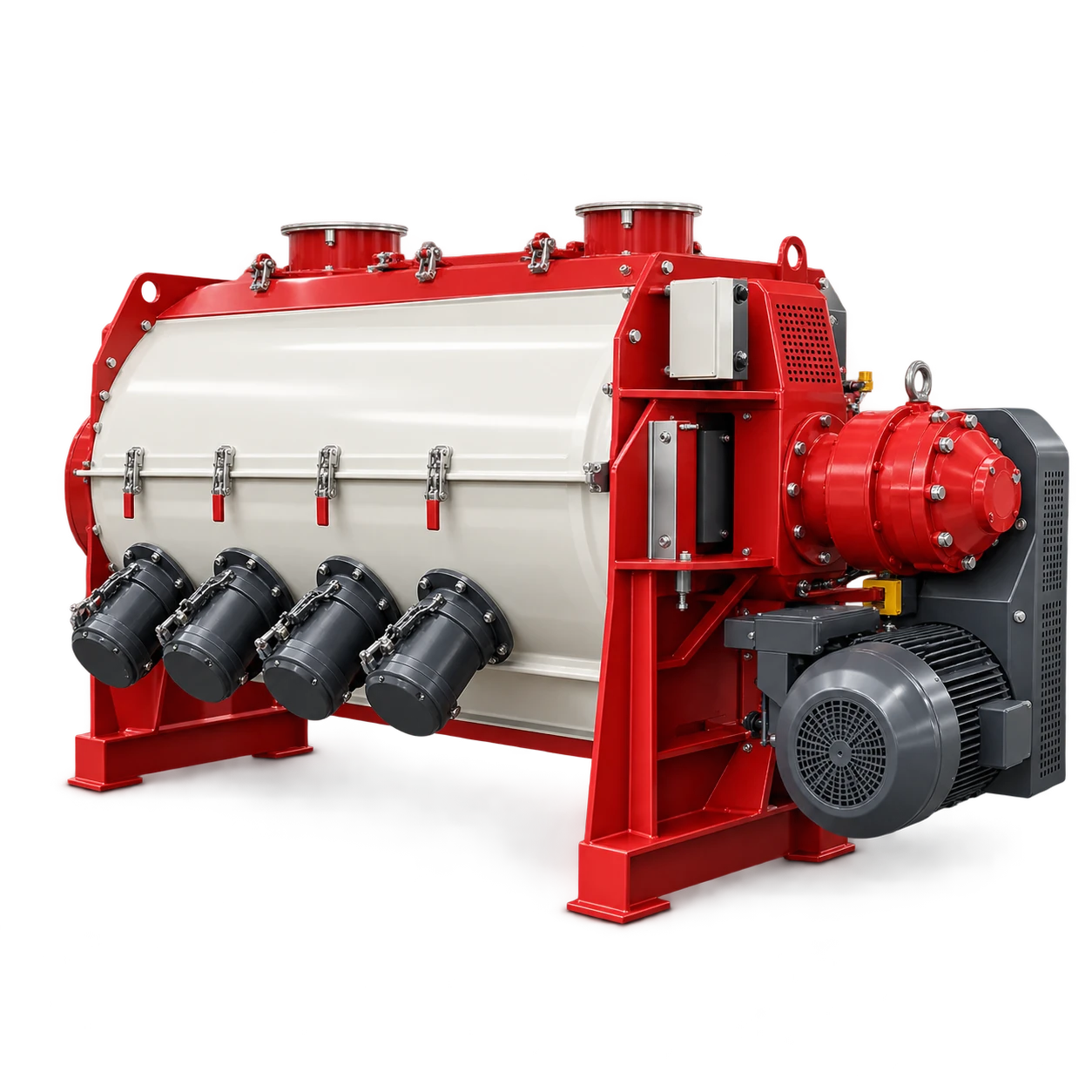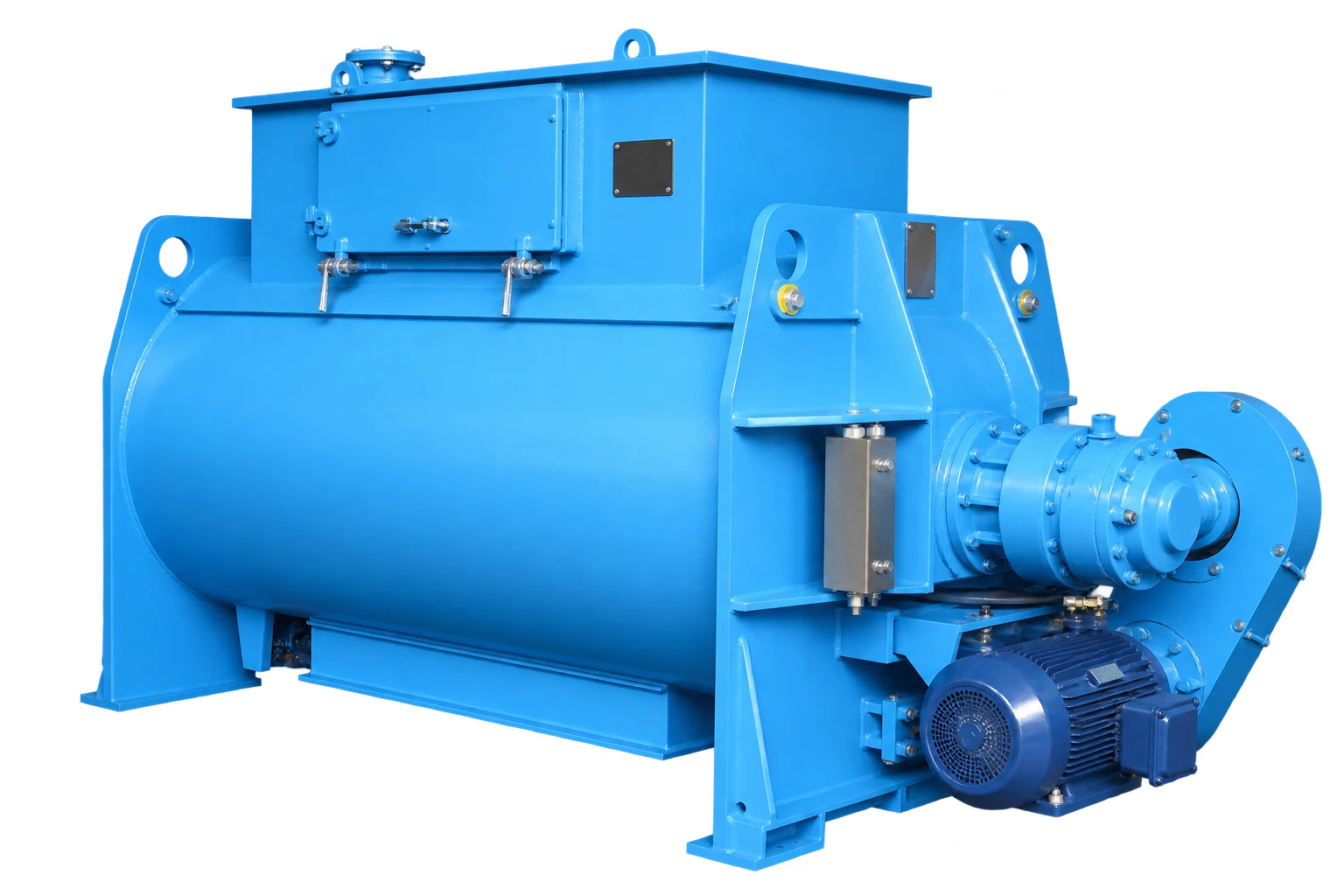
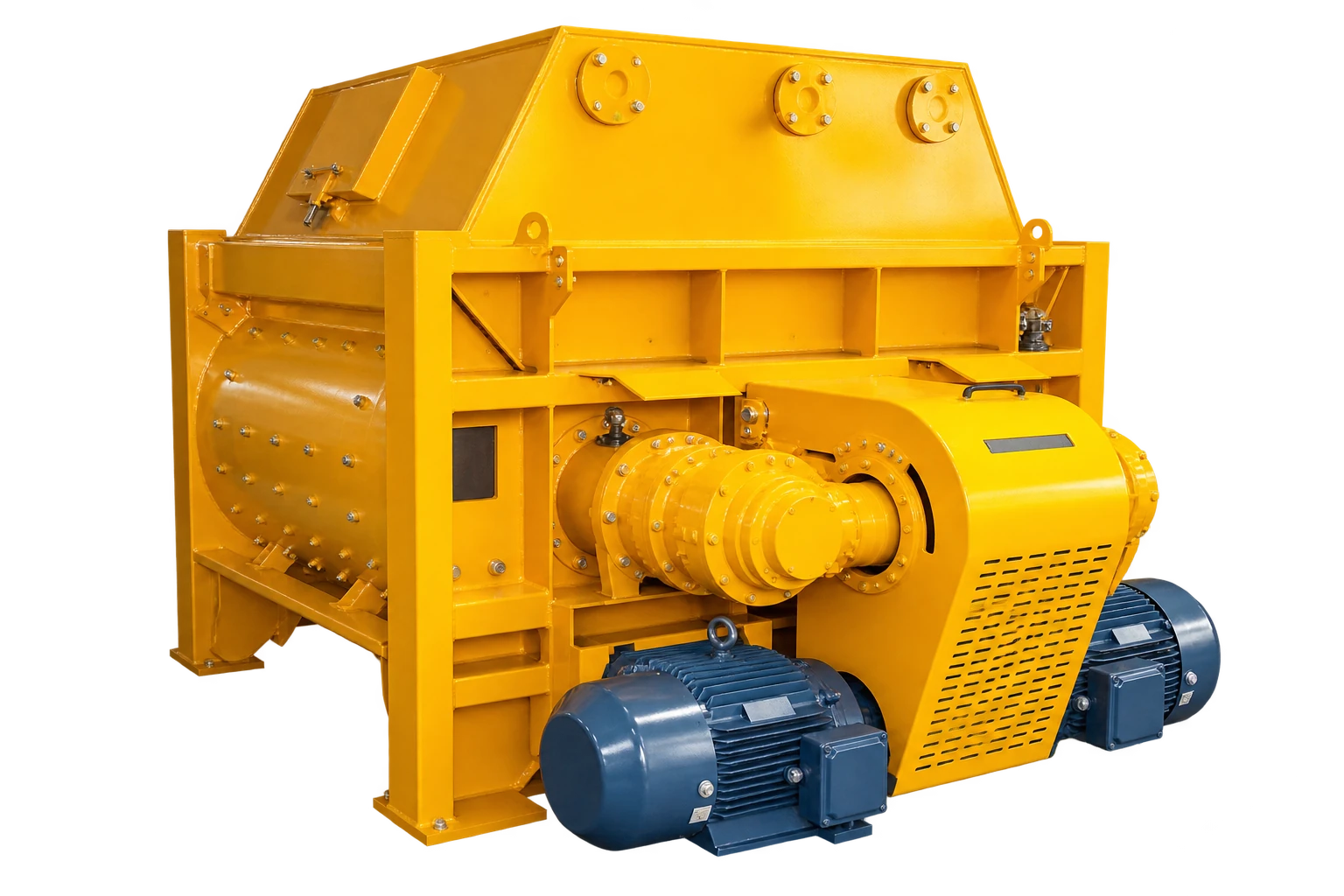
Fly ash solidification mixer specification begins with the feed and the approved treatment recipe, not the mixer model. Define what the ash or waste contains, what the binder and water must achieve, how every stream is measured, and how the cured output will be accepted. A mixer can provide controlled contact; it cannot prove contaminant immobilization or regulatory compliance by itself.
The MFO fly-ash solidification mixer is a catalog mixer family with models MFO500 through MFO3000. The catalog describes a 500–3,000 class range but does not declare the unit or a universal treatment throughput in the product data used here. The inquiry must therefore state the required batch or continuous basis and request a supplier-confirmed working limit.
Separate solidification from stabilization
The EPA citizen’s guide distinguishes the two functions. Solidification mixes material with a binding agent to create a solid mass. Stabilization also uses amendments, but aims to make contaminants less mobile through chemical reactions. A project can require both, yet the acceptance tests are not interchangeable.
State the project purpose explicitly:
| Project objective | Evidence outside the mixer | Equipment implication |
|---|---|---|
| Dust-free handling or physical monolith | Moisture, free liquid, strength or handling test | Wetting, containment and discharge arrangement |
| Reduced contaminant mobility | Treatability study and specified leach test | Accurate reagent addition and representative mixing |
| Geotechnical reuse | Strength, density, durability and environmental approval | Repeatable recipe and manageable discharge consistency |
| Disposal preparation | Facility waste-acceptance criteria | Batch traceability and controlled loadout |
Do not describe fly ash as harmless or hazardous from its name alone. Obtain current chemical characterization, particle-size and moisture data, safety information and the receiving facility’s criteria. If the material is contaminated, the responsible environmental professional determines the testing and controls.
Supply a complete feed envelope
The RFQ should state minimum, normal and maximum feed rate; bulk density; moisture and free-liquid range; temperature; particle size; tendency to bridge or set; corrosive constituents; and expected batch variability. List every binder, sorbent and liquid separately, including delivery form and density.
ITRC’s treatment guidance notes that solidification/stabilization may use Portland cement, quicklime or fly ash and that success requires adequate contact between amendment and treated material. This supports specifying dosing and mixing evidence, not assuming a named reagent will work for every waste.
For hazardous or reactive feeds, give the supplier the project hazard assessment. Request materials of construction, sealing concept, vent connection, access arrangement and cleaning method against that assessment. “Enclosed” does not mean airtight, dust-free or pressure-rated. Define the allowable internal pressure and leakage test only if the system is designed for them.
Reconcile recipe mass and mixer working load
Show the approved recipe on a clear basis. Hypothetical batch example: 1,000 kg of as-received ash or treated material, 120 kg dry binder and 180 kg water produce a nominal 1,300 kg charged batch before reaction, evaporation or retained residue. Binder is 120 ÷ 1,000 × 100 = 12% of the feed basis. Water is 18% of that same basis.
These figures are not an MFO recipe, test result or capacity. Bulk volume may increase or decrease as powders wet, entrain air or react, so 1,300 kg cannot be converted to mixer volume without measured loose and wetted densities plus a supplier-approved fill level. Also identify water already present in feed and liquid reagents; otherwise the total-liquid calculation will be wrong.
For continuous duty, translate each percentage into a mass flow and specify feeder turndown. For batch duty, state weighing resolution, sequence, mixing endpoint and discharge traceability. Require the supplier to declare whether the quoted size is total volume, working volume or permissible charged mass.
Define dosing, sequence and containment interfaces
List the equipment boundary from reception through treated-product discharge. Assign responsibility for feed hoppers, loss-in-weight or volumetric feeders, liquid skids, dust extraction, venting, controls, sampling and downstream curing or storage. A mixer quotation that excludes these interfaces cannot be compared with an offer that includes them.
The sequence should come from treatability trials. It may require pre-wetting, dry blending, staged liquid addition or a defined post-addition residence period, but no universal sequence applies. Ask how the controls prevent a batch from discharging after a missed reagent, low water flow or interrupted feed. Retain actual weights and alarm history with the batch identifier.
USACE quality-assurance guidance calls for a solidification/stabilization work plan to describe the proposed mix design and mixing equipment. Convert that principle into contract fields: approved formulation revision, equipment configuration, calibration method, sampling locations and disposition of nonconforming material.
The related silo dust-collector sizing guide explains why displaced and conveying air must be quantified. It does not size a solidification system’s extraction; provide the actual powder transfers and venting boundary to the dust-control designer.
Make acceptance independent of appearance
Visual uniformity is useful for finding obvious dry pockets but cannot demonstrate chemical treatment. Define sampling across the discharge and across batches. State curing age, storage conditions and test methods. Depending on the project, acceptance may include leachability, unconfined compressive strength, permeability, free liquids, density, durability or volume change.
Use three acceptance layers:
- Process record: actual mass of every feed, mixing time or residence condition, alarms and operator interventions.
- Fresh output: moisture or consistency, temperature, visible dry pockets and representative sample identity.
- Cured performance: only the contract tests and limits established by the approved treatment plan.
A passed strength test does not automatically prove contaminant immobilization. A passed leach test does not prove the material has adequate handling strength. The project team must state which properties are required and how failed material will be isolated, retreated or disposed.
Internal inspection and cleaning require isolation of the mixer and every feeder, liquid line and stored-energy source. OSHA’s hazardous-energy guidance addresses unexpected energization during servicing. Respiratory, chemical and confined-space controls depend on the site assessment and are not established by the mixer enclosure.
Conclusion
A fly ash solidification mixer specification is complete only when it connects characterized feed, an approved recipe, calibrated dosing, contained interfaces and project-specific acceptance tests. Ask the supplier to confirm working load, control accuracy and equipment boundary against those inputs. Treat the mixer as one part of a validated treatment process, not as evidence that the treated material is safe or compliant.