Inspect asphalt mixer paddle wear by mapping paddle-tip and liner condition at repeatable positions, comparing measurements with the exact machine instructions, and verifying the mixture after an approved repair. Poor coating alone does not prove paddle wear. Keep mechanical inspection separate from changing the mixing timer or recipe.
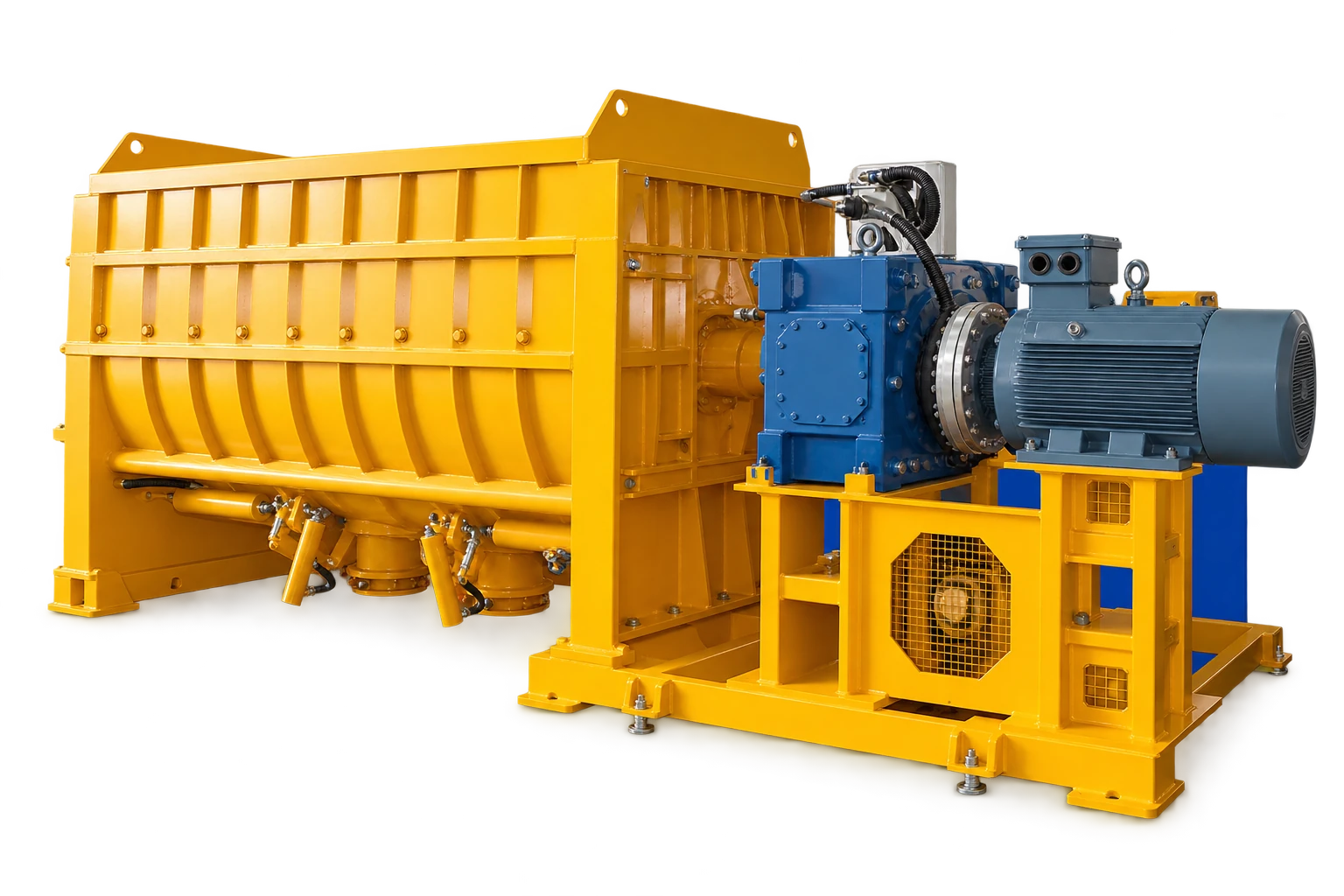
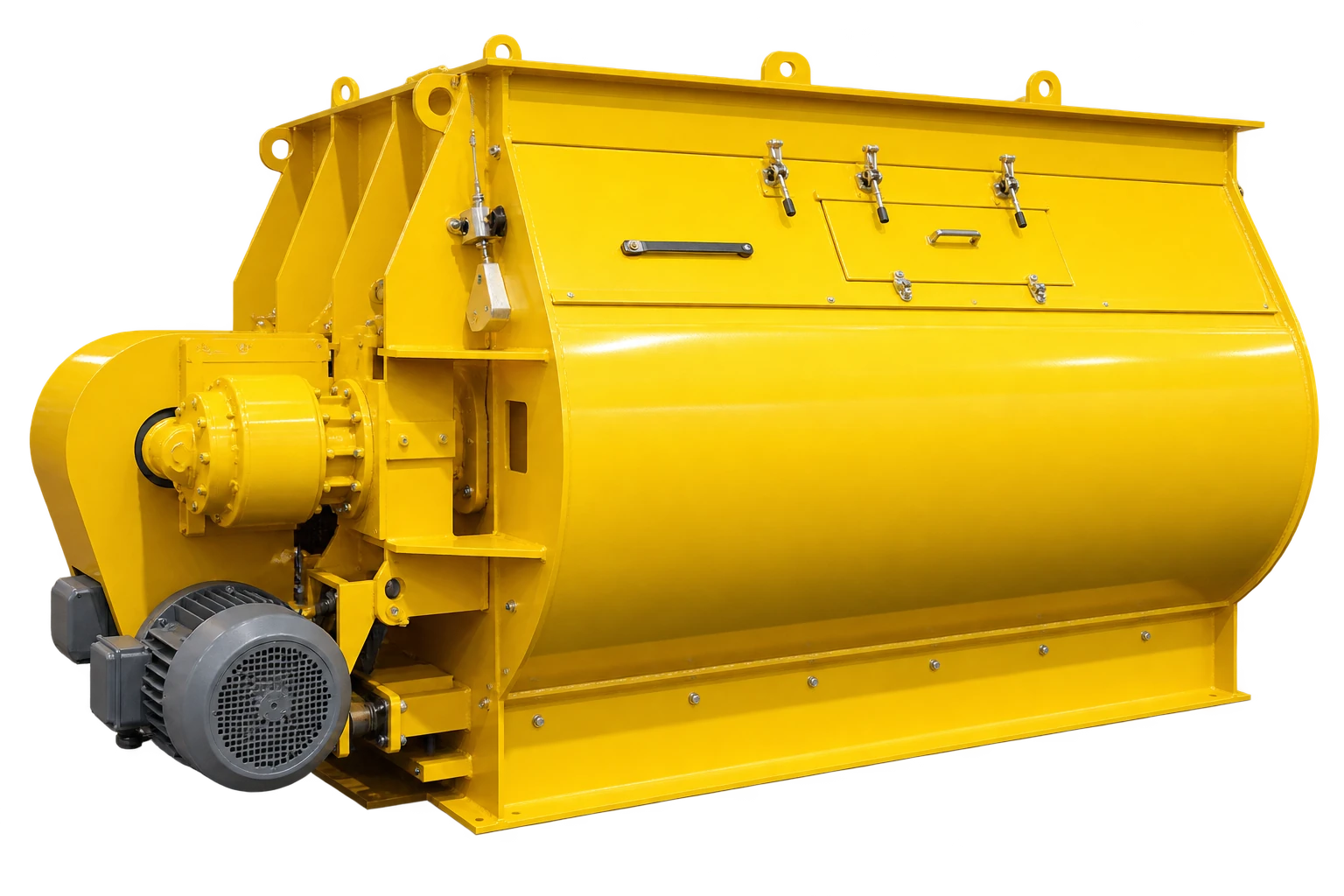
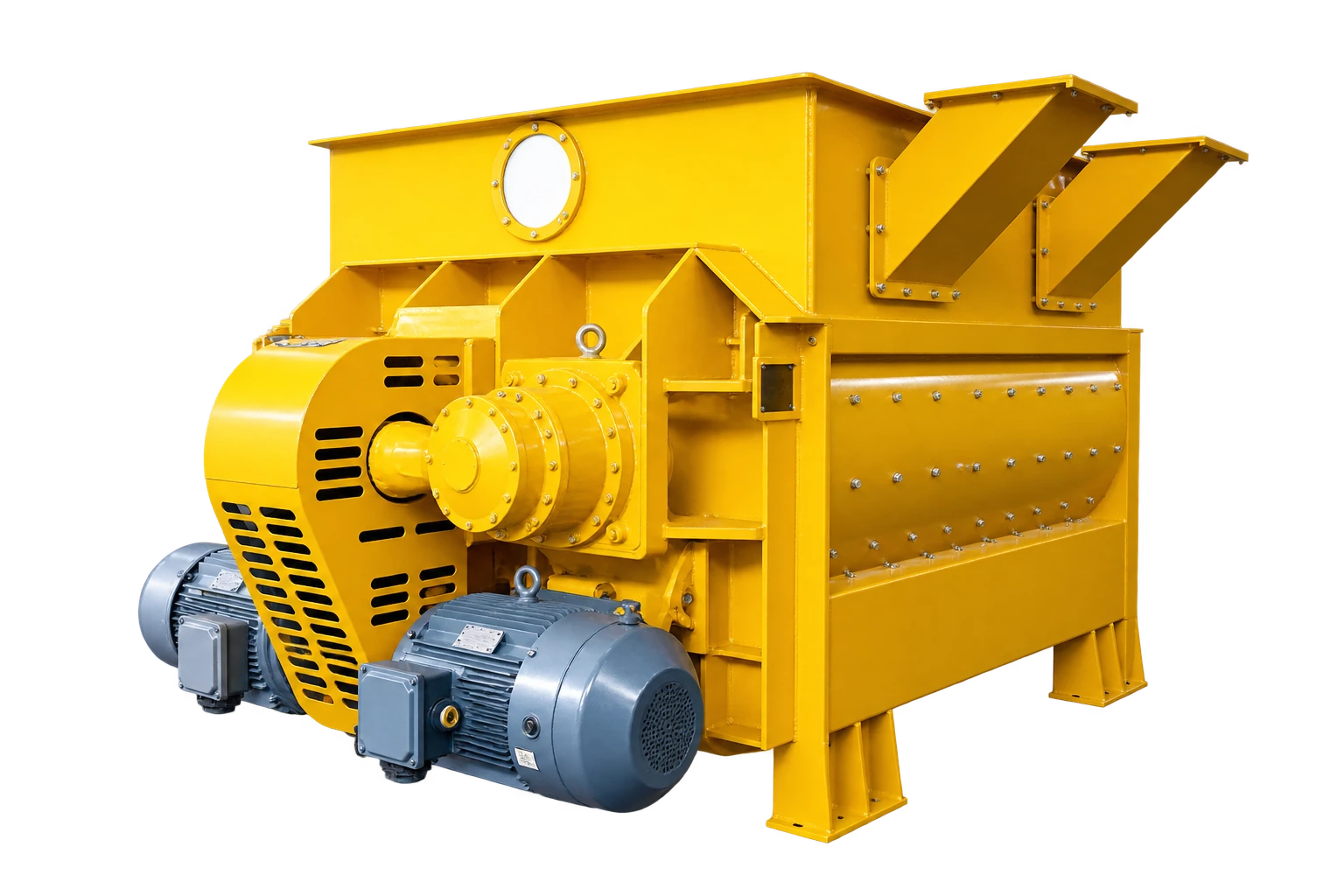
The AM asphalt mixer is the catalog equipment reference for this maintenance topic. Its product listing does not establish a universal paddle clearance, bolt torque or replacement interval. Obtain the installed machine’s serial-specific drawing, wear limits and maintenance procedure before adjusting or ordering parts.
Record the symptom before opening the mixer
Capture when the problem began, affected recipes, actual batch mass, coating observations and any changes in current, noise or discharge residue. Preserve the existing timer and material records. A gradual change across several recipes suggests a different investigation from a fault that began immediately after a binder-system intervention.
The FAA-hosted Hot-Mix Asphalt Paving Handbook, Section 8, connects paddle and liner condition with mixing effectiveness. It also explains that overfilling or underfilling affects circulation. Use that information to build a diagnosis; its illustrative process times are not AM settings or a substitute for the approved mixture procedure.
Before planning entry, compare the symptom with upstream records. Verify that the intended binder mass actually arrived and that the material condition and charging sequence match the accepted process. A worn paddle and a dosing fault can coexist. Replacing the paddle will not resolve a separate loss of binder flow.
Plan safe access and measurement
The HSE maintenance guidance calls for competent personnel, planned work, safe access and manufacturer information. Define the work area, safe material and temperature condition, access arrangement and lifting requirements before the shutdown. Assess confined-space requirements where relevant; an open lid does not settle that question.
Follow the site’s hazardous-energy procedure for the mixer drive, gates, upstream feed, pneumatic or hydraulic actuators and retained material. OSHA’s lockout/tagout overview covers unexpected energization and release of stored energy. A stop command or HMI permission is not an isolation method. Shaft repositioning during inspection needs a specifically approved method with nobody exposed to motion.
Use the same cleaned surfaces, identified measurement locations and instrument method each time. Record the machine condition, including temperature where it affects the prescribed measurement. Distinguish a deposit covering a sound component from loss of the component itself. Do not remove deposits by an unapproved method that damages the liner or exposes staff to hot material.
Build a wear map that supports a decision
| Inspection record | What to capture | Decision it supports |
|---|---|---|
| Machine identity | Model, serial and drawing revision | Applicability of the limit and replacement part |
| Paddle position | Shaft, station, orientation and photo ID | Repeatable comparison of the same location |
| Paddle and arm | Tip profile, damage and mounting condition | Approved replacement or further investigation |
| Liner region | Wear, deposits, damage and fastener condition | Whether the adjacent surface explains the gap |
| Defined gap | Location, method, reading and machine condition | Comparison with the exact approved criterion |
| Follow-up | Prior reading, operating exposure and action | Trend and maintenance planning |
The Alaska DOT inspector’s manual, Chapter 4.3.14, describes unmixed dead areas associated with excessive paddle-to-liner clearance. That November 2002 manual gives a general clearance range. Do not turn that range into a VOGO repair limit: the installed geometry, aggregate and current OEM instructions control the decision.
Interpret the pattern before choosing a repair
A large gap can reflect loss at the tip, loss at the liner, incorrect assembly or a combination. Compare neighboring stations and inspect the attachment and support condition. A local anomaly should trigger an investigation of its cause, rather than an automatic instruction to move every paddle closer to the wall.
Keep the measurement and authorization columns separate. For a hypothetical record, station L3 reads 14 mm, then 16 mm after 200 operating hours under the same measurement conditions. The observed gap change is 2 mm. Without an approved limit and the component-condition record, those figures do not establish remaining life or a safe replacement date. L3 is an example location label, not an AM part number.
Do not extrapolate the short trend into a guaranteed linear wear rate. Material, recipe, contamination and operating exposure can change. If an approved limit is unavailable, hold the adjustment decision and request the applicable machine documentation. Cracking, loose attachments or suspected contact require the site’s defect response, not waiting for a calculated interval.
A repair proposal should identify which tips, arms, liners and fasteners are involved, their applicable drawings and the approved fitting method. Confirm whether parts are supplied individually or as a defined kit. Do not infer interchangeability from a similar photograph, and do not add hardfacing, reverse a tip or alter its angle without documented approval for that configuration.
Separate wear from other causes of poor coating
| Observation | Mechanical question | Parallel process question |
|---|---|---|
| Repeated unmixed region | Local tip/liner geometry or deposits? | Is binder distributed to that region? |
| Failure only at larger batches | Working envelope and circulation? | Does actual batch mass exceed the approved case? |
| New noise after service | Assembly, attachment or interference? | Was the charging condition changed? |
| Long discharge or carryover | Gate and retained material condition? | Is the discharge sequence and receiving path available? |
| Recipe-specific change | Exposure or component compatibility? | Moisture, gradation, binder or addition sequence? |
These are investigation prompts, not diagnoses. Keep any change to the accepted process under its own authorization. The existing asphalt mixing-time and temperature guide owns timer validation; extending wet-mix time should not be used to conceal a deteriorating mechanical condition.
Verify the repair before returning to normal production
Retain the before-and-after wear map, part identities, drawing revision, fitting records and approved measurements. Account for tools and loose parts, close the work permits and restore guards and protective functions under the site procedure. Use the manufacturer’s authorized inspection and test sequence for rotation and clearance checks.
Then validate representative production against the existing coating and mixture-quality requirements. Compare with a documented pre-fault baseline where available. A no-load run can reveal some assembly problems but cannot prove mixture quality. If the original symptom persists, reopen the fault tree rather than assuming the new parts need a longer timer.
Conclusion
Asphalt mixer paddle wear inspection should produce a location-based condition record and an authorized repair decision. Compare the actual tip-and-liner geometry with machine-specific criteria, investigate abnormal patterns, and verify both mechanical condition and the accepted mixture after repair. Preserve the evidence so the next inspection measures the same problem on the same basis.