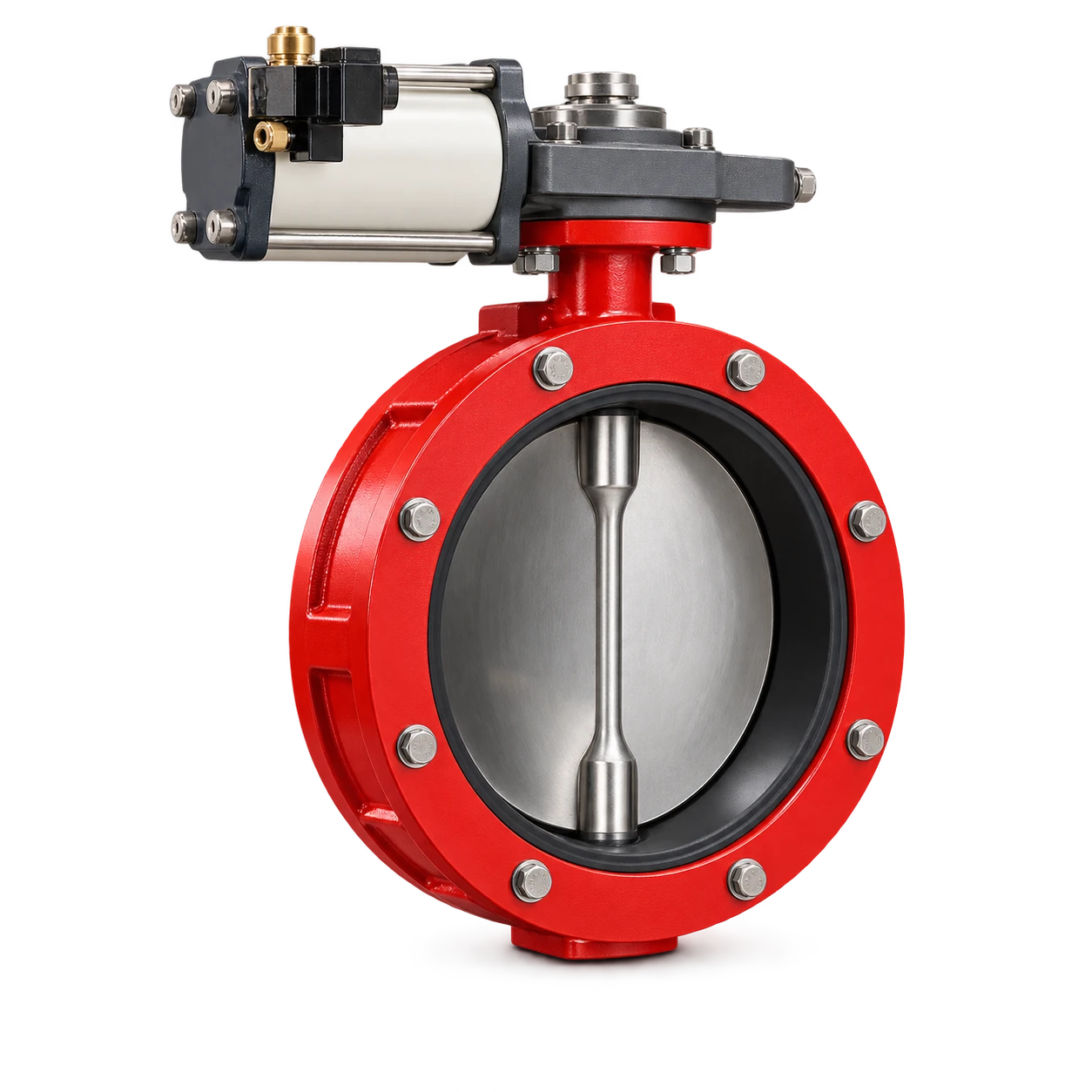
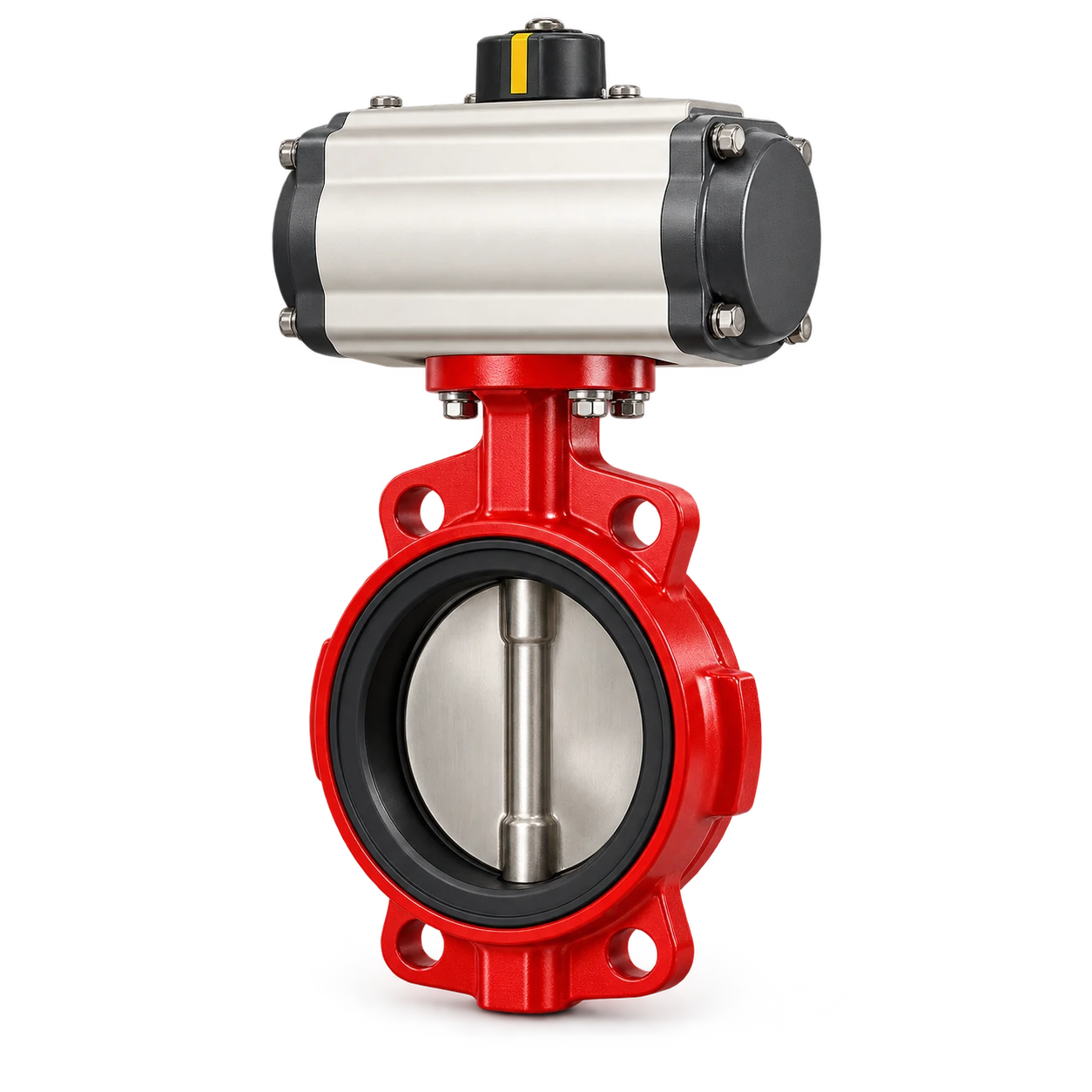
A butterfly valve pressure test report should answer two separate questions: whether the pressure boundary retains the test medium, and whether the closed valve meets its specified leakage criterion. Check the conditions and actual observations for each test. A certificate that says only “pressure tested” leaves the purchasing decision unresolved.
The VOGO water butterfly valve range lists DN50-DN200 and requests pressure and actuation inputs for selection. Catalog size does not establish a project pressure class, leakage class or test certificate. Ask for the exact offered construction and the applicable evidence before releasing an order.
Distinguish shell integrity from closure tightness
The public scope of ISO 5208:2015 separates pressure-boundary integrity, closure tightness and structural adequacy of the closure mechanism. It is intended to work with the applicable valve product standard; where their requirements differ, the product standard governs. Reading the public scope is not a substitute for obtaining the specified standard and approved test procedure.
A shell result concerns external pressure-containing boundaries. A seat or closure result concerns passage across the closed disc/seat arrangement. Neither a closed-position signal nor actuator travel alone measures leakage. State which result is required rather than accepting a photograph of a gauge as proof of every function.
Agree the standard, edition, product-standard relationship and purchaser supplements in the order. If a bidder proposes a different test basis, request a written deviation comparison. Similar standard names or the same nominal pressure label do not establish identical acceptance conditions.
Read the test conditions as one set
Each result needs valve identity, medium, temperature, pressure reference, test pressure, stabilization and observation periods, closure direction and allowable leakage. Record how leakage is observed or measured and the applicable units. “No visible leakage” must refer to a defined method and observation period; it is not a universal molecular-leak claim.
AVK’s factory-testing description reports different body and seat test conditions under EN 12266-1 for its own products. This is useful evidence that the tests have different purposes. Its multipliers, ratings and factory practices are not specifications or certification for the VOGO valve, and must not be copied into a VOGO purchase order without supplier confirmation.
| Report field | Buyer verification | Hold point |
|---|---|---|
| Identity | Model, DN, construction and unit/batch link | Generic product-family certificate |
| Test basis | Standard, edition and approved procedure | Unexplained alternative standard |
| Shell result | Medium, pressure, period and external observation | Only seat result supplied |
| Closure result | Direction, differential pressure and leakage criterion | Direction or criterion missing |
| Instruments | Identification, range and calibration status | Untraceable gauge photograph |
| Disposition | Actual values, exceptions, approval and date | Pass box without test conditions |
Treat direction and differential pressure explicitly
A test in one direction cannot substantiate a bidirectional requirement unless the agreed test specification provides the relevant evidence. Describe the upstream side on a drawing or by the marked body orientation. Ask how reverse-pressure duty is covered, especially if the offered construction is direction-sensitive.
Keep shell pressure, maximum operating pressure and maximum shutoff differential as separate identified values. An allowable shell pressure does not automatically define the closed disc’s permissible differential pressure. Confirm restrictions with the exact manufacturer configuration and include them in the acceptance schedule.
Do not adjust actuator stops or increase closing torque merely to obtain a favorable test result. Any authorized adjustment must stay within the valve/actuator limits and be recorded with the retest. The separate actuator torque guide explains the selection inputs; it does not authorize a field torque increase.
Compare two offers without inventing a price
Consider a hypothetical procurement comparison. Offer A includes serial-linked shell and seat records, while offer B includes only a generic conformity statement. Their quoted totals do not yet represent the same document package. Ask B to return the required testing, witness access, instrument records and document costs as explicit lines.
A witness signature identifies who observed an agreed activity. It cannot repair an undefined criterion. Set notification, witness or review points before the test, and define what happens if the purchaser cannot attend. Keep actual readings and observations even when the result is a rejection followed by corrective work.
Request the original failure and retest records together. The final shipment record should identify the accepted configuration, including seat, disc and actuator if relevant. If a component changes after testing, have the supplier determine and document the required repeat scope rather than assuming the previous result transfers unchanged.
Keep test safety and site hydrotests separate
HSE GS4 treats pressure testing as a stored-energy activity requiring risk assessment, a written safe system, segregation and suitable maintained connections. A test standard’s acceptance provisions do not replace that safety work. Competent personnel must approve the fixture, medium, restraints, controls and depressurization arrangement.
A factory valve test is also different from a pipeline hydrotest. The site procedure must respect the installed valve’s approved positions and pressure limits. Do not use a factory body-test number as authority to pressurize a closed disc beyond its allowed differential. This article is a buyer’s evidence checklist, not an instruction to conduct a pressure test.
Conclusion
Accept a butterfly valve pressure test report only when identity, test basis, conditions, direction, leakage criterion and actual results are traceable. Compare the same evidence package across bidders. Keep the supplied valve’s ratings, test safety and pipeline commissioning approval as explicit separate responsibilities.