Introduction
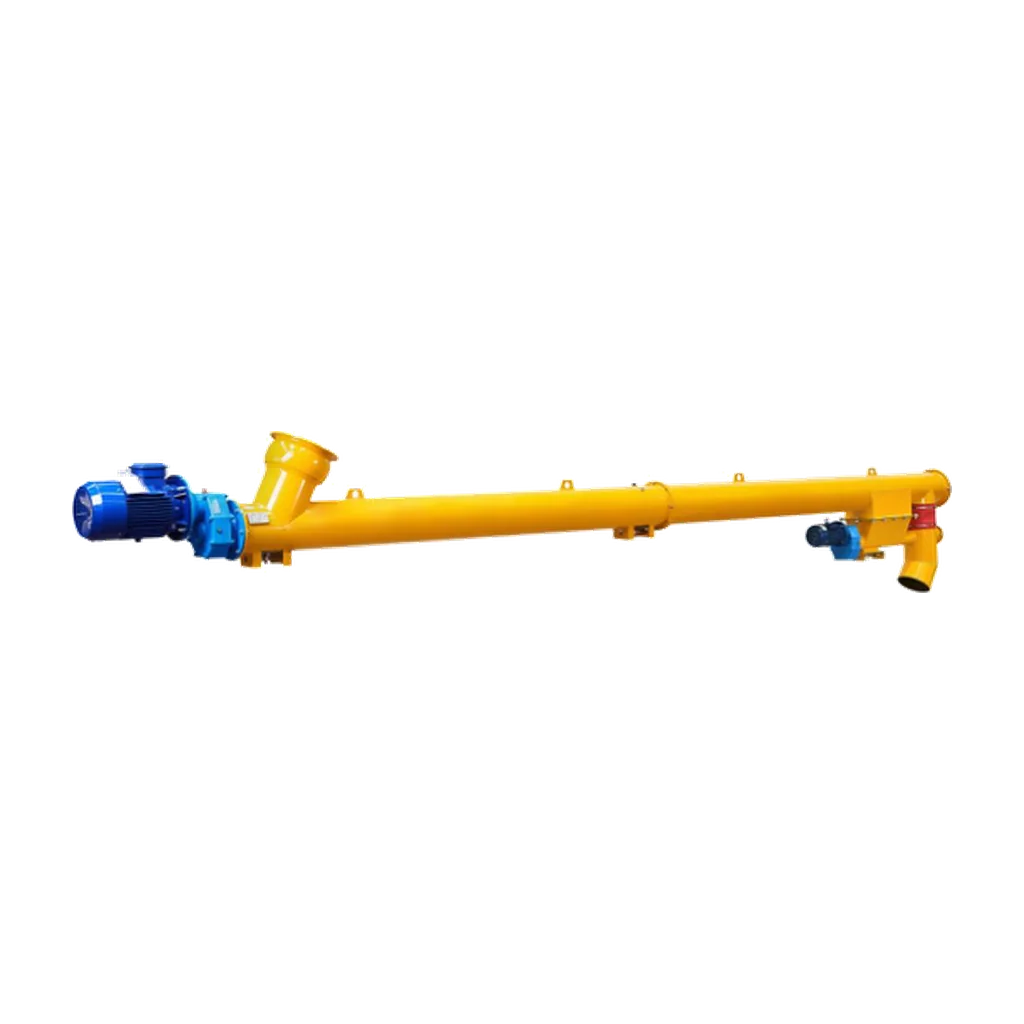
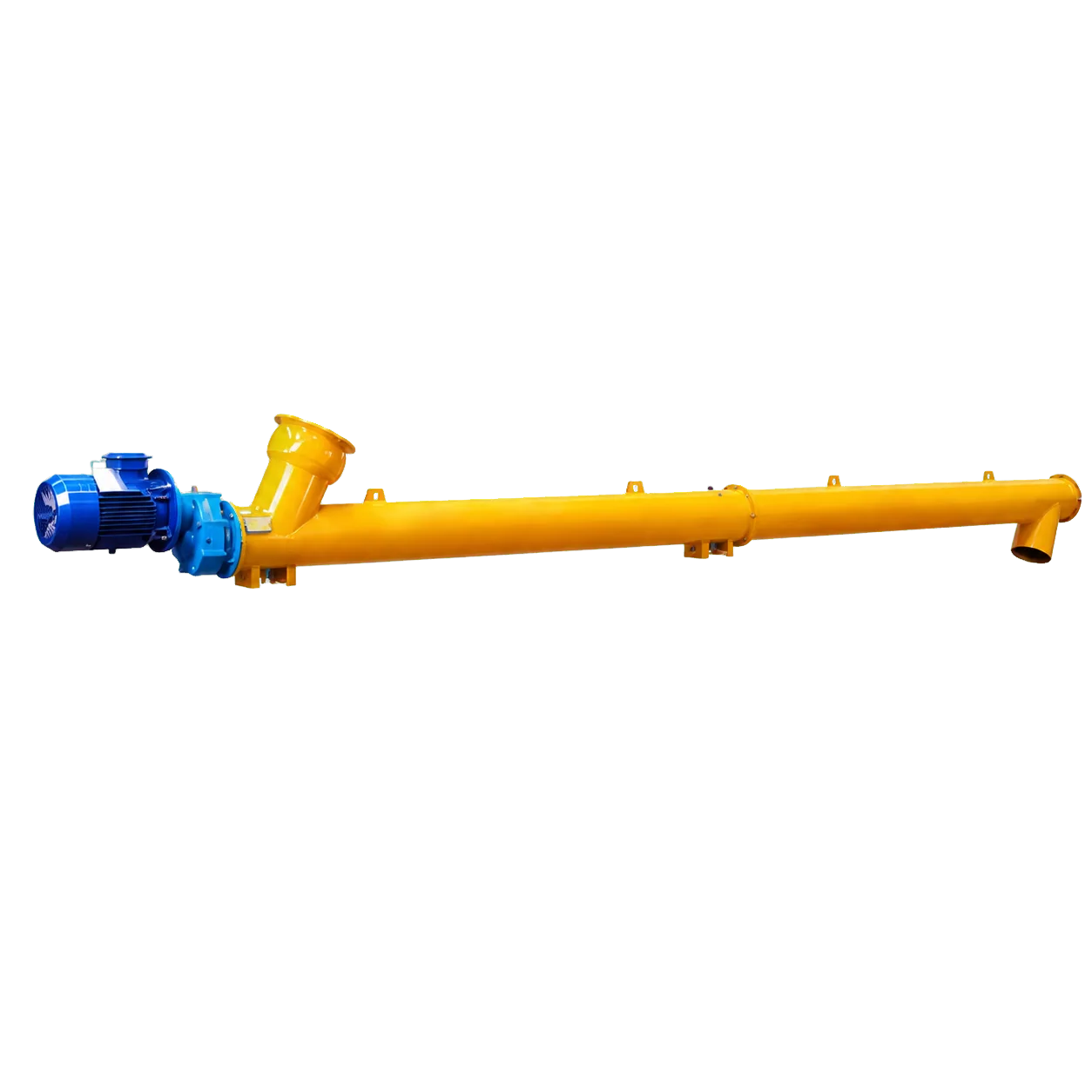
Calcium carbonate (CaCO3) is a standard mineral filler in the plastics, coatings, paper, and building materials industries. Manufacturers use it to increase rigidity in polypropylene compounds, provide opacity in PVC, and act as a functional extender in dry-mix mortars. In high-performance applications such as masterbatch production and cable compounding, the precise dosing and transfer of this mineral are critical to maintaining final product quality. Conveying calcium carbonate powder requires specific engineering because of its distinct physical properties. The material is highly abrasive, possessing a Mohs hardness of up to 3, and exhibits varying bulk densities depending on its processing history. It also generates severe, pervasive dust when agitated. Enclosed tubular screw conveyors are a compact, highly efficient solution for these demanding applications. System design requires careful flight selection, precise torque calculations, and rigorous wear management. Effective sealing is equally necessary to maintain safe plant operations, protect operator health, and prevent environmental contamination.
Understanding calcium carbonate material characteristics
Designing a conveying system starts with a comprehensive analysis of the physical properties of the calcium carbonate being handled. Its characteristics vary significantly depending on the geological source and the production process. Precipitated calcium carbonate (PCC), also called light calcium, is chemically refined and very fine. Its loose bulk density can be as low as 0.301 kg/dm³, compacting to roughly 0.398 kg/dm³ under pressure. Ground calcium carbonate (GCC), or heavy calcium, is mechanically milled, making it denser and more granular, with bulk densities ranging from 1.378 kg/dm³ to over 1.474 kg/dm³.
Differences in particle shape, size distribution, surface roughness, and hardness directly affect the powder’s flow behaviour and abrasiveness. For instance, PCC often features rhombohedral or scalenohedral crystal structures, whereas GCC particles are highly angular. The high number of interparticle interactions and friction prevents a universal correlation between a filler’s basic properties and its bulk flow behaviour. Furthermore, calcium carbonate can be slightly hygroscopic; even minor variations in ambient humidity or moisture content can cause fine particles to agglomerate, leading to bridging or ratholing in feed hoppers. Therefore, conveying systems cannot be bought off the shelf and must be engineered for each specific application. Laboratory testing, including shear cell testing to determine unconfined yield strength, alongside data on the material’s moisture content, particle size, and flowability, are required for accurate screw conveyor design.
Screw flight design to prevent compaction and degradation
Conveying fine mineral powders like calcium carbonate often causes material compaction. Excessive mechanical agitation or inappropriate flight geometries cause aerated powders to pack tightly. This forms a solid mass that restricts flow, increases the unconfined yield strength of the bed, and overloads the drive motor. The screw flight design must precisely match the material’s flowability to prevent this detrimental compaction.
Standard constant-pitch flights are often insufficient for calcium carbonate that tends to pack or fluidise. Engineers frequently utilise variable-pitch flights, cut flights, or specialised ribbon flight geometries to compress the material gradually and prevent sudden pressure build-ups within the trough. Ribbon flights, in particular, are highly effective for cohesive or easily compacted powders because they minimise the shear zone and reduce the frictional surface area in contact with the material.
Screw rotational speed must also be strictly optimised. Operating the conveyor at high revolutions per minute (RPM) causes particle degradation, generates excessive heat through friction, and fluidises the powder. This fluidisation results in erratic flow, severe dusting, and a dramatic drop in conveying efficiency. To mitigate this, the filling degree of the trough is typically restricted to between 15% and 30% for fine powders. A controlled, lower rotational speed provides a steady axial thrust that moves the material smoothly without altering its physical structure or inducing unwanted aeration.
Managing abrasion with wear-resistant linings
Calcium carbonate, particularly coarser GCC grades with sharp, angular particles, is highly abrasive. Continuous friction between the mineral particles and conveyor components rapidly wears the screw flights and the inner trough wall. Unmanaged abrasion damages the conveyor structure, increases radial clearance gaps between the flight and the trough, and causes system failure, reduced volumetric efficiency, or product contamination from metal wear debris.
Tubular screw conveyors require robust, wear-resistant linings to handle this continuous wear. Trough linings typically utilise hardened steel, high-chromium alloys, polyurethane, or even basalt and ceramic tiles for the most aggressive GCC applications. Polyurethane resists abrasion effectively, reduces operational noise, and prevents material sticking due to its low surface friction. Screw flights can be protected using hard-facing welding techniques or manufactured from wear-resistant steel alloys.
When selecting the correct lining material, engineers must balance the initial capital expenditure against the required service lifecycle and maintenance downtime. For example, while ceramic linings offer superior abrasion resistance for coarse GCC, they add significant weight and cost. Monitoring radial clearances is also critical; as wear increases the gap between the flight edge and the trough, material slips backward, reducing throughput. Specifying the correct lining thickness and material based on material hardness minimises maintenance downtime and extends overall equipment life.
Sealing solutions for dust control and containment
Fine calcium carbonate powder generates dust easily when subjected to mechanical agitation or pressure differentials. This causes significant health and safety risks, alongside environmental compliance issues. Uncontained dust leads to respiratory problems for operators, creates slip hazards on walkways, and causes valuable product loss. Dust containment is therefore a primary, non-negotiable design requirement for calcium carbonate conveying systems.
Tubular screw conveyors inherently limit dust exposure. Their fully enclosed cylindrical body keeps the conveying path compact and isolated from the plant environment. However, enclosure integrity depends entirely on the effectiveness of the seals at the junctions and shaft penetrations. Shaft end seals must stop fine powder from migrating along the rotating shaft and escaping the conveyor housing. Designers often specify adjustable PTFE chevron packing seals or air-purged labyrinth seals to prevent leakage. Air purging introduces a slight positive pressure of clean, dry air at the seal faces, creating an invisible barrier that repels the mineral dust.
Hanger bearings support the screw shaft at intermediate points along long conveyors. These bearings require specialised seals to prevent dust ingress, which would otherwise cause rapid bearing failure. Furthermore, integrating dust extraction points at the inlet and discharge hoods helps manage internal pressure differentials, ensuring that the system remains slightly negative or balanced during operation. Effective sealing keeps the workshop clean, reduces housekeeping burdens, and ensures compliance with occupational exposure limits.
Conclusion
Conveying calcium carbonate powder successfully depends on a deep understanding of the material’s physical characteristics and flow dynamics. Precipitated grades present challenges with low bulk density and compaction, while granular ground varieties demand rigorous protection against high abrasion. Engineers must use customised screw flight designs to prevent compaction, carefully optimise rotational speeds and filling degrees, apply appropriate wear-resistant linings, and install robust, air-purged shaft and bearing seals to build reliable, dust-free systems. For enclosed powder conveying, VOGO Machine supplies tubular screw conveyors configured to match the material, throughput, and layout. Available selection diameters are Ø89 mm to Ø407 mm, with lengths up to 15 metres. Published capacity ranges are selection references; actual performance must be confirmed for each project. Visit the Cement Screw Conveyor product page for configuration options, or download the datasheet for engineering specifications.