A mine paste backfill mixer selection is defensible only when the mixer is evaluated as part of the complete backfill system. Characterize the tailings, binder and water; define the required placement rate and discharge rheology; then test whether the proposed mixer can deliver homogeneous paste to the reticulation system at the required duty. Nominal chamber volume or motor power alone does not answer that question.
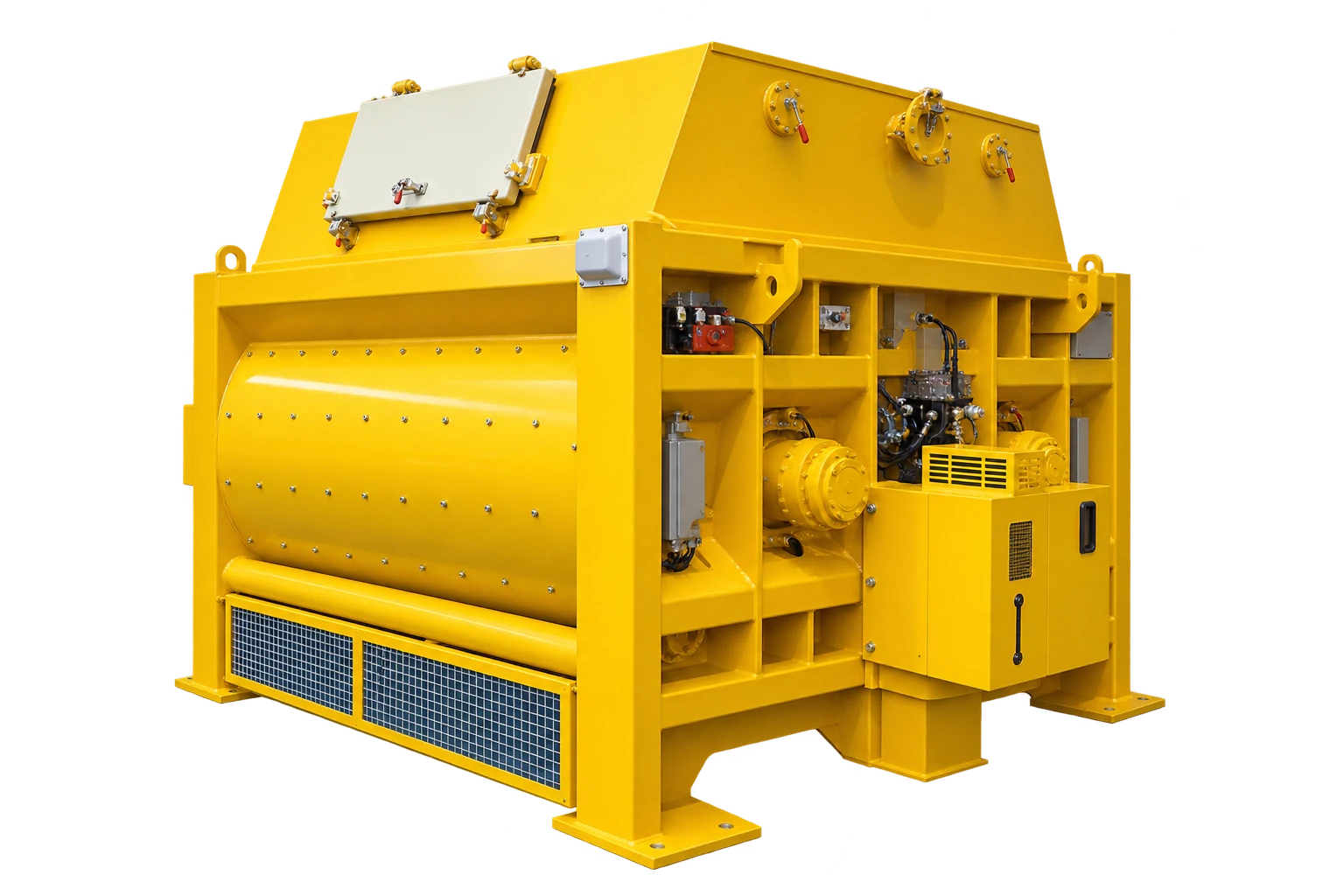
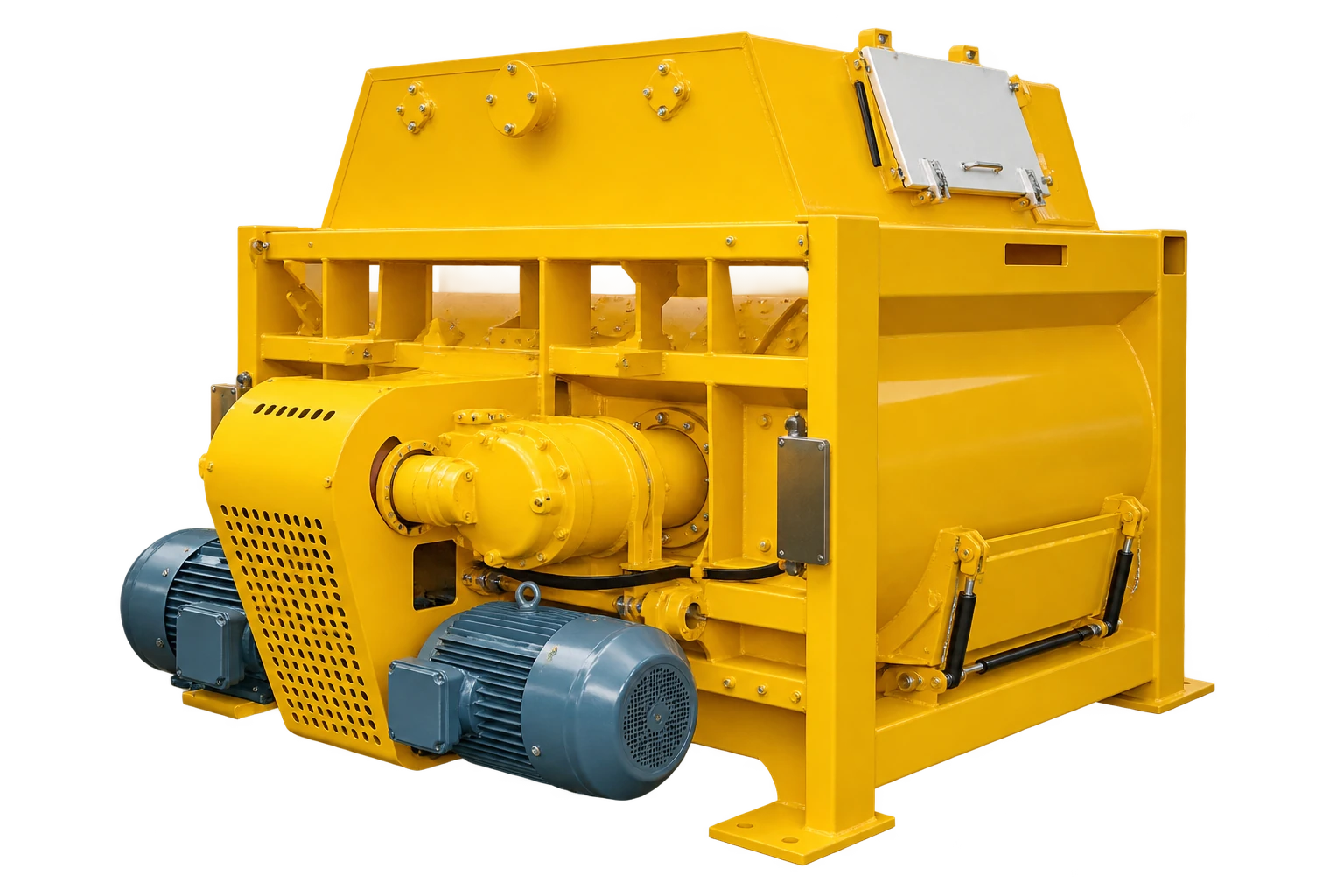
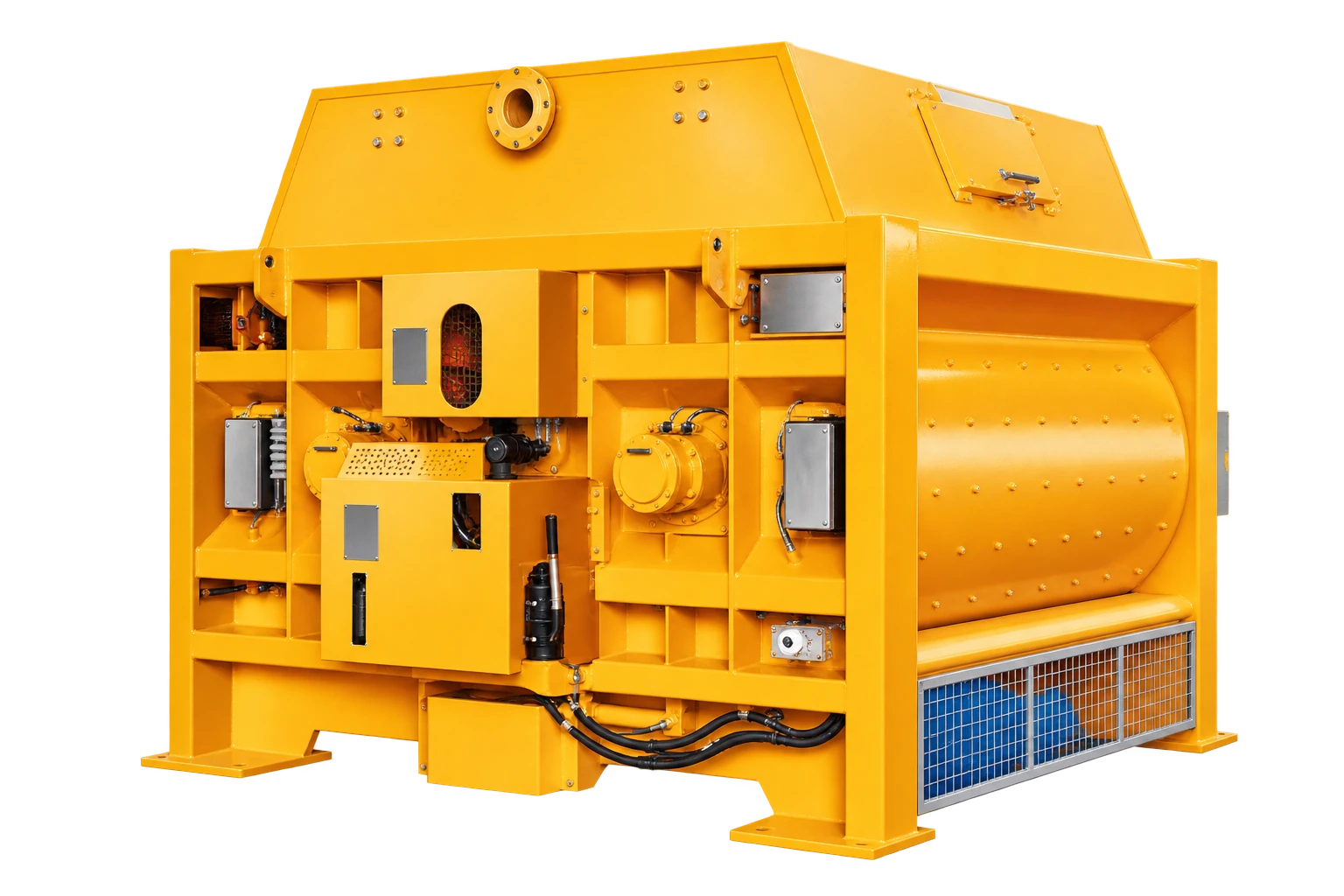
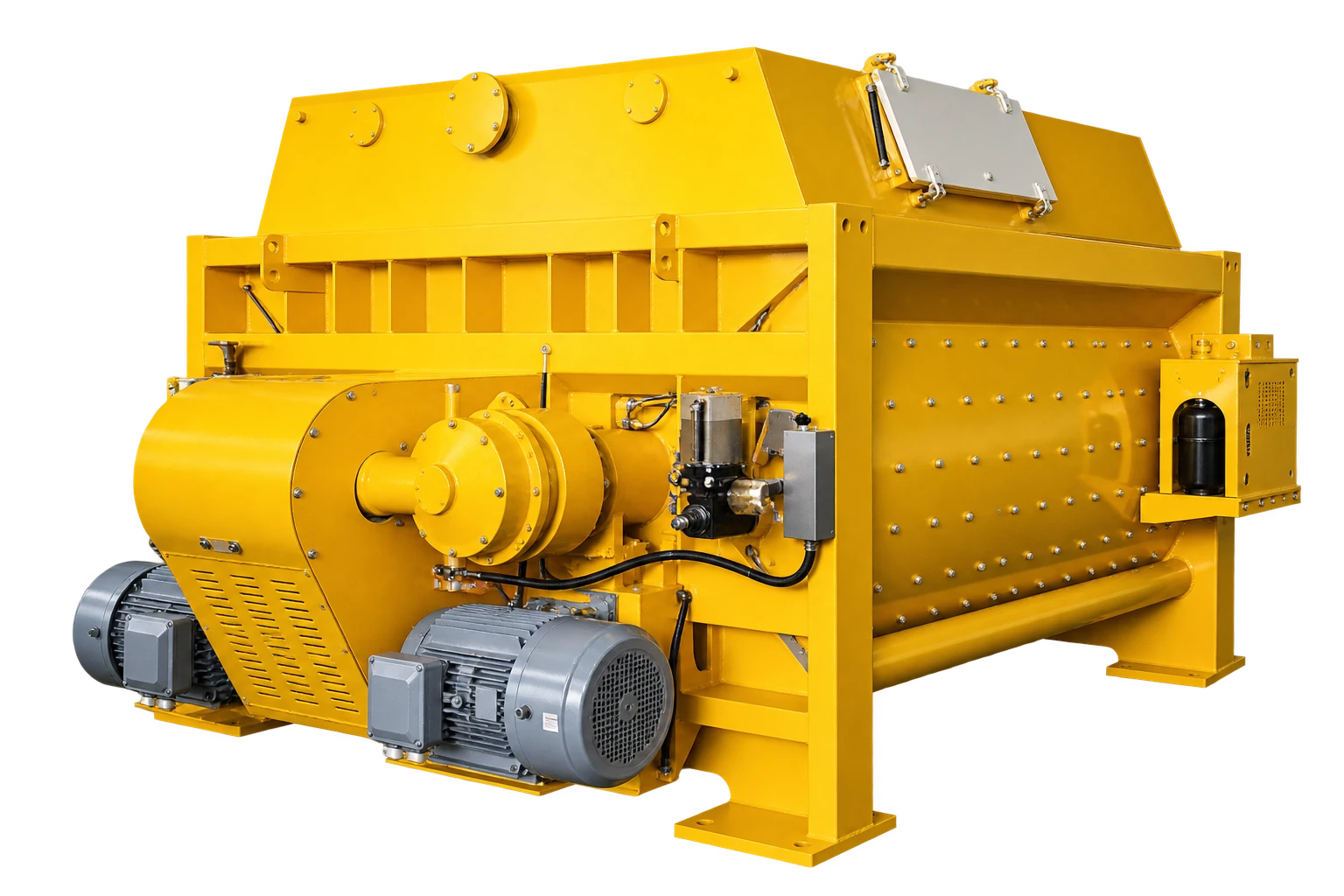
The MAO/MAW Mining Mixer is a heavy-duty twin-shaft range for mining and high-volume duties, published in a 3–10 m³ class. VOGO’s catalog says to select by batch output, aggregate size and production duty. Those are candidate-screening inputs, not proof of paste rheology, mixing energy, residence time or guaranteed placement rate.
Define the backfill duty before comparing mixers
Start with the mine plan and the recipe-development program. Record the required placement volume by stope and shift, operating hours, planned interruptions, line flushes, changeovers and standby philosophy. The mixer must fit the dewatering, binder dosing, surge storage, pumping or gravity-feed system and underground reticulation—not operate as an isolated machine.
The Australian Centre for Geomechanics paper State-of-the-Art in Paste Fill Technology explains that paste rheology can change while material moves from the mixer through the borehole and reticulation. It also identifies tailings agglomeration as a mixer-design concern because incompletely broken agglomerates can change stiffness downstream and contribute to line blockage. Therefore, an acceptance sample taken only at the mixer discharge does not describe the whole placement system.
Give each bidder the same project envelope:
| Input | What to declare | Why it changes selection |
|---|---|---|
| Tailings | Particle-size distribution, mineralogy, solids condition and variability | Affects wetting, agglomeration, rheology and wear |
| Binder and water | Types, concentrations, temperatures and dosing tolerances | Changes reaction, consistency and sequence |
| Rheology | Test method, sample location and target operating window | Links mixing to transportability |
| Production | Required accepted volume per hour and operating availability | Sets true cycle and duty requirements |
| Reticulation | Route, elevation, line diameter, pump or gravity basis and hold-up risk | Defines the downstream boundary |
| Cleaning | Flush medium, destination, access and isolation | Determines downtime and safe maintainability |
Separate recipe development from equipment proof
Recipe development establishes a workable combination of tailings, binder and water. The Pinos Altos case study describes laboratory rheology testing followed by recipe optimization in a two-phase program. That approach illustrates the correct sequence: characterize and optimize first, then prove the production equipment against the selected operating window.
Do not translate one laboratory mixing time directly into production seconds. The peer-reviewed study on specific mixing energy of cemented paste backfill varies time, speed and load mass and shows why the preparation method can affect consistency. Its authors also caution that the relationship between laboratory and field specific energy still requires validation. Use laboratory results to define a trial plan, not a guaranteed scale-up factor.
A useful supplier return should state the proposed batch or continuous basis, working load, charging sequence, retained volume, mixing endpoint, drive-load evidence, discharge control and the variables recorded during a trial. Ask what happens at the minimum and maximum planned solids condition, not only at the easiest recipe.
Calculate required accepted output on one basis
Use accepted paste at the mixer discharge as the common production basis, then account for availability separately.
Hypothetical example: a mine needs 1,260 m³ of accepted paste during a seven-hour placement window. If planned operating availability during that window is 85%, the required operating rate is:
1,260 m³ ÷ (7 h × 0.85) = 211.8 m³/h
Round only after adding justified surge and scheduling allowances. This is an arithmetic example, not an MAO/MAW capacity. It does not establish batch size, cycle time or pump capacity. The supplier must return those values against the actual recipe and line design.
For a batch mixer, reconcile the claim with:
accepted output per batch × accepted batches per hour = accepted hourly output
The batch cycle must include all charging, mixing, discharge, gate movement, interlocks and routine cleaning that consume production time. For continuous duty, define residence-time distribution, feed-control stability and how off-spec material is detected and diverted.
Compare mixing mechanisms with measured endpoints
Mixer labels do not establish performance. The study on the effect of high mixing intensity reports that mixing intensity can alter cemented paste backfill rheology. Treat that as evidence that energy and procedure matter, not as proof that the highest intensity or largest motor is automatically best.
Define the trial endpoints before suppliers run material:
- constituent mass reconciliation and dosing deviations;
- representative samples at defined discharge positions or time intervals;
- solids content and the agreed consistency or rheology tests;
- visible agglomerates or segregated material using a defined observation rule;
- mixer power or current trend, load, time and temperature;
- downstream pressure, flow and restart behavior where the project scope permits;
- repeat-batch variation and recovery after a planned interruption.
The related high-strength concrete trial-batch guide provides a useful principle even though the material differs: process records, discharge samples and final-property acceptance are separate evidence streams. For paste backfill, do not let one strength result erase a rheology or transport failure.
Specify system boundaries and maintainability
State who supplies the tailings feed interface, binder and water dosing, dust extraction, controls, sample points, discharge hopper, pump interface, flushing system and off-spec diversion. “Enclosed” does not mean airtight or pressure-rated. Require declared seals, vent connections and allowable pressure conditions if the project needs containment.
Include access for inspection, wear measurement and cleaning without personnel entering a hazardous zone. Before servicing, all mechanical, electrical, hydraulic, pneumatic and gravity-fed energy sources must be isolated. OSHA 1910.147 addresses unexpected energization during servicing; an emergency stop is not an energy-isolation procedure.
Use a staged acceptance plan
- Document review: freeze the material envelope, process basis, interfaces and measurement methods.
- Representative material trial: run more than one load at agreed low, normal and difficult conditions.
- Factory acceptance: verify mechanics, controls, interlocks and recorded process signals.
- Site commissioning: test the complete feed-to-reticulation chain and planned restart cases.
- Performance run: demonstrate accepted output, repeatability and availability over the agreed duration.
Acceptance limits must come from the mine’s geotechnical, process and placement design. VOGO catalog data can identify a candidate size; it cannot replace recipe qualification, reticulation engineering or project acceptance.
Conclusion
Mine paste backfill mixer selection connects characterized feed, target rheology, mixing energy, accepted output and reticulation behavior in one testable specification. Compare suppliers on the same material and duty basis, reconcile hourly claims with complete cycle time, and require a full-scale trial with repeatable process and downstream evidence. Use the MAO/MAW range as a candidate platform only after those project inputs are defined.
References
Australian Centre for Geomechanics — State-of-the-Art in Paste Fill Technology ↗Minerals — Specific Mixing Energy of Cemented Paste Backfill, Part I ↗Minerals — Effect of High Mixing Intensity on Cemented Paste Backfill ↗Australian Centre for Geomechanics — Design of the Paste Backfill Recipe for Pinos Altos Mine ↗OSHA — Control of Hazardous Energy ↗