A reclaimed concrete wash water specification should define the source, intended blend, qualification evidence and control responsibilities before equipment is purchased. Settling water until it looks clear is insufficient evidence of suitability. The producer needs a repeatable way to supply approved mixing water and retain the records for affected batches.
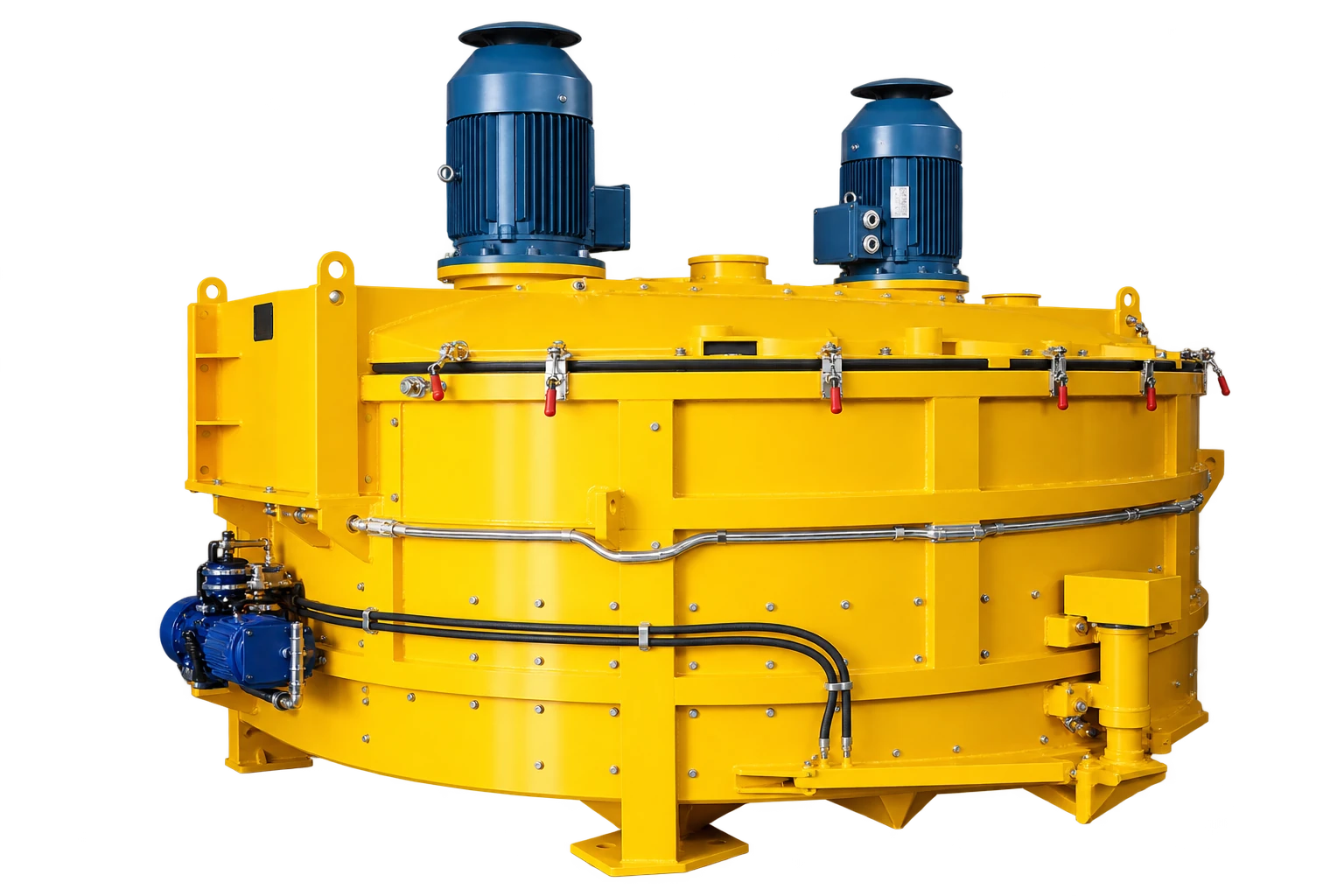
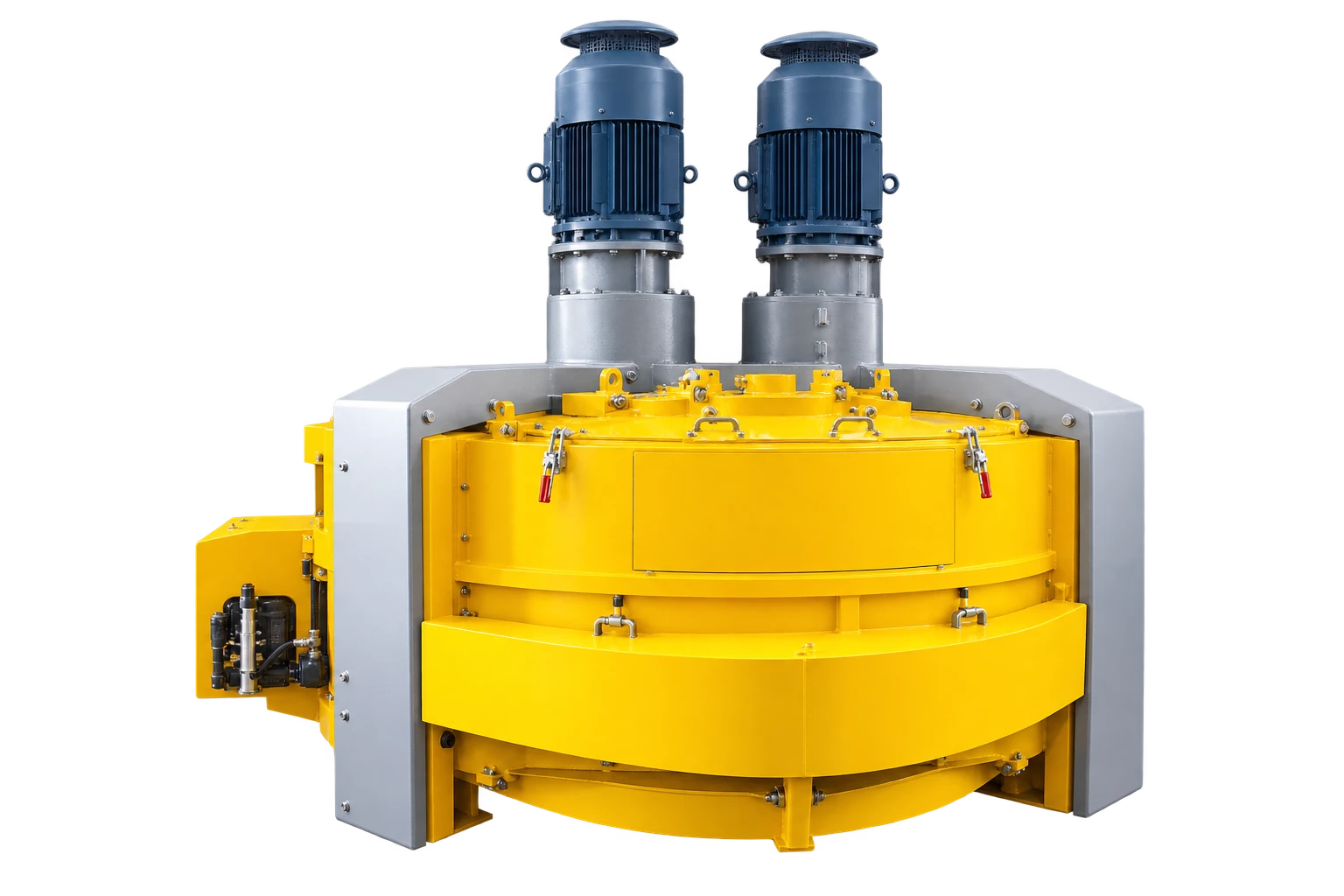
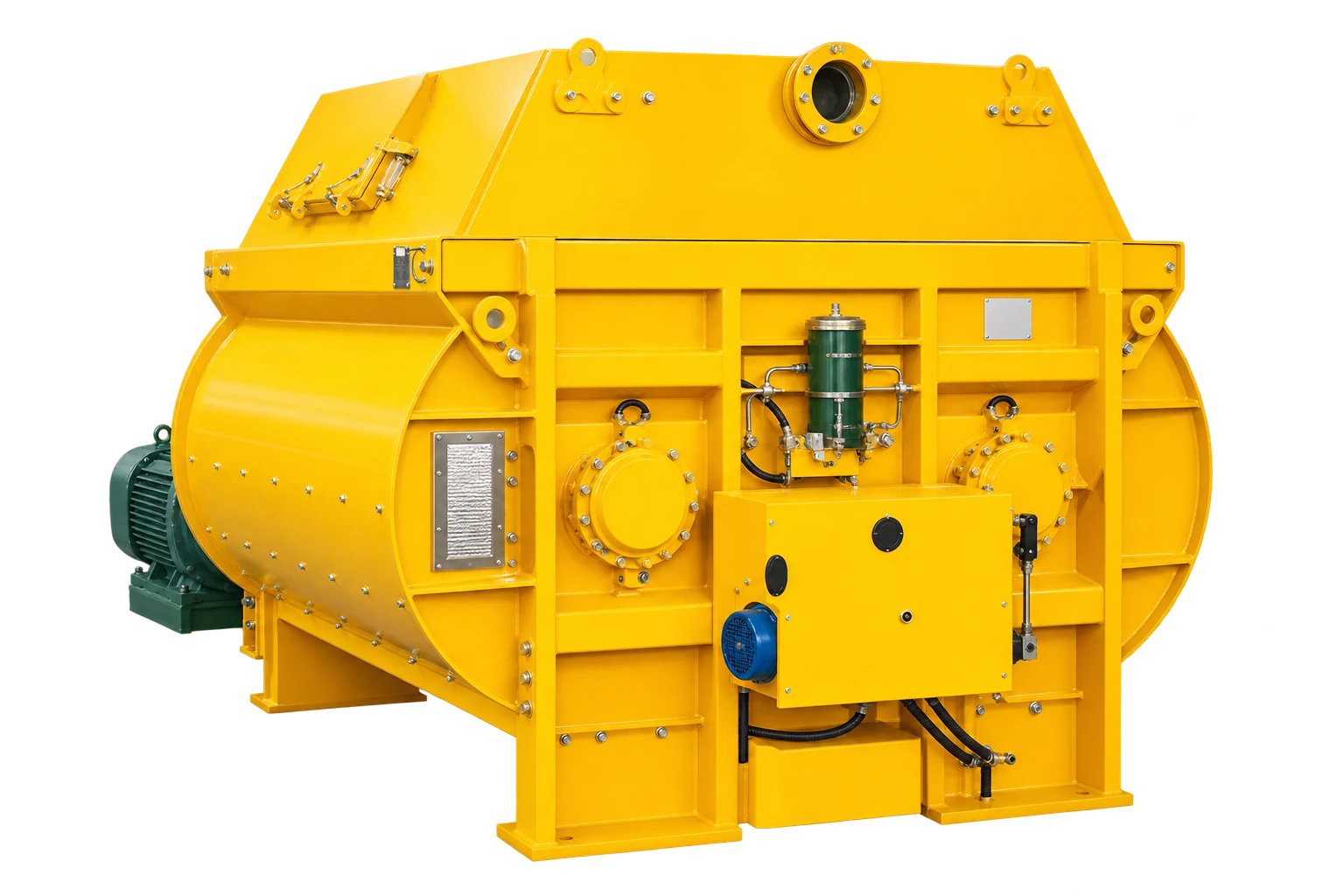
The MEO twin-shaft concrete mixer is a catalog mixing range selected by compacted output, plant capacity and installation space. Its listing does not establish that a reclaimer, slurry tank, agitator, pump or reclaimed-water meter is included. Treat these as separate procurement interfaces requiring an explicit supplier response.
Identify the stream you want to reuse
Distinguish mixer cleaning water, returned-concrete reclaimer water, collected storm water and other site liquids. A shared collection pit can combine streams with different histories. Record the collection route and any potential contamination before describing the material merely as recycled water.
Cement Concrete & Aggregates Australia’s recycled-water review distinguishes clarified wash water from higher-solids slurry water. Its literature review reports that solids and water age can affect water demand, setting and other concrete properties. Treat this as engineering context; the project specification and actual qualification tests still control acceptance.
Draw the route from collection through storage and blending to the actual batching point. Name the point where samples will represent water supplied to concrete. A tank-top sample and a later dose drawn from a different level may describe different material. The sampling and handling arrangement needs its own validation.
Separate qualification from the equipment package
The public scope of ASTM C1602/C1602M-22 covers individual or combined water-source qualification. Its abstract identifies concrete strength and setting time as performance requirements, density monitoring and optional chemical limits. Obtain the complete applicable standard and purchaser requirements before fixing test methods, limits or frequencies; this article does not reproduce them.
The same scope excludes methods of water storage, transport and blending and the development of producer quality-control programs. Consequently, a statement that a package is “to C1602” does not answer who supplies agitation, establishes sampling or manages a change of source. Return those questions separately in the inquiry.
Use this original boundary worksheet to compare offers. It is an editorial procurement aid, not an ASTM acceptance table.
| Boundary | Information to provide | Supplier return or responsible owner |
|---|---|---|
| Source identity | Collection route and permitted streams | Excluded liquids and segregation arrangement |
| Qualification | Governing specification and intended blends | Producer/laboratory approval and test records |
| Storage | Variation, holding arrangement and usable inventory | Tank and agitation scope requiring confirmation |
| Transfer | Route, elevation and proposed material condition | Pump, piping and cleanout responsibility |
| Batching | Required dose basis and water accounting | Metering method and control-system interface |
| Release | Accepted operating envelope and change triggers | Hold, investigation and restart authority |
Ask every bidder to mark included, excluded, buyer-supplied or unresolved. An empty line is not an included item. Price unresolved equipment separately rather than comparing a mixer-only offer with a complete recovery installation.
Reconcile water and solids at the batch controller
ASTM C1602’s public abstract treats batch water, ice, aggregate free moisture, water introduced with admixtures and later additions as parts of mixing water. Reclaimed slurry introduces an additional accounting question because its gross mass can include suspended solids. The laboratory and control supplier must approve how the actual stream is represented in the recipe and ticket.
For example, a controller entry labeled “100 kg reclaimed water” is ambiguous if one party means gross slurry mass and another means water alone. This is an interface example, not a recommended dose or a validated solids-correction equation. Agree the measurement, sampling basis and conversion before coding automatic substitution. Density alone does not identify every dissolved constituent or prove concrete performance.
The existing aggregate moisture correction guide owns the SSD aggregate calculation. Keep that correction distinct from reclaimed-water qualification, then reconcile all authorized water sources once. Do not apply a second manual correction after the controller has already included the same quantity.
Agree a change and hold procedure
Write down what changes require investigation: a new collection stream, an unapproved blend, a measurement fault or material outside the qualified envelope. The producer’s quality plan should identify affected batches and the evidence needed before returning to normal use. Do not invent a universal testing interval or a maximum replacement percentage from a mixer model.
Require a commissioning record that connects the water sampled, the metered dose, the recipe revision and the concrete tests. Include ordinary operation and the agreed response to an invalid measurement. A successful pump run demonstrates transfer; it cannot by itself demonstrate accepted concrete quality.
The public scope of ASTM C94/C94M-24a places ready-mixed concrete quality within the specification or purchaser’s stated requirements. Where that specification applies, preserve the purchaser’s acceptance boundary. For another product or jurisdiction, name its governing basis instead of assuming that one standard covers every application.
Conclusion
Buy a reclaimed-water interface from a stated source, qualification plan and complete division of responsibility. Keep concrete acceptance with the approved quality process and require explicit returns for storage, transfer, metering and controls. The useful mixer offer identifies those interfaces without implying that a catalog mixer alone qualifies the water or supplies a recovery plant.