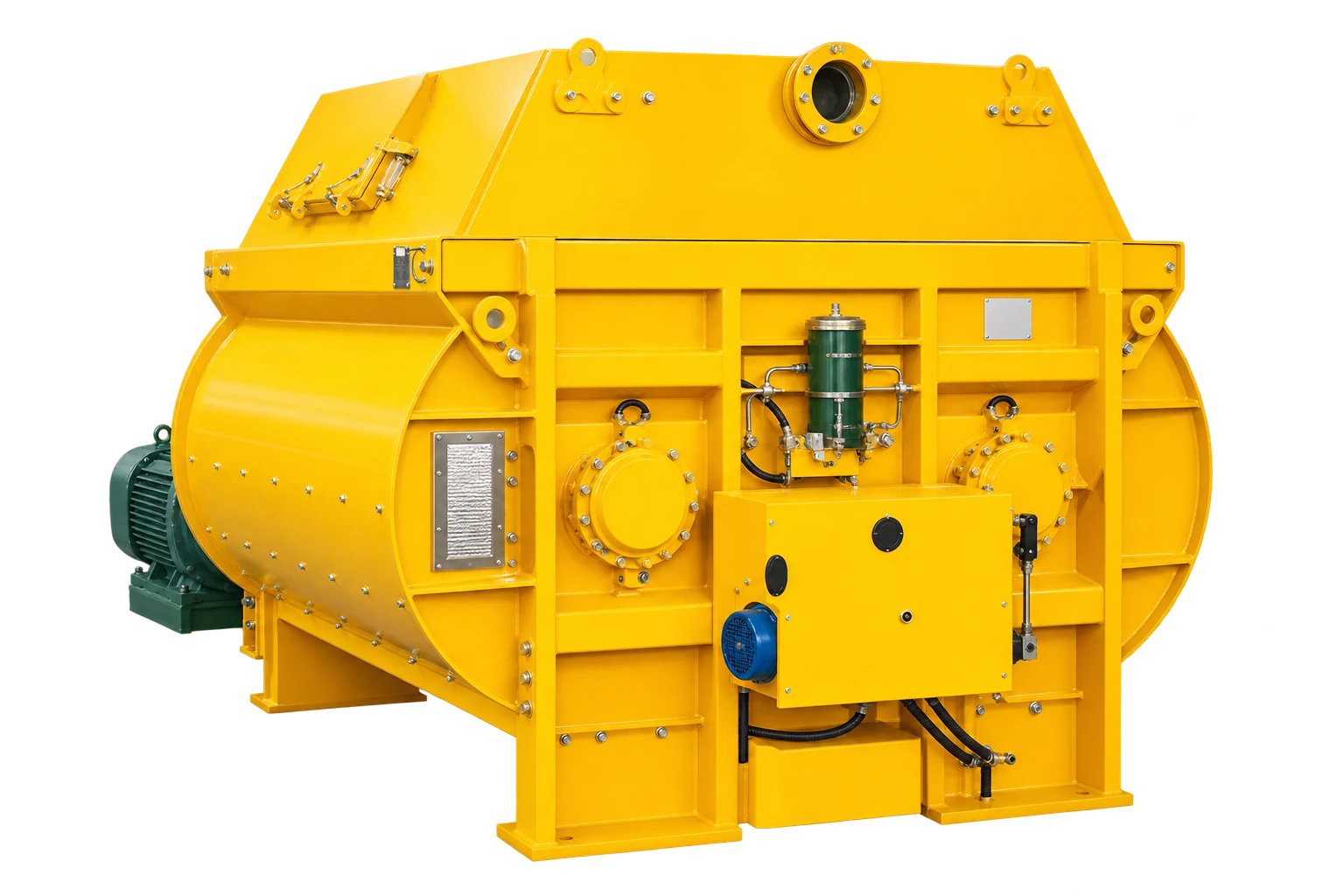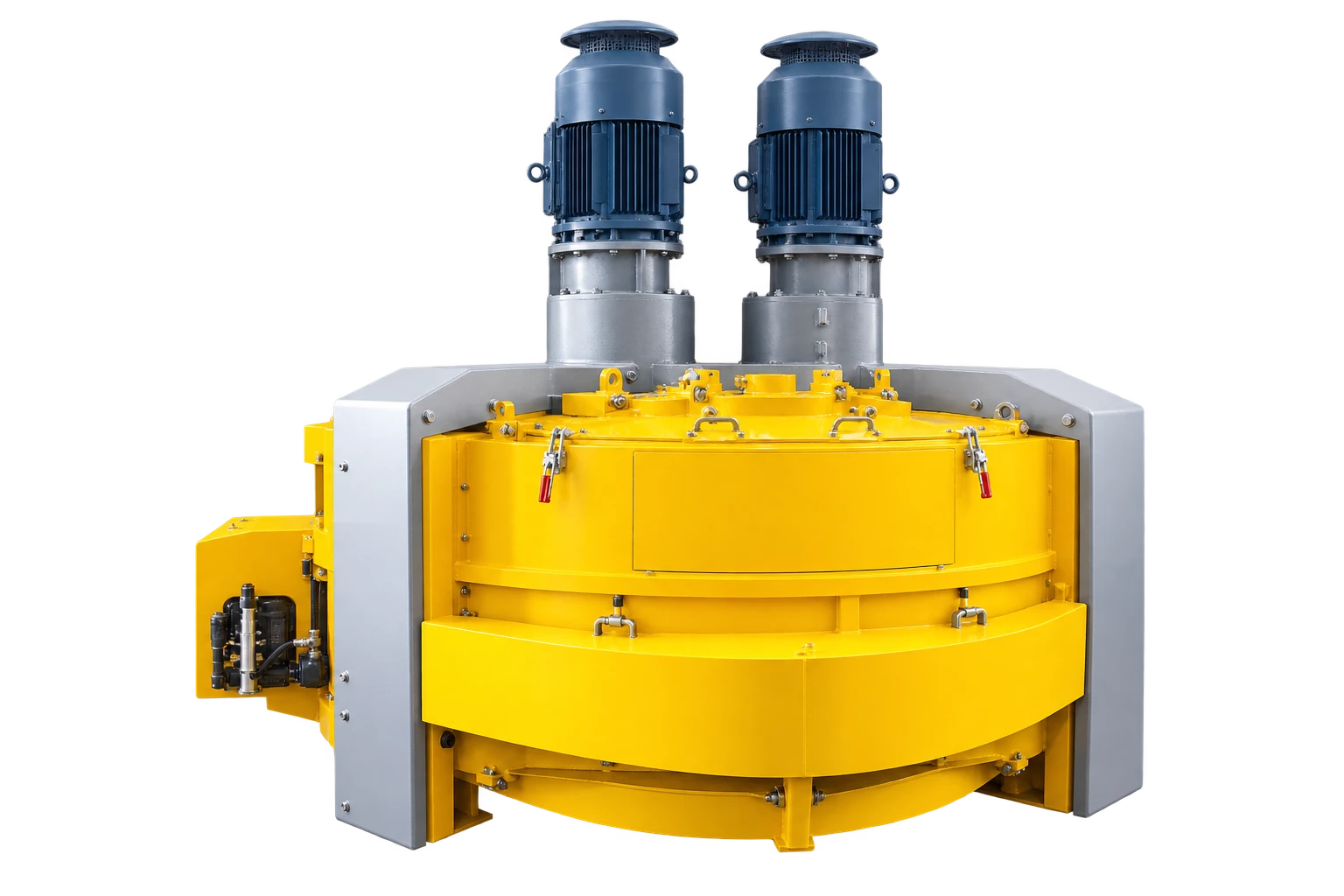
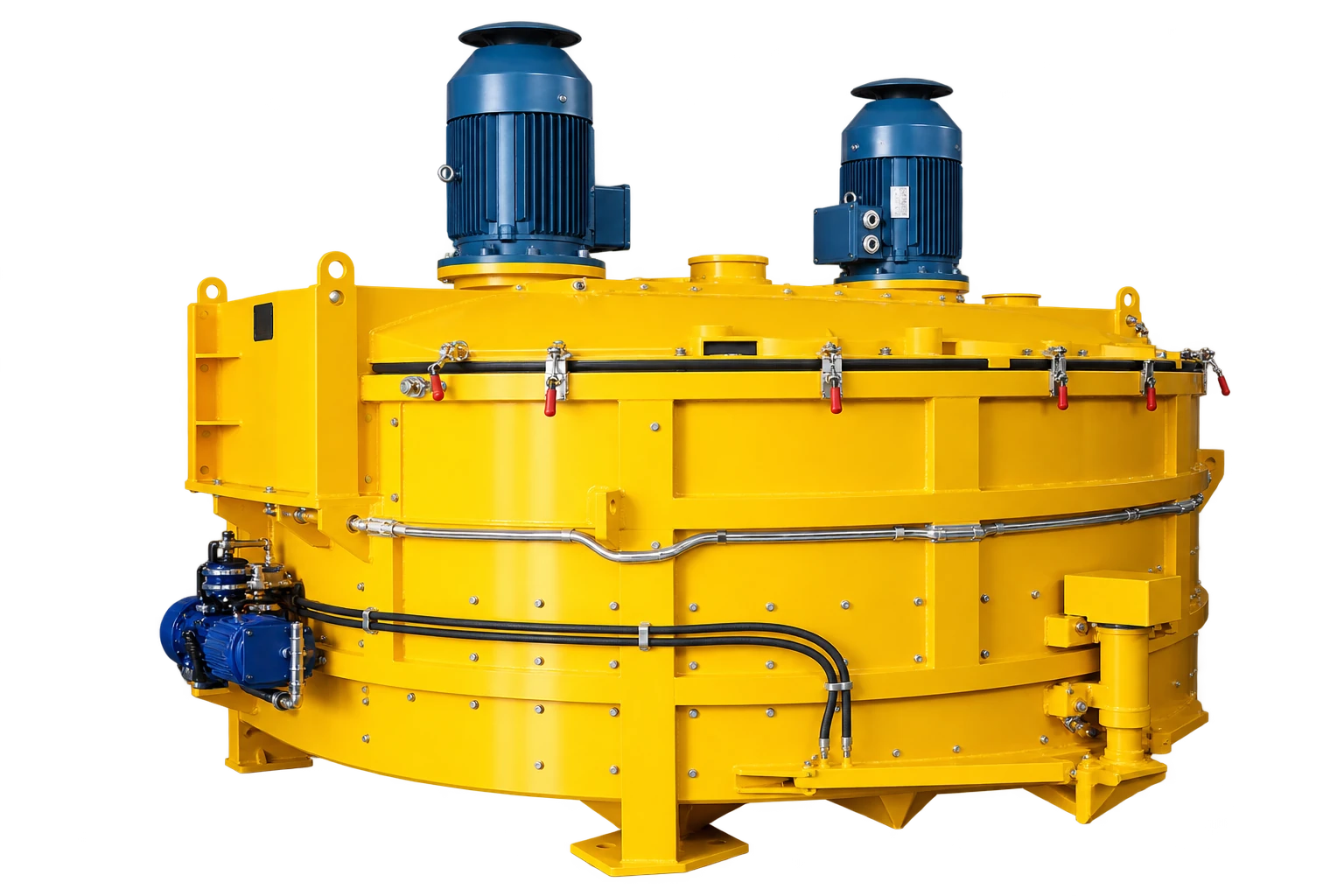
An MPC750/500 vs MEP750/500 quotation comparison should start with concrete output and complete supplied configuration. The reviewed VOGO MPC table and Euromecc MEP page both identify 500 L compacted or vibrated output. That common volume does not establish equal cycle time, electrical demand, installation dimensions or accepted results with your recipe.
The MPC planetary concrete mixer range is the VOGO catalog destination for the MPC candidate. Request a current offer for the exact model and accessories. The comparison below uses published reference data, not two live commercial quotations, and makes no claim that VOGO is affiliated with Euromecc or that one machine is an approved replacement for the other.
Compare MPC750/500 vs MEP750/500 quotation fields
The MPC entries below come from the site’s current SICOMA 2022 catalog evidence. The MEP entries were read on Euromecc’s manufacturer page on 31 October 2026. Confirm the latest offered configuration and drawing with each seller; catalog references and a dated website reading are not a binding offer.
| Published field | VOGO catalog MPC750/500 | Euromecc MEP750/500 |
|---|---|---|
| Concrete-output label | Compacted output | Vibrated concrete output |
| Output under that label | 500 L | 500 L |
| Separate dry-capacity field | Not stated in the current MPC performance table; confirm | 750 L |
| Separate fresh-output field | Not stated in that table; confirm | 600 L |
| Mixing-motor power field | 22 kW | 1 × 18.5 kW |
“Not stated” means that this comparison lacks that field; it does not mean zero capacity or that the equipment cannot perform the duty. In particular, do not infer an unlisted capacity solely from the digits before the slash. Obtain the offered-unit data sheet and have the supplier define each volume.
The historical SICOMA MP engineering brochure separates dry filling, compacted output and mass limits. It is evidence that these fields answer different questions, not authority to copy an older MP drive or dimension into the current MPC offer. Preserve manufacturer, series, full model and document revision together.
Read the motor comparison without inventing savings
The 22 kW and 18.5 kW entries are published mixing-motor fields. They are not measured input energy per accepted batch. A smaller installed motor number alone cannot rank mixing quality, overload capability or annual electricity cost.
Euromecc lists hydraulic and skip motor information separately from mixing power. Ask each bidder for the same electrical boundary: mixer drive, hydraulic unit, skip where supplied and other included auxiliaries. Do not compare a total connected load from one package with only the mixing motor from another.
If operating cost affects the decision, agree a representative recipe, accepted output and measurement boundary for an energy test. Keep loading, mixing, discharge and idle portions visible. These are proposed procurement measurements, not claims of a particular supplier’s savings or guaranteed test result.
Normalize the equipment included in each price
Issue one return sheet instead of asking only for the price of a “500 L planetary mixer.” The following is an original quote-comparison worksheet; its items require supplier confirmation and are not automatically included in either offer.
| Price boundary | Required return from both bidders |
|---|---|
| Mixer assembly | Exact model, tool arrangement, lining and delivered drive configuration |
| Charging | Belt, skip or buyer feed; included structure and interface responsibility |
| Discharge | Number and type of gates, power unit, transitions and receiving interface |
| Controls | Panel, field devices, utility requirements and integration boundary |
| Service | Cleaning equipment, access, lifting provisions and identified initial spares |
| Acceptance and delivery | Trial duties, documents, packing, freight and named delivery place |
Require included, excluded, buyer-supplied or unresolved against each line. A product page that lists an accessory does not necessarily say it is included in a particular price. Obtain currency, offer date, validity, taxes, payment milestones and commissioning obligations for the transaction.
Do not create a generic market-price range from unrelated listings. A low-cost bare mixer and a package with skip, hydraulic equipment, controls or site services are different purchases. Keep allowances visible until the responsible supplier provides an amount; unknown cost must not be entered as zero.
Keep recipe acceptance separate from catalog similarity
The ACI technical answer on mixing adequacy describes checking samples from different portions of discharge and comparing concrete properties under the applicable criteria. That supports an agreed uniformity trial, not a guarantee that any two mixers of the same nominal volume will deliver the same result.
Ask both suppliers to accept the same recipe envelope and evidence plan. Identify what the contract means by accepted output, how the cycle is measured, which tests apply and who approves the result. A no-load demonstration cannot establish concrete uniformity. Conversely, a price comparison should not silently impose one supplier’s unsupported cycle assumption on the other.
Use the existing planetary mixer selection guide for the broader production-cycle and recipe-trial method. This page owns the narrower named-model quotation comparison. Verify the current layout and installation drawings separately; a matching output figure is not proof that foundations, charging or discharge fit.
Conclusion
Compare MPC750/500 and MEP750/500 prices only after aligning output definitions, supplied equipment and acceptance duties. Keep the published 500 L and motor entries attached to their actual sources, leave unlisted fields unresolved, and request current configuration-specific offers. Choose from documented project fit and accepted scope rather than the model suffix or a single kW value.