
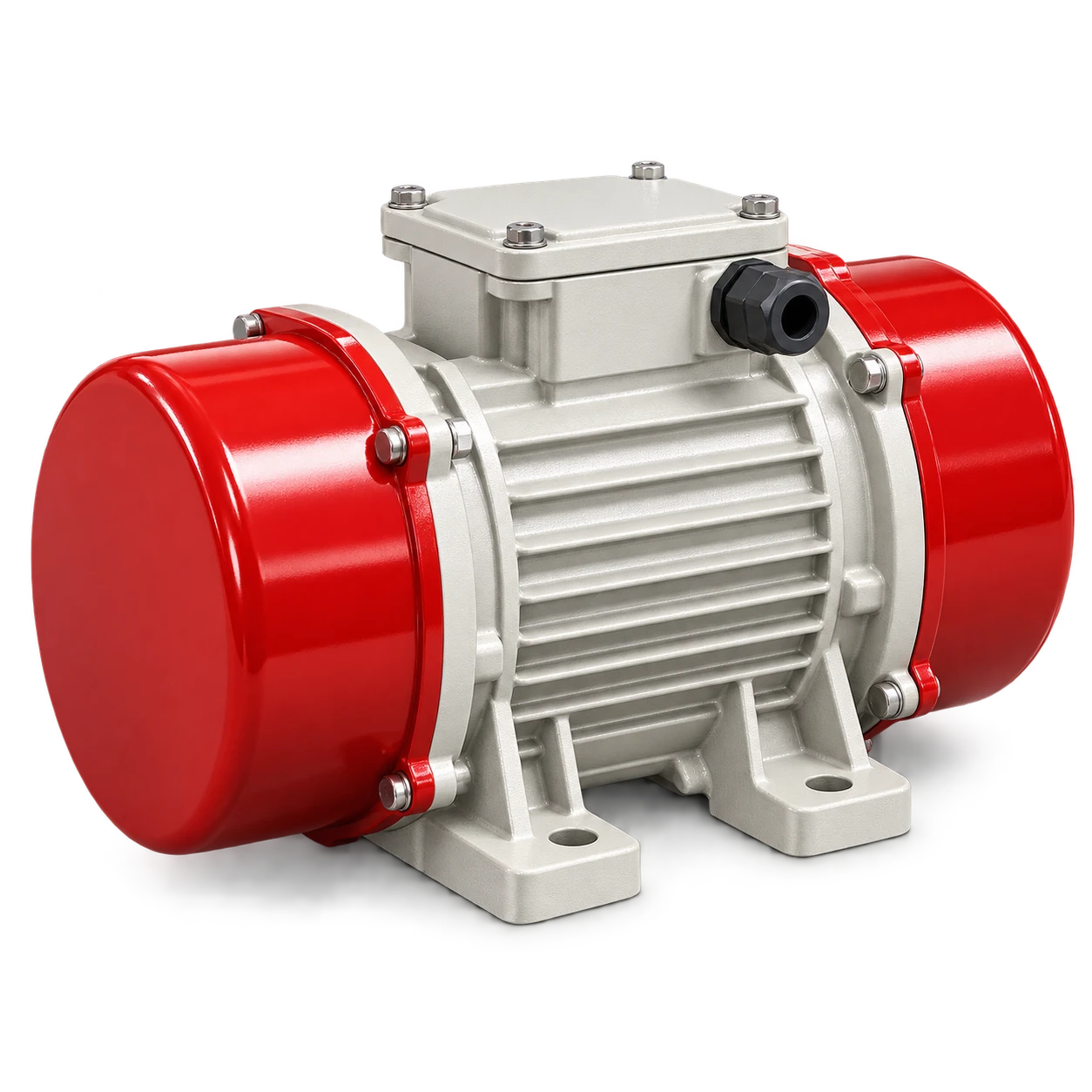
A replacement vibrator motor quotation should compare the existing installation with the proposed unit, field by field. Matching power, a familiar model prefix or a similar photograph is insufficient. The purchase decision needs a traceable identity, a mounting drawing, electrical data and a clear list of differences for the equipment owner to approve.
The MVE series vibrator motor is cataloged for hoppers, silos, screens and feeders. The published selection basis is excitation force, speed, power and mounting size. Its listing does not establish interchangeability with another manufacturer’s motor or confirm a particular machine’s operating approval. Ask for a configuration-specific response rather than assuming that a shared MVE designation identifies the same product.
Build an identity package before asking for price
Photograph the full nameplate, the complete installed motor and the surrounding mounting arrangement. Include the original purchase reference, serial number and machine identification where available. A readable nameplate photograph is better evidence than a model copied from an old maintenance spreadsheet with unknown provenance.
Separate the original design requirement from the condition of a failed unit. Record why replacement is proposed and whether the machine has changed since commissioning. A cracked mounting plate or altered control sequence should be declared in the inquiry; a new motor cannot be assumed to correct that underlying problem.
Martin’s electric-vibrator manual distinguishes model families by mounting pattern and specifies mounting-surface requirements. This supports checking the interface explicitly. Its dimensions and installation limits belong to the cited models and are not VOGO replacement approvals.
Send a comparison table that exposes missing information
The following is an original purchasing worksheet, not a design standard. Complete the existing column from traceable records or authorized measurements. Ask the supplier to fill the proposed column and mark each item as confirmed, different or unresolved. A blank cell must not be interpreted as agreement.
| Comparison item | Existing installation evidence | Required supplier return |
|---|---|---|
| Identity | Nameplate, serial and machine reference | Exact offered configuration and document revision |
| Mechanical interface | Hole positions, sizes, foot geometry and drawing datum | Dimensioned drawing and every departure |
| Envelope and access | Covers, terminal box, cable approach and removal space | Installed envelope and service-clearance requirements |
| Operating duty | Approved speed, excitation requirement and run sequence | Rating basis and permitted duty for the offered unit |
| Electrical interface | Supply, phase, frequency and connection record | Nameplate data, wiring diagram and protection requirements |
| Environment | Ambient conditions, dust, moisture and location assessment | Documented suitability and explicit exclusions |
| Functional assembly | Single motor or paired arrangement | Scope of compatibility assessment and responsible reviewer |
Do not measure around moving equipment to complete this table. OSHA’s hazardous-energy overview explains the danger of unexpected startup and stored energy during servicing. Use the plant’s authorized isolation procedure and qualified personnel for inspections; a stop command is not permission to touch the installation.
Separate a direct replacement from an engineered substitution
Define the intended purchase category before comparing prices. A documented direct replacement retains the approved interfaces and operating basis. An engineered substitution has differences that require review. A candidate with unresolved information remains on hold. These are proposed procurement categories, not manufacturer certifications.
For example, an offered motor may match the bolt spacing but place its terminal box where the existing cable tray prevents access. The motor may be mechanically mountable while the installation remains unsuitable. Return the drawing conflict for resolution instead of approving it on the basis of a photograph. Conversely, an apparent housing difference may be acceptable after a documented clearance review; appearance alone is not the rejection criterion.
Require the supplier to list adapters, mounting changes, cable modifications and protection changes separately. Identify who designs and supplies them, who reviews the machine consequences and whether the price includes installation or only the motor. Do not treat an unpriced modification as included by default.
Obtain the electrical and paired-machine review
The Italvibras handbook requires supply/nameplate agreement and external overload protection. It also addresses interlocked protection for paired units. These are model-manual examples supporting a defined electrical review, not a wiring instruction or a claim that the cataloged MVE configuration includes those controls.
Ask the qualified electrical reviewer to check the offered nameplate, connection diagram, supply and existing starter or drive. If a variable-speed proposal is involved, require its separately approved operating envelope. On a paired machine, the equipment designer must decide whether one-unit replacement is acceptable and how the pair and fault response will be verified. Do not assume that two similar-looking motors form an approved set.
The existing frequency-selection guide owns the operating-point decision. Use it for that question rather than reproducing a frequency calculation in the replacement inquiry. This article’s purpose is to define the evidence and scope returned with a quotation.
Agree acceptance and delivery records before ordering
Require the offered-unit identification, approved drawing, applicable manual, supplied accessories and inspection documents in the order package. Agree how the delivered configuration will be checked against the accepted offer. Record storage and preservation instructions so that an urgently purchased spare does not enter service with an unknown history.
Mechanical fit, electrical readiness and process acceptance should each have an assigned reviewer. Establish the authorized commissioning plan and stop criteria before installation. The related force-adjustment guide addresses commissioning; it does not authorize copying another model’s settings or changing the driven structure without review.
Compare quotations on the same scope: motor, accessories, documented modifications, commissioning responsibilities and commercial delivery terms. No universal price premium or lead time follows from these categories. Obtain those terms for the actual offered configuration and keep unresolved exclusions visible.
Conclusion
Release a replacement vibrator motor order from a completed interface comparison and an approved deviation record. Keep unknowns on hold, assign review responsibility and preserve the accepted documents with the machine. That gives purchasing a defensible basis for comparing offers without turning a catalog similarity into an interchangeability guarantee.