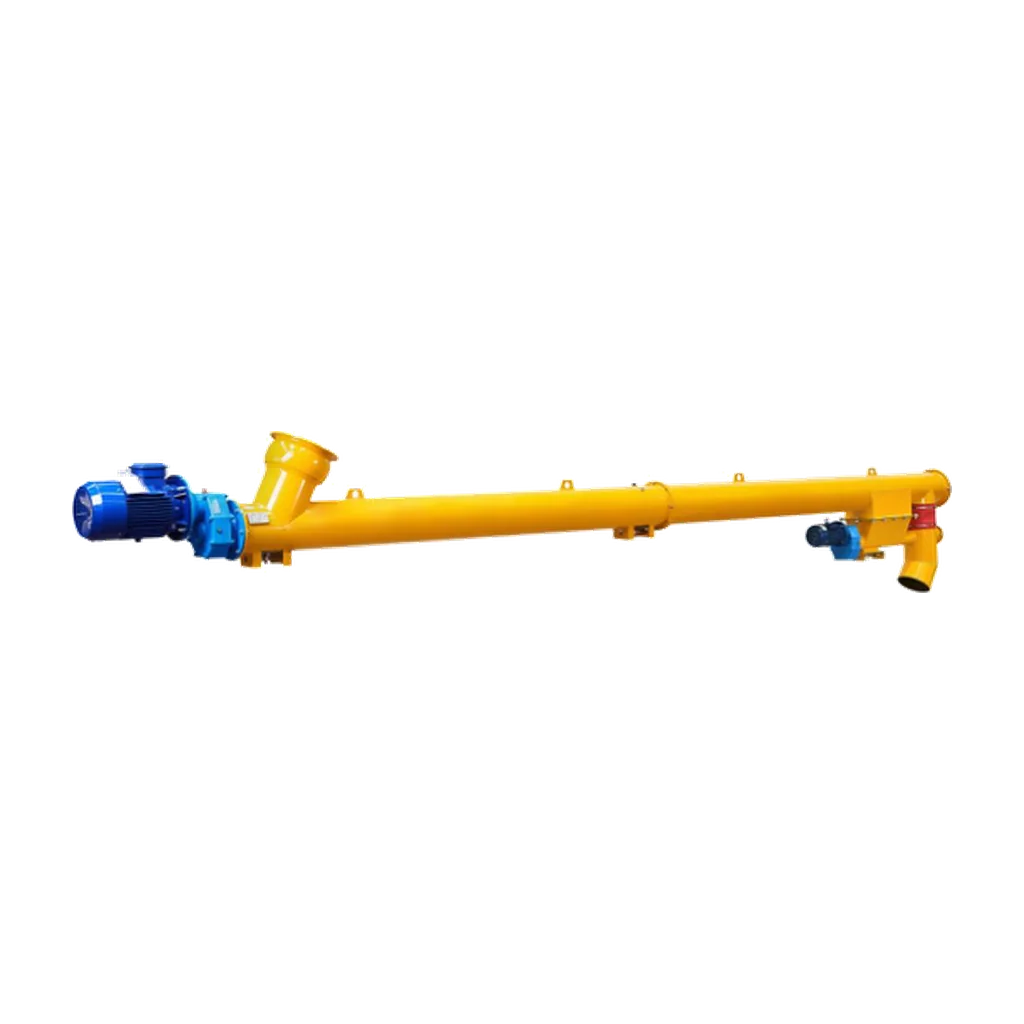
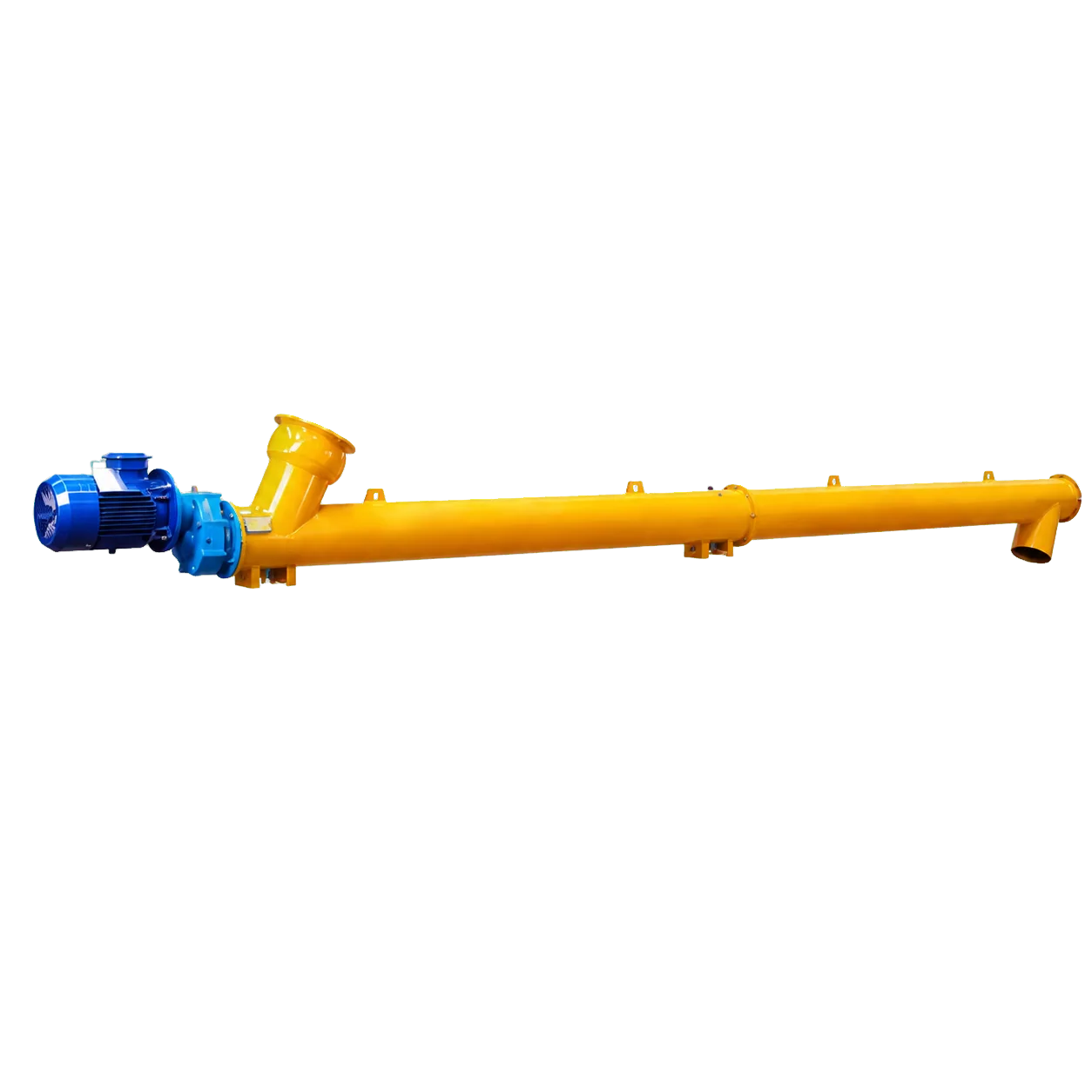
In bulk solid handling for cement, dry-mix mortar, and chemical plants, maintaining the physical integrity of dry powders is essential. Screw conveyors are used for their enclosed and compact design. However, the rotating screw flight that drives material forward can cause degradation and attrition. When handling sensitive materials such as fine cement, fly ash, or fragile mineral fillers, particle breakage and dust generation reduce product quality and downstream process efficiency. This guide analyses mechanical shear forces and impacts within the screw conveyor trough. It evaluates how flight speed, tip clearance, and flight geometry influence particle breakage. Process engineers can apply these principles to minimise degradation while maintaining required throughput.
Mechanics of material degradation
Screw conveyors degrade materials through friction, squeezing, and shearing forces. Unlike belt conveyors, which carry material, or pneumatic systems, which suspend particles in an airstream, screw conveyors rely on mechanical displacement. When the motor rotates the screw blade, friction occurs between the blade and the material. The blade also exerts an axial thrust to shear and push the material forward. This process subjects the material to continuous squeezing and rubbing against the blades and pipe walls.
Attrition occurs mainly at the fixed gap between the high-speed rotating blade tips and the trough or pipe wall. This narrow clearance traps and shears brittle powders. The conveying action also creates plug flow, pushing powder along the tube walls while the spiral turns within the product. The material stays inside the trough for the entire transit time and interacts with the flight and enclosure. For fragile materials, this prolonged mechanical interaction breaks particles. This changes the particle size distribution and generates fines, which can affect the rheology of concrete or the strength of dry-mix mortars.
The influence of flight speed and tip clearance
The operational parameters of the screw conveyor affect material attrition. Flight speed, measured in revolutions per minute (RPM), determines the kinetic energy and shear forces applied to the particles. Higher rotational speeds increase the frequency and force of particle-wall and interparticle impacts. Higher speeds increase throughput but often worsen degradation. Lowering the screw speed minimises shear forces and reduces the breakage rate. This must be balanced against the required volumetric capacity. Reducing the speed requires a larger screw diameter or a higher trough fill level to maintain the same mass flow rate.
Tip clearance is the radial gap between the outer edge of the screw flight and the inner wall of the trough. An excessively large clearance allows material to recirculate and become trapped between the flight tip and the wall. This causes severe grinding and attrition. A tighter clearance reduces this recirculation and the associated shearing. Achieving minimal clearance requires precise manufacturing. The design must account for thermal expansion and shaft deflection during operation to prevent the flight from scraping the trough. Scraping causes material degradation and accelerates mechanical wear.
Selecting the right flight type for sensitive powders
The geometry of the screw flight changes the flow pattern and shear environment in the trough. The standard solid helicoid flight is a continuous surface that maximises axial thrust but applies constant shearing and squeezing forces to the material bed. Alternative flight designs reduce degradation for sensitive or easily degraded powders.
Ribbon flights have a central gap, reducing the solid surface area in contact with the material. This allows some material to pass through the gap, reducing squeeze intensity and creating a mixed flow pattern instead of a rigid plug flow. Engineers can also configure specialised low-shear flight profiles or shaftless designs for specific duties. These designs move the material with less aggressive axial thrust, reducing mechanical stress on brittle particles. When selecting a flight type, engineers must evaluate the material’s fragility, bulk density, and flowability. While ribbon or low-shear flights mitigate degradation, they alter conveying efficiency and required drive power. The overall system must be recalibrated to maintain stable performance.
Engineering solutions and system configuration
Beyond the screw itself, the system configuration and trough design affect material integrity. Mechanical alignment and bearing selection are fundamental. Misaligned shaft sections or worn hanger bearings make the screw wobble, which creates uneven tip clearances. Where the clearance temporarily closes, the flight scrapes and grinds the material, which causes severe localised degradation. Appropriate hanger bearings and precise shaft alignment during installation reduce vibration and maintain a consistent radial gap.
The choice between a U-trough and a fully enclosed tubular screw conveyor also changes internal conditions. Tubular designs keep the conveying path compact and limit external dust exposure, so they require strict attention to internal clearances and surface finishes. Smooth surfaces or low-friction coatings on the flights and inner trough wall reduce abrasion and the generation of fines.
Inlet and outlet design also matters. A poorly designed inlet drops material directly onto the rotating screw with high impact energy, which breaks particles immediately. Drop boxes, baffles, or controlled feeding mechanisms at the inlet introduce material gently into the conveyor to match the screw’s rotational direction and minimise sudden compaction. Operating the conveyor at an optimal trough loading fill level also prevents over-compaction. When a screw is completely choked or overfilled, extreme compressive forces act on the material and increase attrition. If the conveyor is correctly sized for the duty (using the published capacity range as a selection reference rather than a guaranteed output), engineers can maintain an ideal fill level that supports throughput while preserving the product.
Conclusion
Reducing material degradation in screw conveyors requires understanding the mechanical forces involved and selecting the correct equipment. Process engineers reduce particle attrition and protect sensitive powders through controlled flight speeds, precise tip clearances, appropriate flight geometries, and optimised inlet conditions. For facilities handling cement, fly ash, or other dry mineral fillers, the correct conveying solution maintains consistent downstream product quality.
VOGO Machine supplies cement screw conveyors in various tubular diameters and lengths, configured to match specific material characteristics and throughput requirements. Review selection parameters, discuss application needs, or download the datasheet on the VOGO cement screw conveyor product page. The engineering team is available to assist with system selection and operation.
For specifications, visit the cement screw conveyor product page.