
Introduction
In capital-intensive industries like cement manufacturing, concrete batching, and dry-mix mortar production, procurement decisions often focus on the lowest initial purchase price. Evaluating bulk material handling equipment only on capital expenditure (CAPEX) is a fundamentally flawed financial model. The true economic cost of a screw conveyor is its Total Cost of Ownership (TCO). TCO encompasses the initial purchase price plus the operational, maintenance, energy, and downtime expenses accumulated over the equipment’s entire lifecycle. Mechanical engineers, maintenance supervisors, and plant directors must thoroughly understand these TCO components to optimise long-term profitability and maintain continuous production. Handling fine powders like cement introduces unique challenges, including material aeration, fluctuating bulk densities, and high abrasiveness, which severely impact equipment longevity if ignored. This article analyses the lifecycle expenses of screw conveyors in cement and powder handling, explaining how to minimise TCO through rigorous equipment selection, advanced material upgrades, and proactive preventative maintenance.
Breaking down the total cost of ownership
Managing lifecycle expenses requires breaking the TCO into distinct, measurable primary components. Initial CAPEX includes the purchase price, freight, and basic installation. However, Operational Expenditure (OPEX) typically constitutes the vast majority of long-term costs. OPEX includes electricity for continuous motor operation, wear parts like flights, trough liners, hanger bearings, and shaft seals, and the labour required for routine maintenance and replacements. In cement handling, the specific wear mechanisms—primarily micro-cutting abrasion from hard clinker particles and adhesive wear from fine dust—dictate the replacement frequency of these components.
Beyond direct operational costs, unplanned downtime is the most expensive variable in the TCO model. A blocked or failed conveyor can halt an entire batching line or kiln feed process, causing severe production losses that often dwarf the cost of the equipment itself. For instance, the cost of a halted cement kiln can exceed thousands of pounds per hour in lost output and thermal inefficiency. Cement is highly abrasive and accelerates wear exponentially if the equipment is not specified correctly for the bulk density, moisture content, and particle size distribution of the specific cement grade. A complete TCO model must project these operational variables over an equipment lifespan of 10 to 15 years to identify the main cost drivers and justify investing in project-specific engineering rather than off-the-shelf solutions.
The hidden costs of improper specification and gap design
Incorrect gap specifications between the screw flight and the conveyor shell significantly increase TCO. This radial clearance strictly controls material flow, energy efficiency, and wear rates. A tight gap causes flight tips to grind continuously against the shell, increasing wear and friction while risking severe blockages due to thermal binding. Conversely, a loose gap increases material backflow and slippage, forcing the motor to work substantially harder to maintain the required throughput.
Improper clearances can increase power consumption by up to 15%. In a practical case study at a European cement plant, an undersized radial gap of less than 3 mm caused flight tip replacement every six months instead of the expected three-year cycle. It also caused hardened material buildup that required weekly manual cleaning, exposing workers to confined space hazards. The system drew excessive current and frequently tripped safety relays during peak loads. Furthermore, thermal expansion in high-temperature environments complicates gap determination. Metal expansion requires larger initial cold-state gaps to prevent binding at operating temperatures, but calculating this requires precise knowledge of the conveyor’s thermal gradient and the specific coefficient of thermal expansion for the chosen steel alloy.
Mitigating material fluidisation and environmental compliance costs
A frequently overlooked factor in the TCO of powder conveyors is the management of material fluidisation and the associated environmental compliance costs. Fine cement powders can easily become aerated during pneumatic transfer or mechanical agitation, causing the material to behave like a liquid. If a screw conveyor is not designed to handle this aerated state, the powder can flood through the clearances, leading to massive spillage at the discharge and along the trough.
This fluidisation results in severe housekeeping issues and increases OPEX through the labour and equipment required for continuous cleanup. More critically, spilled cement generates fugitive dust emissions, which can lead to substantial regulatory fines and increased costs for secondary dust extraction systems. To mitigate these hidden costs, engineers must specify air-permeable hanger bearings that allow trapped air to escape without letting powder into the bearing housing. Additionally, integrating properly sized dust extraction flanges at the inlet and discharge, and ensuring the trough is fully sealed with gasketed inspection hatches, prevents environmental breaches. Ignoring fluidisation dynamics in the design phase inevitably shifts these costs into the OPEX phase, where they are much more expensive to control.
Strategies to minimise lifecycle expenses
Minimising TCO requires careful design, operation, and maintenance. The first step is to collect accurate data for sizing. Suppliers require detailed material properties—including angle of repose, bulk density, and flowability indices—alongside throughput requirements, centreline length, inclination, and power supply details to configure the drive and geometry correctly. Guesswork or reliance on generic sizing tables inevitably leads to suboptimal performance and accelerated wear.
Material and component upgrades also drastically reduce long-term costs. Specifying wear-resistant alloys, such as AR400 steel or Hardox for flights and trough liners, and matching hanger and end bearings to the specific operating temperature and load reduces replacement frequency. For highly abrasive clinker, chilled iron or tungsten carbide-tipped flights can extend wear life by a factor of three. Drive optimisation further lowers expenses. Variable frequency drives (VFDs) and soft starters manage startup torque and match motor speed to actual load requirements. This reduces mechanical stress on the shaft and gearbox, prevents power spikes, and eliminates energy waste during partial load operations.
Plants must also shift from reactive repairs to predictive maintenance. Condition monitoring, such as bearing temperature sensors, vibration analysis, and motor current baselines, helps maintenance teams identify anomalies before they cause catastrophic failure. Addressing minor wear trends early extends component life and optimises spare parts inventory, preventing costly unplanned downtime.
Evaluating suppliers through a TCO lens
When procuring a screw conveyor, engineers must consider the total lifecycle value rather than just the initial quote. A supplier might offer a lower upfront cost by using inferior materials, standardising components regardless of the specific duty, or omitting essential service features. A robust TCO evaluation prioritises suppliers that provide project-specific configurations, matching the diameter, length, and drive arrangement to the application. It is also highly beneficial to select vendors who utilise Discrete Element Method (DEM) modelling to simulate material flow and predict wear patterns before fabrication.
Equipment must also be designed for maintainability. Serviceable components, such as selectable hanger bearings and accessible, gasketed inspection hatches, reduce the labour time required for routine maintenance. An enclosed, rigid tubular body limits external dust exposure, which lowers environmental compliance and housekeeping costs. This design keeps the conveying path compact. The smaller footprint minimises civil engineering retrofitting expenses and simplifies integration into existing plant layouts, protecting the initial capital investment. Ultimately, the cheapest quote often becomes the most expensive asset if the supplier lacks the engineering depth to support the equipment over its 15-year lifecycle.
Conclusion
Minimising the total cost of ownership for screw conveyors requires a fundamental shift from evaluating initial procurement costs to analysing comprehensive lifecycle value. Precise specification, optimal gap design, correct material selection, and proactive maintenance drastically reduce energy consumption, extend component life, and prevent the devastating financial impact of unplanned downtime. By addressing fluidisation and environmental compliance during the design phase, plants can further protect their operational margins.
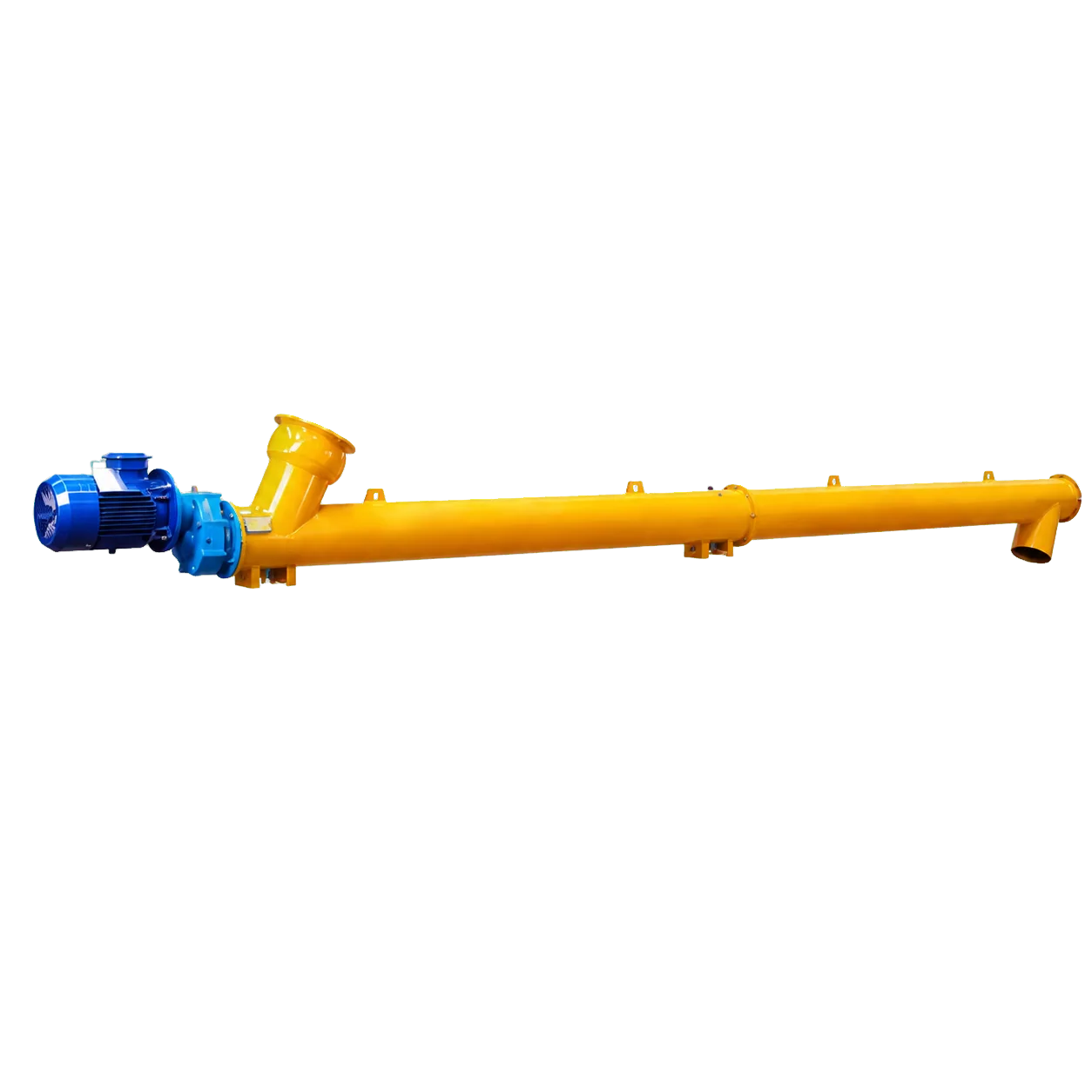
VOGO Machine designs and supplies cement screw conveyors in tubular configurations with selection diameters of Ø89 to Ø407 mm. Each unit is configured using specific material and process data to provide reliable, enclosed powder conveying. Visit the VOGO cement screw conveyor product page or download the datasheet for selection parameters. Published capacity ranges are selection references; actual output must be confirmed for each project.