
Introduction
Material handling efficiency directly affects plant productivity and product quality in cement, mining, and dry powder processing. When designing or upgrading a facility, plant engineers and project managers must select the appropriate conveying technology. This choice depends on material characteristics, required throughput, and plant layout. A standard comparison in bulk material handling is between screw conveyors and belt conveyors. Processing plants use both systems, but their applications differ. Belt conveyors move large volumes of coarse, abrasive materials such as sand and gravel. Handling cement, fly ash, and other fine, dry powders requires dust control, moisture protection, and layout flexibility. This article compares screw conveyors and belt conveyors. It explains why enclosed tubular screw conveyors are better suited for cement and powder handling.
Design principles and material suitability
Screw conveyors and belt conveyors differ in how they move material. A belt conveyor uses a continuous loop rotating over two or more pulleys. The open design moves coarse aggregates over long horizontal distances. However, the open belt is unsuitable for fine powders because the material can become airborne or absorb external moisture.
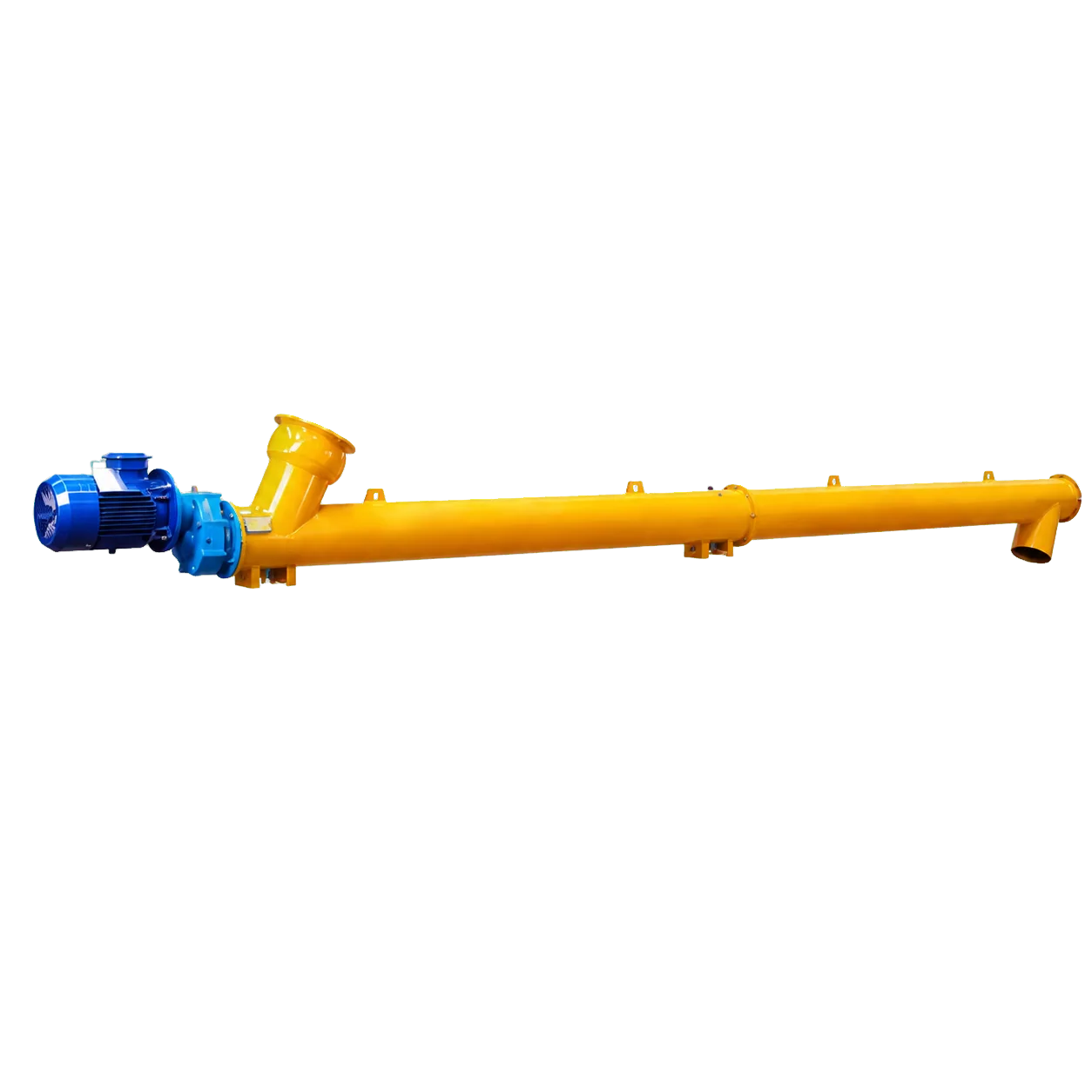
A screw conveyor uses a rotating helical screw blade, called flighting, inside an enclosed tubular or U-shaped trough. The enclosed system handles cementitious materials, mineral fillers, and other dry powders. The rigid tubular body keeps the path compact and isolates the material from outside air. Concrete batching plants store cement in sealed silos to protect it from humidity. The screw conveyor transfers cement from the silo to the weighing hopper, keeping the powder dry and uncontaminated until it is mixed. Because of this design, belt conveyors move aggregates, while screw conveyors transfer cement and fine powders.
Dust control and environmental compliance
Dust generation is a major challenge in cement and powder handling. Fine particulate matter poses health risks to plant personnel and causes material loss and environmental compliance issues. For dusty materials, the enclosed design of a screw conveyor is more effective than a belt conveyor.
Belt conveyors have an open design and require secondary containment, dust extraction hoods, and skirtboard sealing to manage fugitive dust. Transfer points where material drops onto or off the belt remain prone to dust emissions even with these additions. A tubular screw conveyor is dust-tight. The enclosed casing keeps the powder contained during the conveying process and limits external dust exposure. Enclosed screw conveyors suit harsh, dusty environments with strict environmental controls. Preventing dust from escaping the plant atmosphere keeps the working area clean and minimises product loss from wind or spillage. It also reduces the load on centralised dust collection systems. In facilities that use pneumatic transport for long distances, mechanical screw conveyors feed mixers or weighing hoppers over short distances. This precise metering occurs without introducing contaminants.
Incline capability and footprint flexibility
Existing structures, equipment placement, and vertical clearances often constrain plant layouts. A conveyor’s ability to navigate inclines and fit into a compact footprint is a primary selection factor. Belt conveyors have limited incline capability when handling bulk materials. If the angle is too steep, the material slides back down the belt. To achieve the necessary elevation change, belt conveyors often require long horizontal runs or multiple transfer points. This increases the overall footprint and adds maintenance points.
Screw conveyors are more flexible. The rotating screw moves material up inclines, typically up to 20 degrees, without significant loss of efficiency or material fallback. Plant engineers can use this to design compact, direct routing between process stages, such as transferring dry mix mortar ingredients or moving cementitious powders between different levels of a building materials plant. The compact footprint of a tubular screw conveyor means it fits in tight spaces where a belt conveyor will not fit. This is useful in retrofit projects or densely packed concrete batching plants where every metre of space is at a premium.
Maintenance and operational considerations
No conveying system operates without maintenance. Understanding the operational demands of each technology improves long-term reliability. Belt conveyors need regular attention for belt tracking, tensioning, and replacing worn idlers and pulleys. Abrasive materials and environmental degradation also wear the open belt.
Screw conveyors require maintenance primarily because of friction between the material and internal components. Powder friction against the trough and screw flighting causes wear. Maintenance involves periodically inspecting and replacing hanger bearings, end bearings, and shaft seals. When specifying a screw conveyor, provide accurate data for the material, bulk density, and required throughput. VOGO Machine requires specific inputs like the centreline length, inclination, inlet and outlet layout, power supply, and process temperature to configure the drive and bearing arrangement. This project-specific approach prevents over-specification, reduces power consumption, and extends the service life of wear parts.
Conclusion
Belt conveyors transport coarse aggregates horizontally, while screw conveyors handle cement and fine powders. They are dust tight, handle inclines, and require less floor space. Selecting a system matched to your material and process conditions reduces downtime and improves efficiency. VOGO Machine manufactures cement screw conveyors for dusty environments. The tubular models have diameters of 89 mm to 407 mm and catalogue reference capacities of 1.3 to 170 t/h. Visit the VOGO cement screw conveyor product page to check selection parameters, or download the datasheet for technical specifications.