A silo pressure relief valve quotation should identify the required airflow, the pressure at which that flow can be relieved, the silo’s approved pressure limits and the separate vacuum duty. A low opening pressure or matching flange does not establish that the offered valve can protect the installation. Ask suppliers to return evidence against the same duty schedule before comparing commercial totals.
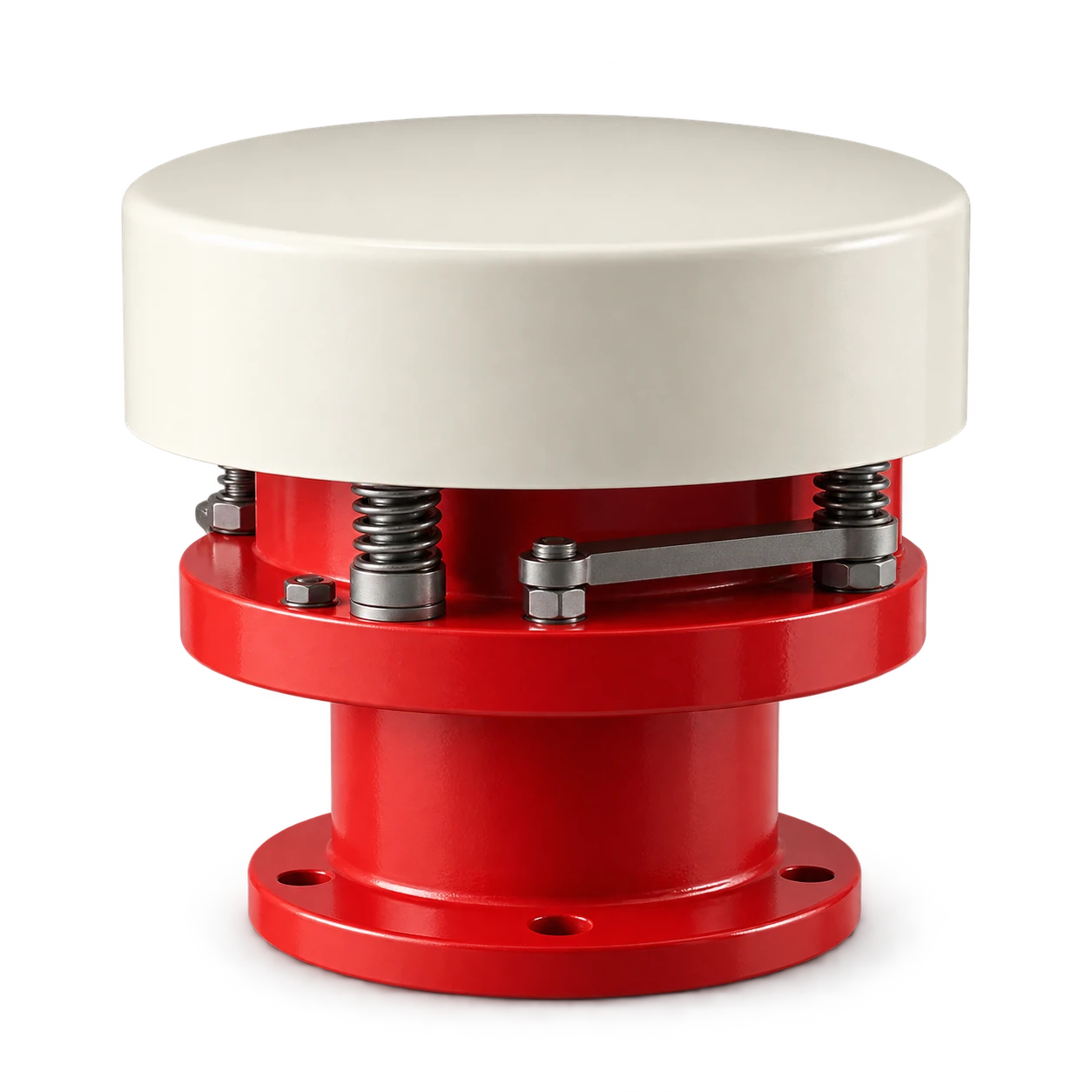
The VOGO RV silo pressure relief valve is cataloged for positive and negative pressure protection with a Ø250 installation size. Those facts are not a published capacity curve or a project-approved setting. The purchasing process below is intended for nonflammable, nonexplosive powder silos; combustible-dust explosion protection and pressure-vessel certification require separate assessment.
Start the silo pressure relief valve quotation with an approved duty
Assign an owner for the silo pressure limits, credible airflow cases and protection-system review. Procurement should obtain those inputs rather than choose structural limits from a valve brochure. Include the silo identification and applicable drawings, powder, temperature, filling method, delivery-air conditions, other connected air supplies and discharge conditions.
Opening pressure and airflow capacity at a stated pressure are different acceptance items. MPA’s 2011 Silo Safety guide, section 7.5 and Appendices A–B, explains that relief selection needs pressure and flow considered together. Its worked example is installation-specific, not a universal flow allowance. The guide’s scope and publication date should be considered alongside current site and jurisdiction requirements.
A useful engineering review asks: under the defined relief case, can the offered assembly discharge the required air while the silo remains within its approved limit? Record the pressure reference and units, air temperature and whether flow is stated at actual or reference conditions. Unlabelled m³/h figures cannot be compared reliably across different flow bases.
Request a supplier return matrix, not a bare model number
The following is a recommended offer-review schedule. The buyer’s engineer defines the duty; the supplier identifies the evidence for the offered configuration. Mark missing evidence as unresolved instead of turning a blank cell into an assumed approval.
| Acceptance item | Buyer’s input | Required supplier return |
|---|---|---|
| Positive-pressure case | Approved limit and credible inlet airflow | Opening behavior and pressure–flow evidence for that case |
| Vacuum case | Approved negative-pressure limit and air-inflow demand | Separate vacuum setting and capacity evidence |
| Evidence basis | Units, pressure reference and airflow conditions | Test or curve conditions, configuration and limitations |
| Connection | Nozzle/flange drawing and available space | Dimensioned matching drawing and installed orientation |
| Powder/environment | Material, temperature, weather and deposits | Compatibility statement and operating restrictions |
| Relief destination | Site access and discharge surroundings | Required discharge clearance and installation constraints |
| Documentation | Project acceptance requirements | Identified manual, setting record and evidence scope |
Positive-pressure relief and vacuum relief need separate documented duty cases. Do not assume that positive-pressure capacity proves adequate inward airflow during discharge or cooling. Include any credible vacuum case identified by the responsible engineer, with its own sign convention and allowable limit.
An archived WAM VCP manual, February 2001 edition, section E2, explicitly requires checking the valve setting against the silo limit. It illustrates why a factory setting needs application review. Its model-specific spring arrangements and settings are not RV data, current RV instructions or a basis for field adjustment.
Reject an attractive quotation when its pressure basis fails
Consider a hypothetical positive-pressure screening example. Assume the responsible engineer has provided a 30 mbar gauge silo limit and a defined required airflow. Offer A begins opening at 20 mbar gauge, but its curve reaches the required flow only at 35 mbar gauge. The opening value is below the limit; the demonstrated operating point is not. That offer fails the stated screening condition.
Offer B claims sufficient flow below 30 mbar gauge but provides no curve, test conditions or configuration identification. Keep it unresolved until evidence arrives. A claim without the supporting basis is not a passing alternative. These assumed pressures are examples only: they are not RV settings, recommended silo limits or a complete dynamic safety calculation.
All quoted pressures in this example are gauge pressures. The project review must also address tolerances, transient response, installation effects and the complete protection arrangement. Do not substitute a generic safety margin for the responsible engineer’s documented acceptance criteria. The same nominal diameter can conceal different performance evidence and scope.
Normalize scope after technical eligibility
Ask what the price includes: valve assembly, mating connection, seals, fasteners, setting documentation, manuals, test evidence, delivery and any installation assistance. Identify who supplies the roof/nozzle work and who approves it. Separate optional accessories from mandatory items so that the low-price offer does not omit an essential interface.
Request a revision-controlled schedule of deviations. “Suitable for cement silo” is not a response to a stated pressure–flow case. If the supplier proposes a different connection or installation orientation, return the change for engineering review rather than accepting it as a commercial equivalent.
Maintenance access is part of the installation scope. HSE’s equipment-maintenance guidance emphasizes planning, safe access and isolation. Include access responsibilities in the quotation without presenting this procurement checklist as a safe-work procedure. Do not ask personnel to lift or adjust a live relief device to obtain purchasing data.
Keep the rest of the silo protection system in view
A relief valve does not replace normal filter venting, level/pressure alarms, filling controls or maintenance. Record the interfaces and their owners even when they are outside the valve supply contract. A missing filter duty or delivery-air case cannot be repaired by selecting a valve solely from its catalog diameter.
The silo pressure relief valve inspection guide covers ongoing condition checks and the distinction between movement, setting and capacity tests. Those inspection procedures are outside this quotation review. Purchase acceptance should define which documented evidence is required before installation and which site verification remains necessary afterward.
Is the valve opening pressure enough to compare quotations?
No. A quotation also needs the pressure–flow evidence for the required relief duty and the installation conditions under which that evidence applies.
Conclusion
A defensible silo pressure relief valve quotation separates opening behavior, useful airflow at the permitted pressure, vacuum protection and installed scope. Release a comparison only when the same project inputs are answered by traceable evidence. An unresolved curve, setting or interface remains an engineering question, however competitive the quoted price appears.