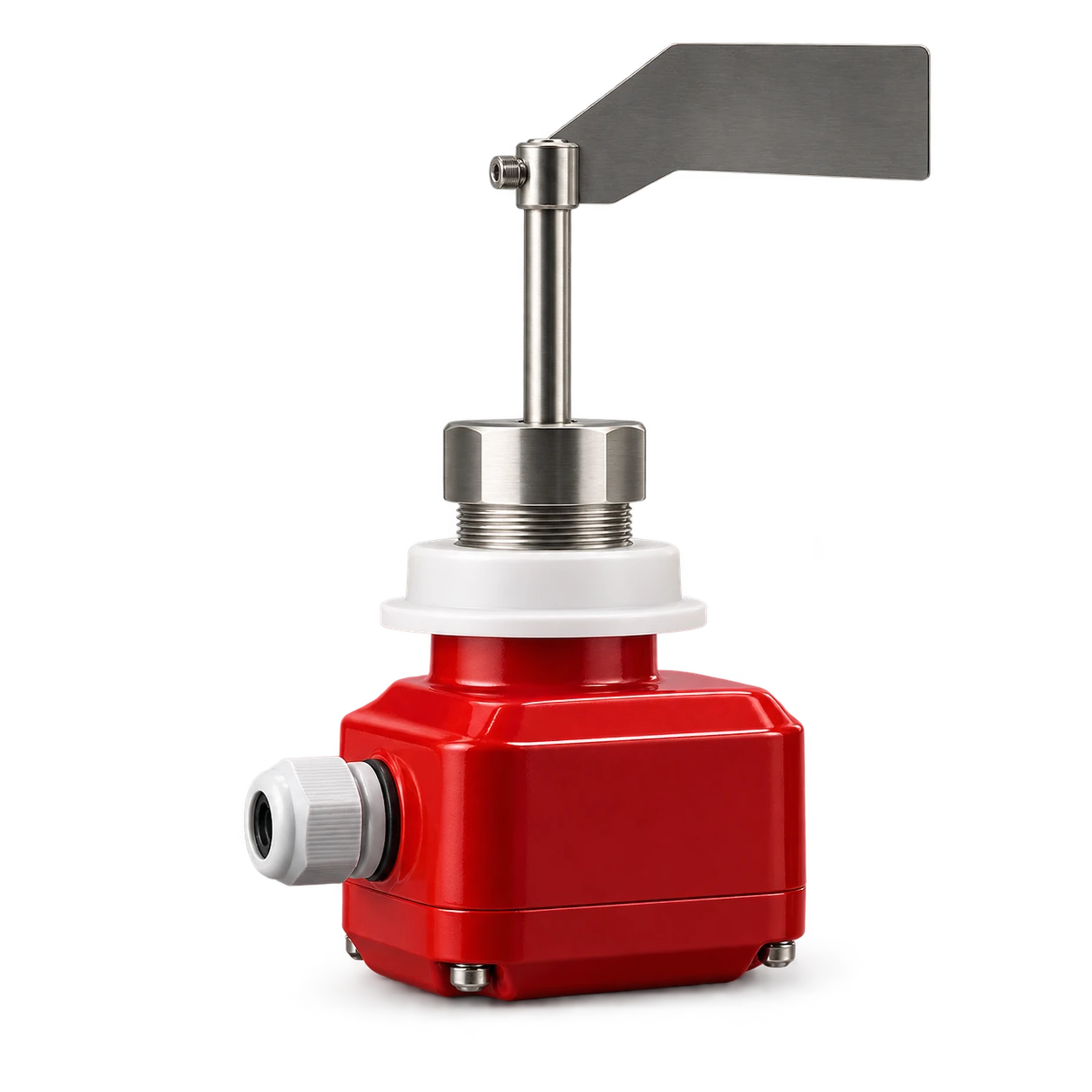
Choose hopper aeration pads or external vibrators from the material’s response and the hopper’s constraints. Aeration introduces air into suitable powder; an external vibrator transmits mechanical excitation through the vessel wall. Either can worsen an unsuitable application. A controlled material trial and a system review should decide the shortlist, rather than the cheapest device or the first moment of restored flow.
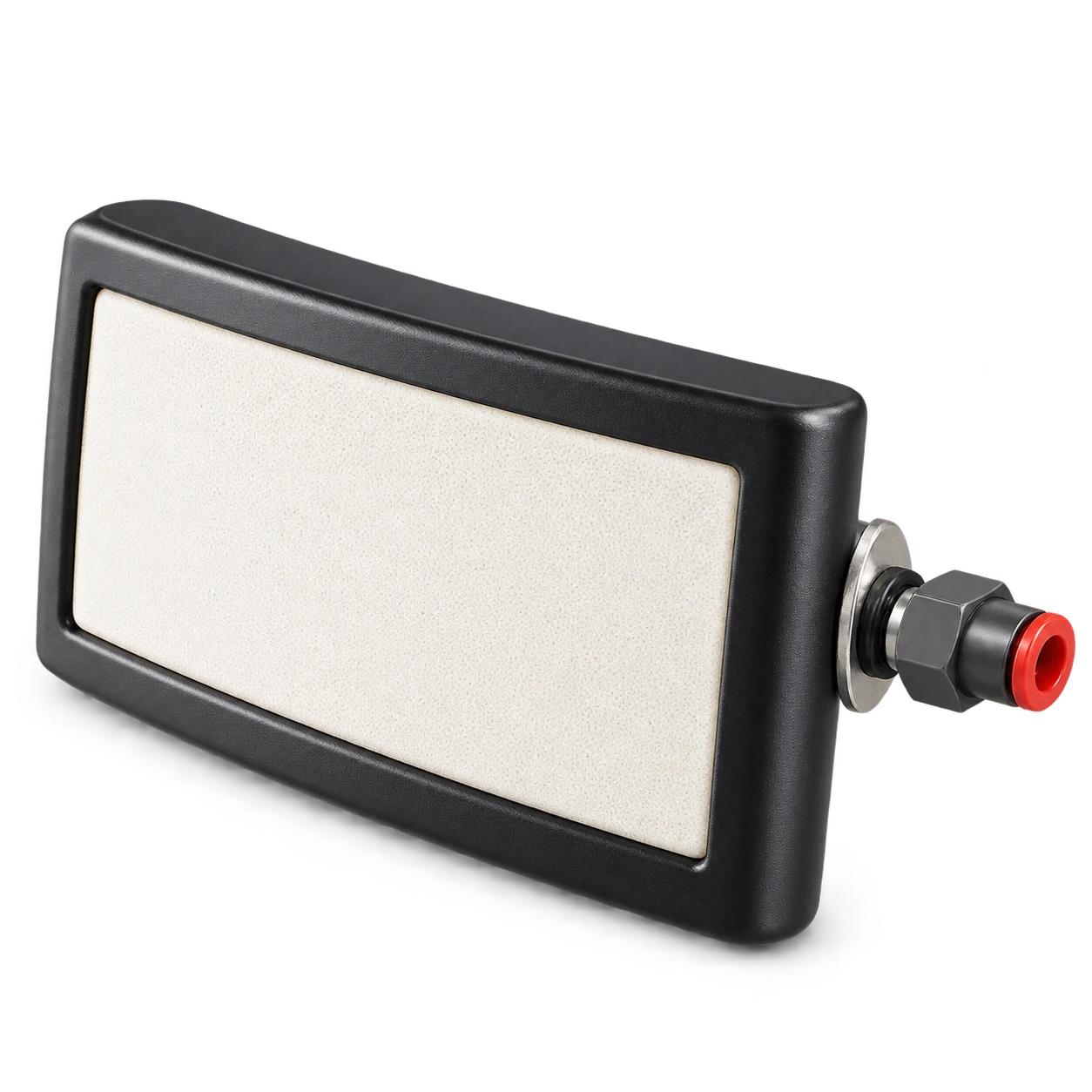
The PL air fluidization pad is the catalog option for an aeration review. Its presence in the catalog does not establish suitability for a particular powder. This comparison concerns porous aeration pads and external wall-mounted vibrators; air cannons, internal vibrating cones and mechanical extractors require their own assessment.
Diagnose the blockage before comparing devices
Distinguish a stable arch above the outlet, a central flow channel surrounded by stagnant material, and a downstream feeder that has stopped taking material away. Record moisture, storage time, fill level and whether the problem occurs after rest or during continuous discharge. A photograph of an empty hopper does not capture those conditions.
The SHAPA paper by the University of Greenwich’s Wolfson Centre relates reliable discharge to material strength, outlet geometry and the resulting flow pattern. It describes several flow-aid technologies because they act differently. Neither an air pad nor a wall vibrator changes an undersized outlet into a proven mass-flow design.
If records show worsening flow after a long storage interval, include that interval in testing. If the difficulty occurs only with one material source, preserve samples from that source. These are proposed investigation steps, not evidence that every cement or fly-ash silo has the same failure mechanism.
Compare aeration pads and vibrators by failure mode
| Decision input | Aeration-pad question | External-vibrator question |
|---|---|---|
| Material response | Does distributed air improve flow without unacceptable flushing? | Does excitation release material without increasing compaction? |
| Moisture and cohesion | Can air distribute through the actual stored powder? | Does the material become stronger when compacted? |
| Vessel interface | Can suitable pads be installed and maintained safely? | Can the wall, bracket and attachments carry the dynamic loading? |
| Process interaction | Can venting and downstream dosing tolerate added air? | Can the receiving feeder remove material during excitation? |
| Utilities | Is suitable air quality and controlled flow available? | Is the selected electrical or pneumatic supply suitable? |
| Acceptance | Stable discharge and acceptable air use | Stable discharge and acceptable structural/process response |
Jenike & Johanson warns that vibration can increase the cohesive strength of compressible materials, fluidize fine powders or worsen segregation. It also identifies fatigue and cracking risks where the vessel was not designed for vibration. This is a reason to verify material and structure, not a claim that every vibrator will fail.
Aeration has its own limits. The SHAPA discussion identifies difficulties with wet, sticky or coarse material and possible changes in discharge density under active aeration. A useful trial must therefore check what reaches the next process, not merely whether the hopper empties. A dosing system may reject a flow aid that produces intermittent surges.
Monitor’s air-pad documentation describes introducing air into dry powder and specifies clean, dry supply air for its device. Its pressures, consumption and coverage describe Monitor equipment. They are not PL settings or transferable spacing rules. Obtain the selected supplier’s project data before estimating utility demand.
Define a matched trial before changing the hopper
Use representative material and a repeatable fill-and-rest history. Agree the acceptable discharge behavior before testing, including downstream receiving capacity and stop criteria. Have competent specialists approve temporary mounting, instrumentation and operating methods; do not improvise by welding a motor to a thin wall or drilling unapproved air holes.
Measure useful discharge, not a successful restart
A practical comparison record can have four trial states: the unassisted baseline, approved aeration only, approved vibration only, and a repeat of the preferred state. Hold the material lot, fill condition, storage interval and receiving-feeder setting as constant as practical. Change one assistance method at a time so the result remains interpretable.
For each state, record time to first discharge, mass collected during equal intervals, interruptions, residue and any quality change. For aeration, also record pressure and airflow at defined points. For vibration, record the approved setting and structural observations. Noise, dust or structural concerns require the project’s own limits; this article does not supply universal safe values.
Consider a hypothetical acceptance requirement of 100–120 kg collected in each one-minute interval. Trial A gives 110, 20 and 200 kg; trial B gives 105, 108 and 106 kg. The averages are both 110 and about 106.3 kg/min respectively, but A fails two interval limits. This example illustrates why average throughput alone can hide a downstream problem. These figures are assumed, not VOGO tests or a recommended plant rate.
Repeat the acceptable state under the important stored-material condition. A freshly filled, dry sample can support a preliminary shortlist while leaving long-rest or higher-moisture duty unresolved. Record that unresolved condition explicitly instead of converting one successful run into a performance promise.
Check the receiving equipment and vessel protection
Aeration adds gas that needs a suitable exit path. The MPA silo-safety guide explains the consequences of inadequate venting and the roles of filters, warnings and relief protection during pneumatic delivery of non-explosive powder. Extending that system principle to auxiliary aeration requires a project review of simultaneous air sources. The guide is not an explosion-protection design or a PL approval.
External vibration also needs coordination with withdrawal. SHAPA advises sequencing vibration with material removal because excitation of confined material can consolidate it. Define what happens when the feeder stops, a valve closes or the receiving process becomes unavailable. Specify the approved fail state for each device.
If a screw is flood-loaded directly under the hopper, it performs feeder duty. Its withdrawal geometry and loaded restart must be reviewed separately from a control-fed conveyor. Restoring hopper flow does not establish that the feeder can absorb the resulting discharge. Enclosed construction also does not establish airtightness or a pressure rating.
Make the selection conditional on the evidence
Select aeration for further engineering when representative testing supports material response and the air, venting and dosing interfaces can be satisfied. Shortlist external vibration when a supported structural design and material trial justify it. If both approaches worsen the result, return to flow-property testing, outlet geometry or a separately engineered discharge system.
Once aeration is selected, the existing pad placement and commissioning guide covers layout and staged trials. Keep that implementation task separate from this technology decision. A combined system should be assessed as another controlled case, not assumed to combine only the advantages of each device.
Conclusion
Choose hopper aeration pads versus vibrators by documented material response, structural and utility constraints, and stable delivery to the next process. Use matched trials and interval results to reject misleading average-flow claims. Purchase the selected technology against the conditions actually demonstrated, while recording every untested storage or operating case.