
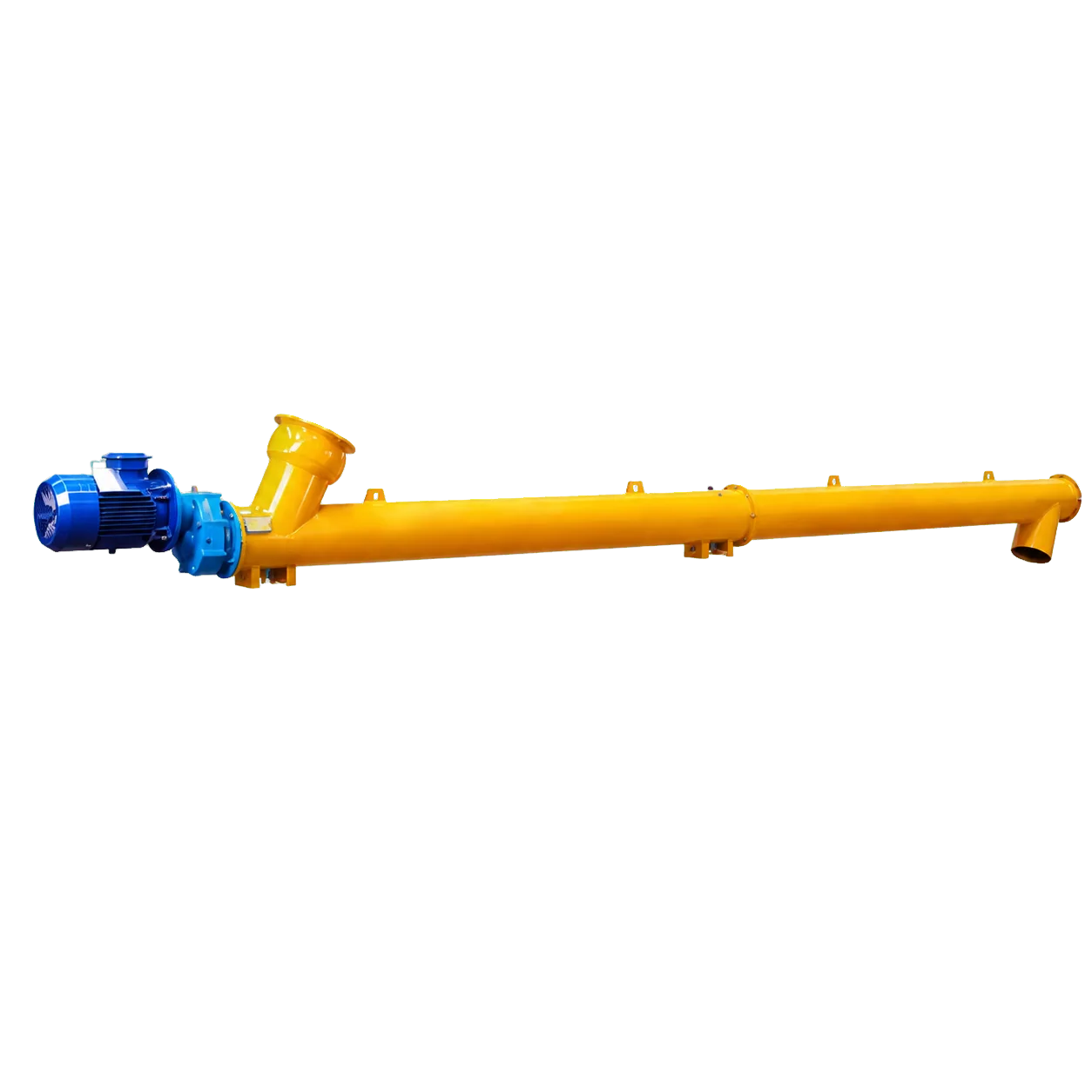
Cement production, concrete batching, and dry powder handling require efficient material transport. Screw conveyors move cementitious powders, fly ash, and mineral fillers between silos, weighing hoppers, and mixing stages. System performance depends on the screw conveyor flight, the primary mechanical interface with the conveyed material. Selecting the correct flight type dictates material flowability, equipment wear rates, and power consumption. Engineers and procurement managers must understand the characteristics of different flight types, as an inappropriate design causes material aeration, excessive packing, accelerated abrasive wear, and high energy use.
Solid, ribbon, and paddle flights are the most common designs. The following sections detail their engineering principles and explain how to select the correct configuration for cement and dry powder applications. Matching the flight geometry to the physical properties of the material improves system reliability and longevity.
The standard solution: solid flights
The solid flight, also known as a standard or continuous flight, is the most common design in bulk material handling. It consists of a continuous, solid helical surface welded to a central pipe or shaft. This design moves material forward in a controlled, linear path. For cement and dry powder applications, solid flights are the default choice for horizontal and mildly inclined conveying. They provide a consistent flow rate. This suits standard concrete batching operations that transfer cement or fly ash from a storage silo to a weighing hopper.
The main advantage of the solid flight is its high volumetric efficiency. The continuous helical surface maximises the volume of material moved per screw revolution. However, this design is not suitable for all powder types. When conveying highly aerated or extremely fine powders, the solid flight can fluidise the material. This makes the powder behave like a liquid and can cause flooding at the discharge point. The continuous outer edge of the flight also experiences constant friction against the trough or tube wall. When conveying abrasive mineral fillers, this friction accelerates wear. Engineers must consider the abrasiveness and aeration tendencies of the material when specifying a solid flight. This may require hard-facing or specialised alloy materials to extend component life.
Managing fluid and cohesive powders: ribbon flights
Standard solid flights are often unsuitable for highly fluid, aerated, or slightly cohesive dry powders. A ribbon flight is a practical alternative. It is a continuous metal strip, usually rectangular in cross-section, welded to the central pipe at intervals. Unlike a solid flight, this design leaves gaps between the helical wraps.
This open design prevents material aeration and packing. In highly fluid powders, a solid flight generates enough rotational energy to spin the material with the screw, which causes little to no forward movement. This effect is called slugging or fluidisation. The gaps in a ribbon flight allow the material to fall back slightly during rotation. This breaks the rotational momentum and maintains forward flow. For slightly cohesive powders that pack against the trough walls, the ribbon flight agitates the material to prevent buildup and bridging.
Ribbon flights control flow and prevent aeration, but they have trade-offs. The open design reduces volumetric capacity compared to a solid flight of the same diameter. Engineers specify ribbon flights when consistent flow and the prevention of material degradation or aeration take precedence over maximum throughput. They are useful in dry-mix mortar plants or asphalt plants that require controlled, steady feeding of fine mineral fillers.
Specialised handling: paddle and cut flights
Some dry powder applications require specialised handling for gentle mixing, cooling, or specific discharge trajectories. Paddle and cut flights provide these functions.
Paddle flights replace the continuous helical surface with individual blades or paddles mounted on the central shaft. The rotating paddles lift and tumble the material instead of pushing it continuously. This action gently mixes or blends dry powders. In building materials manufacturing, paddle flights homogenise different mineral fillers or additives during transfer. The low-impact mixing prevents the segregation of particles with varying bulk densities.
Cut flights have specific sections removed from a standard solid helical surface. This design creates an interrupted flow of material. Cut flights provide controlled feeding and mix material during linear transport. The interrupted flow breaks up minor agglomerations and maintains a uniform discharge rate. Paddle and cut flights are less common for long distance and high capacity cement transfer, but they optimise specific process stages in concrete and dry mix production lines.
Engineering considerations for flight selection
Selecting the correct screw conveyor flight types is part of the overall conveyor design. The design must match the material’s physical properties and process requirements. Engineers must evaluate the material’s bulk density, moisture content, particle size, and required throughput.
For example, conveying a highly abrasive powder requires a robust flight design and careful control of rotational speed. Operating the conveyor at excessive speeds to compensate for a poor flight design increases wear and power consumption. The centreline length and inclination angle also affect performance. As inclination increases, effective capacity drops and material fallback becomes more likely. In these cases, adjusting the flight pitch or type helps maintain efficiency.
The flight must also match the trough diameter, shaft size, and drive power. The motor must be sized for the torque generated by the specific flight and material combination. Published capacity ranges are only selection references. Actual capacity and power depend on the conveyed material, filling ratio, inclination, and operating conditions, and must be calculated for each project. Selecting the correct hanger and end bearings supports the shaft and flight assembly. This is especially important in longer conveyors, where deflection can cause the flight to rub against the tubular body.
Conclusion
The choice of screw conveyor flight type determines the efficiency and lifespan of cement and dry powder conveying systems. Engineers and procurement managers select solid, ribbon, or paddle flights based on their operational characteristics to control material flow and minimise equipment wear. VOGO Machine builds its cement screw conveyor systems to match specific project requirements. The tubular body, drive arrangements, and serviceable components are configured to suit the exact material properties and site layout. To review selection parameters for enclosed powder conveying solutions in concrete batching and dry-mix mortar applications, visit the VOGO Machine cement screw conveyor product page or download the technical datasheet.