
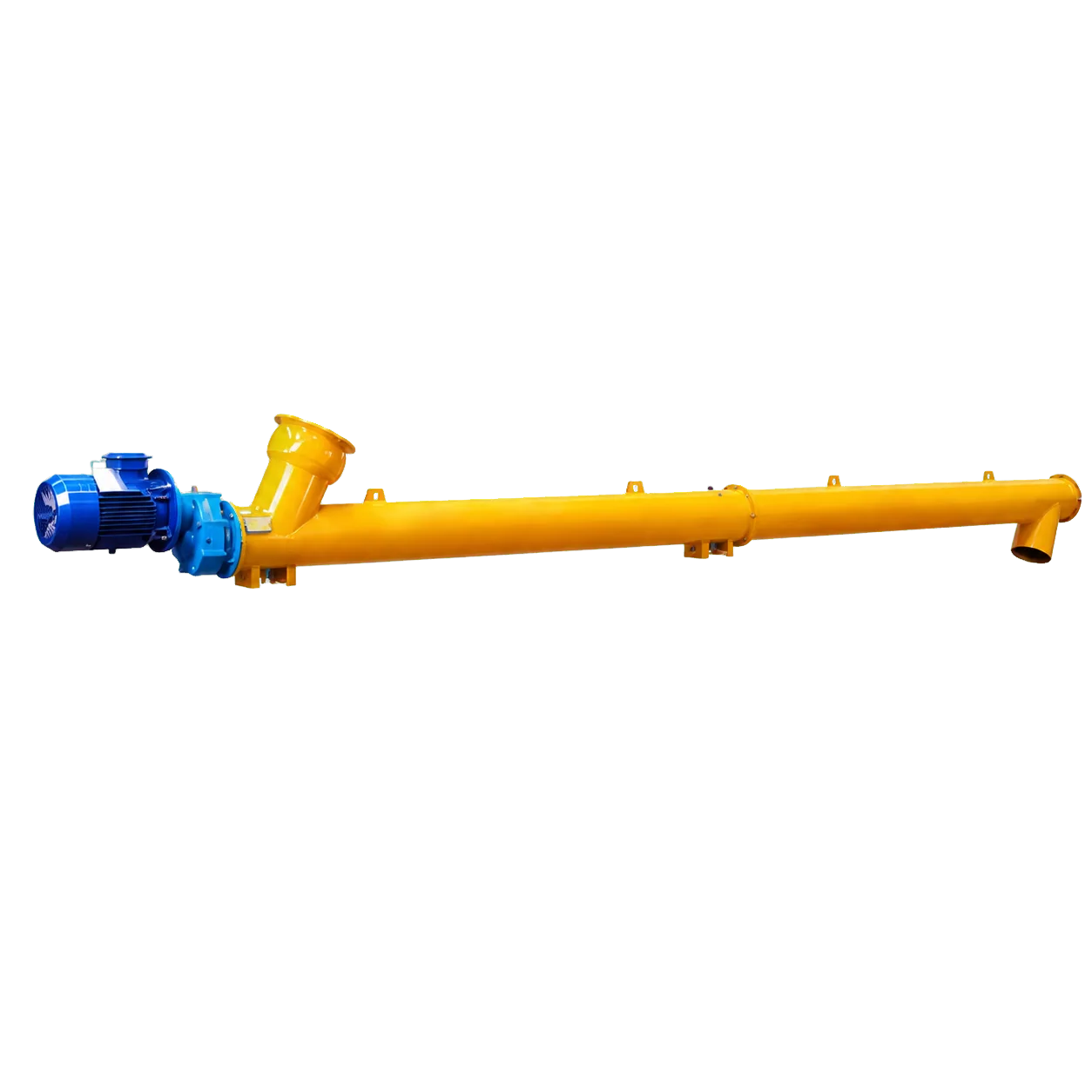
Screw conveyors transfer bulk cementitious powders such as cement, fly ash, and silica fume. These abrasive materials wear the conveyor trough, flights, and hanger bearings. Trough wear compromises structural integrity and degrades sealing performance. This causes dust emissions, reduces conveying efficiency, and increases unplanned maintenance downtime. Specifying the correct screw conveyor trough liner mitigates these issues.
Selecting a trough liner requires more than choosing the hardest material. Engineers must balance abrasion resistance, impact strength, operating temperature limits, and lifecycle costs. The liner must address specific wear mechanisms and maintain smooth material flow. This article details the wear mechanisms caused by abrasive materials in screw conveyors. It compares the physical properties and applications of Ultra-High Molecular Weight Polyethylene (UHMWPE), Hardox wear steel, cast basalt, and ceramic tiles. It also covers liner fixing methods and replacement strategies to extend equipment lifespan and reduce downtime for maintenance managers and procurement professionals.
Understanding wear mechanisms in abrasive environments
Selecting the correct liner requires understanding how abrasive materials interact with the conveyor trough. In cement and fly ash handling, wear occurs through three main mechanisms: micro-cutting, gouging, and impact.
Micro-cutting happens when sharp, hard particles slide across the trough surface and remove material. This is the main wear mode in horizontal or slightly inclined screw conveyors handling fine, dry powders. Gouging wear occurs when larger or harder particles become trapped between the rotating flight and the trough. The trapped particles create deep scratches and remove large volumes of metal or plastic. This is most common in zones with high trough loading or where material characteristics vary.
Impact wear occurs mainly at the inlet sections, where material drops from a silo or hopper into the conveyor. The kinetic energy of the falling material can cause severe surface deformation and fatigue, especially if the liner material lacks adequate toughness.
The physical properties of the conveyed material, such as particle size, shape, hardness, and moisture content, influence these wear mechanisms. Dry, fine cement primarily causes micro-cutting, while materials with higher quartz content, like certain mineral fillers or silica fume, accelerate wear rates. The liner material must have the specific mechanical properties required to resist the dominant wear mode in each section of the conveyor.
Comparing liner materials for screw conveyors
Several materials are utilised for screw conveyor trough liners based on their molecular or structural properties.
UHMWPE (Ultra-High Molecular Weight Polyethylene) is a thermoplastic with a molecular weight between 3 million and 10 million g/mol. Its long-chain structure provides high abrasion resistance; it outperforms carbon steel by a factor of 10 to 15 in standardised sliding wear tests. UHMWPE also has a low coefficient of friction, typically between 0.05 and 0.20, which allows smooth material flow and prevents caking. Its high impact strength and chemical inertness make it suitable for many cementitious applications. However, UHMWPE has a melting range of 110°C to 135°C, which limits its use in high-temperature environments.
Hardox wear steel is a high-strength, abrasion-resistant steel plate. It has high structural integrity and resists gouging and impact wear. Hardox suits heavy-duty applications where the trough experiences severe mechanical stress or elevated temperatures that would degrade polymeric liners. However, its higher coefficient of friction compared to UHMWPE can cause material build-up if the powder is not completely dry.
Cast basalt and ceramic tiles (such as alumina) have high surface hardness, which makes them effective against severe micro-cutting abrasion. Cast basalt has good temperature resistance but is brittle, which limits its use in high-impact zones. Ceramic tiles are very hard and wear-resistant. They are heavy and require precise installation with specialised adhesives or mechanical fixing to prevent detachment under vibration.
Evaluating lifecycle costs and application scenarios
Selecting a screw conveyor trough liner requires evaluating lifecycle costs, not just the initial material price. Total ownership costs include the liner material, installation labour, replacement frequency, and unplanned downtime.
For standard concrete batching applications transferring cement and fly ash from silos to weighing hoppers, UHMWPE is the preferred choice. Its low friction reduces the required drive power, prevents material build-up, and maintains consistent flow. Although UHMWPE costs more initially than standard mild steel, its longer service life and reduced replacement downtime lower the overall lifecycle cost.
When handling abrasive materials such as silica fume or dry-mix mortar ingredients with high quartz content, wear rates exceed the capabilities of UHMWPE. Engineers specify Hardox wear steel or ceramic tiles for these applications. These materials cost more initially and require more labour to install, but their abrasion resistance extends replacement intervals.
Engineers must consider the conveyor geometry and duty. In enclosed powder conveying systems where the path must remain compact and external dust exposure limited, a well-fitted liner maintains the seal between the trough and the cover. The diameter, length, and inclination must match the material’s flow characteristics and the liner’s friction properties.
Liner fixing methods and replacement strategies
Improper installation causes premature trough liner failure, regardless of the material’s wear resistance.
Countersunk bolts secure UHMWPE sheets to the trough. Bolt heads must sit flush with or slightly below the liner surface so the screw flights do not catch on them. UHMWPE has a high coefficient of thermal expansion, so fixing holes should be elongated or oversized to allow longitudinal movement. Rigidly fixing the liner at both ends causes buckling and damage during thermal cycling.
Hardox liners are often welded directly to the trough shell to handle high impact loads. They can also be bolted with countersunk high-strength fasteners. High-temperature, abrasion-resistant adhesives secure cast basalt and ceramic tiles, with mechanical retainers added in high-vibration areas.
Modular liner designs minimise maintenance downtime. Sectional liners allow maintenance teams to replace only worn segments instead of the entire trough. Regular inspections must track the remaining liner thickness and check the clearance between the flight and the liner. Monitoring these parameters lets maintenance managers schedule replacements during planned shutdowns, preventing trough failure and unplanned production stops.
Conclusion
Selecting a screw conveyor trough liner for abrasive materials depends on the wear mechanisms, operating temperatures, and lifecycle costs of the material. UHMWPE has low friction and high wear resistance for standard cement applications. For extreme abrasion and high-impact conditions, Hardox wear steel and ceramics provide greater durability. Fixing methods must account for thermal expansion, and modular replacement strategies minimise maintenance downtime. The trough liner must match the overall conveyor design. VOGO Machine configures its cement screw conveyors to your duty and material characteristics, including the diameter, length, drive, and connection arrangements. For technical specifications and to select the correct configuration, visit the cement screw conveyor product page or download the datasheet for your project.