
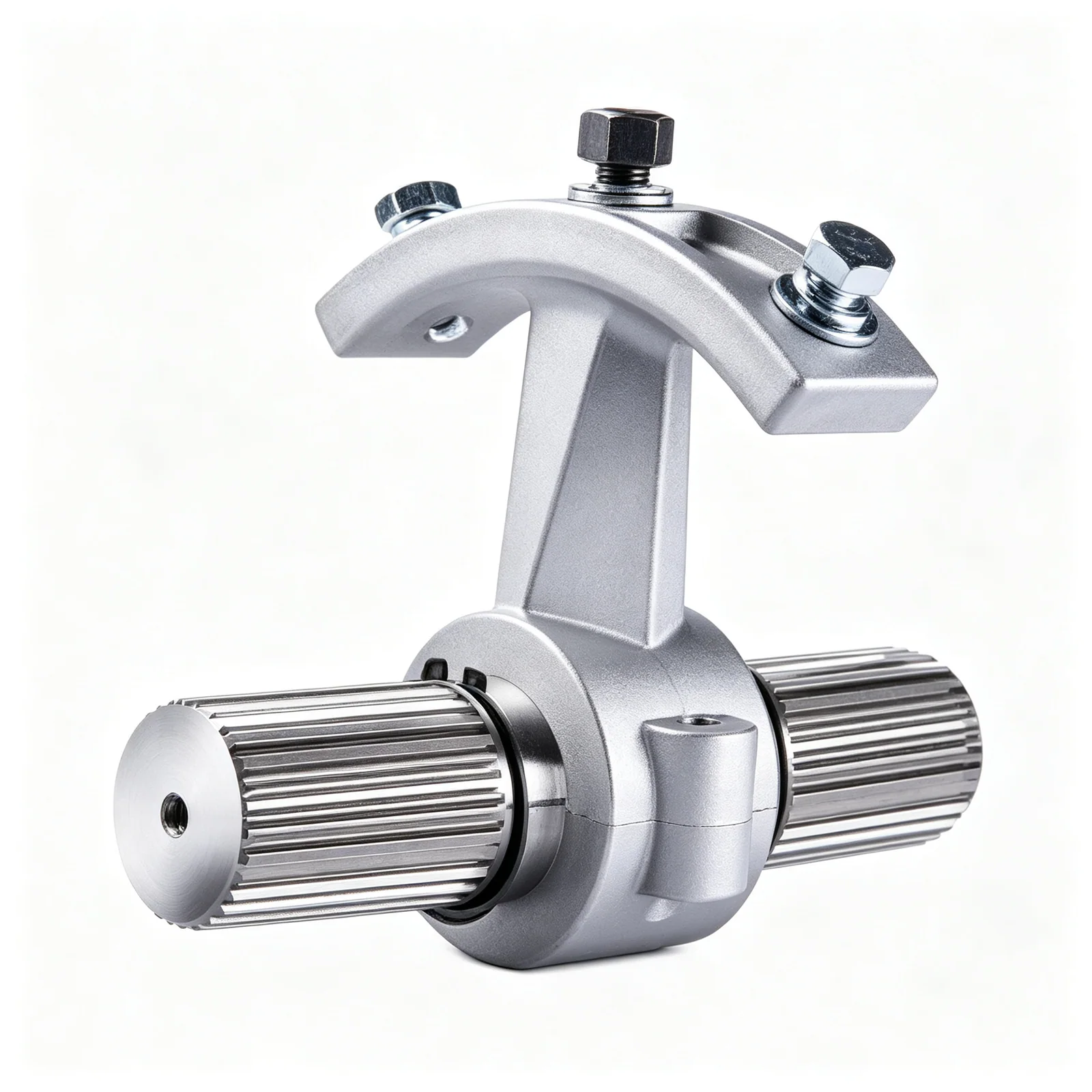
A cement screw conveyor hanger bearing supports the joint between screw sections, but it also adds friction and a local obstruction in the material path. Select it from shaft span, screw speed, temperature, abrasion, lubrication, contamination, alignment and maintenance access.
VOGO’s cement screw conveyor component arrangements can include selectable hanger and end bearings. Final type, count and spacing must be shown on the approved drawing.
Cement Screw Conveyor Hanger Bearing Selection Inputs
The KWS component guide describes hanger bearings as replaceable supports for multiple screw sections and lists material-specific speed and temperature limits. Its table identifies hard iron as one wear-resistant option used for lime and cement, with shaft-hardness and lubrication qualifications. That is a supplier guide, not a universal mandate.
| Input | Selection question |
|---|---|
| Screw speed | Is it below the bearing material and style limit? |
| Cement condition | Is powder aerated, hot, damp or abrasive? |
| Shaft | Is journal hardness and finish compatible? |
| Lubrication | Is lubrication allowed, accessible and protected? |
| Flow | Will the hanger create unacceptable restriction or buildup? |
| Access | Can it be inspected and replaced safely? |
| Alignment | Can connected screws be centered without forcing the bearing? |
Ball-bearing hangers may reduce friction in suitable dry, free-flowing duties, but sealing against fine cement is decisive. Plain bearing materials tolerate contamination differently and may require hardened journals.
Installation Sequence and Alignment
KWS’s hanger installation sequence starts by bolting and aligning trough sections, installing the drive end, and adding screw and coupling sections in order. Do not pull a misaligned screw into position with hanger bolts; that stores bending load in the shaft and bearing.
Before closing covers, rotate the assembly by hand under the approved isolated condition. Check free movement, flight clearance and coupling position. Stabilize the drive and supports. SKF’s mounting guidance reinforces that correct mounting, clean handling and suitable lubrication are central to bearing life.
Diagnose Hanger-Bearing Wear
| Observation | Likely path | Check first |
|---|---|---|
| Wear on one side | Misalignment or bent screw | Trough centerline, shaft runout and support settlement |
| Rapid uniform wear | Wrong material, speed or lubrication | Application limits and journal condition |
| Cement packed around hanger | Flow obstruction or leakage into bearing | Hanger style, clearance and inlet stability |
| Rising empty current | Tight bearing, seal or rubbing | Isolated hand rotation and individual supports |
| Repeated coupling-bolt failure | Cyclic misalignment or drive movement | Drive support and screw straightness |
Do not attribute every blockage to the hanger. Moisture, downstream restriction, overfill and silo surging remain system causes; the blockage guide provides the wider diagnosis. For centerline and hand-rotation checks, use the cement screw conveyor installation guide.
Inspection Record
Trend empty current, loaded current, sound, temperature, journal clearance, visible wear pattern, lubricant condition and cement buildup. Set replacement criteria from the equipment supplier and site reliability program; do not copy a wear limit from a different shaft or bearing design.
A flood-loaded screw feeder can place different loads at the inlet and may require avoiding or relocating an obstruction. The supplier must evaluate withdrawal geometry rather than inserting a hanger into the active inlet zone by habit.
Relate Bearing Choice to Conveyor Layout
A hanger bearing is not chosen independently of screw-section length and support spacing. Longer unsupported spans can increase deflection; adding hangers reduces span but introduces more friction, more maintenance points and more obstructions in the material stream. The conveyor designer must balance shaft stiffness, casing geometry, assembly access and bulk flow.
For a tubular conveyor, access to an intermediate bearing can be more constrained than in an open trough. Require removable inspection or service provisions in the approved arrangement. Confirm how a worn bearing and coupling shaft can be removed without cutting structural members or disturbing unrelated plant equipment.
Where a hanger is placed near an inlet or discharge, check whether it interferes with falling material, promotes buildup or receives direct impact. A hanger in the active withdrawal zone of a flood-loaded feeder may disrupt drawdown. Its location requires feeder-specific review.
Match Journal and Bearing as a Pair
Bearing material, shaft material, hardness, surface finish and clearance work together. A hard iron bearing on an unsuitable soft journal may transfer wear to the shaft. A polymer bearing can have lower speed, load or temperature limits. A rolling bearing protected by seals may have low friction but can fail rapidly if fine powder enters.
The selection sheet should include:
- bearing style and material;
- journal material, hardness, finish and diameter;
- design running clearance;
- maximum normal and upset temperature;
- maximum screw RPM;
- permitted lubricant and relubrication method;
- seal or contamination barrier;
- predicted radial load and misalignment;
- replacement access and lifting requirement.
Do not mix a replacement bearing from one material family with the old shaft specification unless the supplier confirms compatibility.
Set a Lubrication Strategy
Some plain hanger bearings operate dry; others require lubricant. Some rolling-bearing arrangements are sealed or relubricated. “Grease weekly” is not a valid universal instruction. Use the delivered bearing and lubricant manual, operating hours, temperature and contamination.
If grease lines run outside the casing, inspect them for blockage, damage and incorrect connection. A fitting that accepts grease does not prove grease reached the bearing. Where grease could contact cement, confirm process and product requirements.
Establish a baseline after lubrication: temperature, sound and empty current. A sudden temperature rise after greasing can signal overfilling or the wrong lubricant.
Measure Alignment and Wear Consistently
During an isolated outage, support the screw before removing a hanger so its weight does not shift unexpectedly. Measure clearance at the same shaft position and direction. Photograph the wear pattern and mark the orientation.
One-sided wear usually indicates alignment or load direction; polished contamination tracks suggest powder ingress; scoring can indicate abrasive particles or a rough journal. Compare adjacent hangers. If several wear similarly, reconsider bearing selection or lubrication. If one fails, examine local alignment, support settlement and inlet impact.
Hanger-Bearing Procurement Checklist
Require the supplier to identify the number and locations of hangers, maximum RPM and temperature, bearing and shaft materials, lubrication, design clearance, replacement criterion, spare-part code and access method. Include expected operating hours and cement condition.
If the supplier proposes eliminating a hanger, request the alternative span and deflection check. If a hanger is added, return to motor-power calculation because bearing friction and flow obstruction have changed.
Commissioning Baseline for Each Hanger
After empty and controlled-load runs, record temperature at a defined point, sound, nearby vibration, lubricant condition and empty current. Mark hanger locations consistently on the drawing so later observations refer to the same component.
Recheck after the first planned shutdown for settling, fastener condition, buildup and early wear. Early one-sided marks should prompt an alignment correction before a normal maintenance interval is accepted.
Conclusion
Select a cement screw conveyor hanger bearing as part of the screw, shaft, flow and maintenance system. Verify material compatibility, speed, temperature, journal, lubrication, alignment and access. Commission with an isolated hand-rotation check and build a condition trend. Send the supplier the span, RPM, cement condition and maintenance constraints before approving the bearing arrangement.